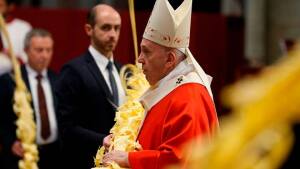
Pope Leo XIV Explains How the Holy Eucharist Radically Transforms Our Daily Lives
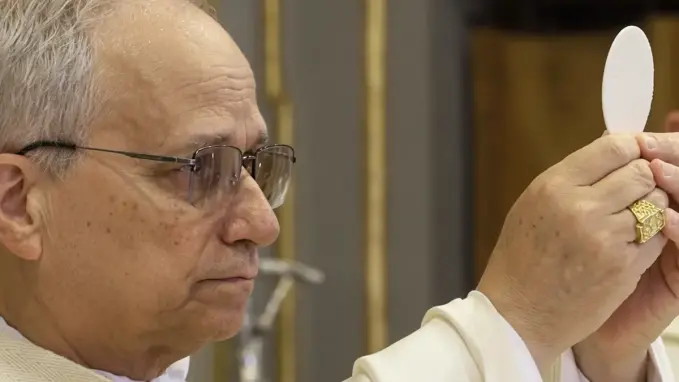
uring his General Audience, Pope Leo XIV deeply reflected on the Holy Eucharist. Discover how this sacred, living mystery actively transforms our Catholic faith
In a world fiercely starving for authentic spiritual nourishment and genuine connection, the Second Vatican Council offers a breathtaking remedy that we frequently overlook. During his highly anticipated Wednesday General Audience, Pope Leo XIV delivered a powerful, deeply moving catechesis on the transformative power of the Real Presence, drawing richly from the magnificent Dogmatic Constitution on the Sacred Liturgy, Sacrosanctum Concilium. Speaking to thousands of devoted pilgrims gathered under the Roman sun, the Holy Father passionately reminded the universal Church that the Holy Eucharist is never a passive spectacle, but a blazing furnace of divine love designed to actively convert our weary hearts.
The Augustinian Vision of Becoming What We Receive
In a masterful display of theological depth, the Holy Father opened his address by directly connecting our modern liturgical experience with the ancient, unshakeable wisdom of the Church Fathers. He stated:
"Dear brothers and sisters, good morning and welcome! We will continue our catechesis on the documents of the Second Vatican Council, particularly the Constitution Sacrosanctum Concilium (SC) on the Liturgy. When Saint Augustine wanted to explain the mystery of the Body of Christ to those who were newly baptized, he took up the passage from Saint Paul that we have just heard: 'Now you are Christ’s body, and individually parts of it' (1 Cor 12:27). He adds: 'It is your own mystery that you receive. To what you are, you respond: Amen, and your response is like your signature. You are told, The Body of Christ, and you reply, Amen. Be therefore members of the Body of Christ, so that your Amen may be true. [...] Be what you see, and receive what you are' (Sermon 272: PL 38, 1247)."
This Augustinian theology perfectly captures the breathtaking reality of our Catholic communion. We do not merely consume a sacred host; we actively ingest our own highest spiritual identity. The Catechism affirms that the Eucharist strictly "makes the Church" (CCC 1396). By declaring a faithful "Amen," we boldly embrace our supernatural responsibility to become the literal, walking hands and feet of Jesus Christ today.
Continuing his profound instruction, the Pontiff illuminated the intimate connection between the Last Supper and our final heavenly destination:
"Immediately after recalling Jesus’ Last Supper, the Constitution on the Liturgy speaks of the Eucharist in these Augustinian terms. For Christians, taking part at the Lord’s table means being 'instructed by God's word and … nourished … [giving] thanks to God' (cf. SC, 48). It is by receiving Him in His Word and in the Eucharist that we become what we receive. We become the Body whose Head is the risen Christ, seated at the right hand of the Father (cf. Col 1:18), who prepares a place for us in heaven (cf. Jn 14:3). Thus, the Eucharist is the sacrament of the Kingdom that is to come. It is the Bread for the journey that leads us to our heavenly homeland, until that blessed day when 'God will be all in all' (1 Cor 15:28)."
Here, the Vicar of Christ deeply underscores the eschatological dimension of the Mass. This heavenly banquet is never a static memorial, but rather dynamic, living sustenance. Saint Thomas Aquinas beautifully called it the "pledge of future glory." Receiving this divine bread fuels our exhausting earthly pilgrimage, guaranteeing that our fragile souls remain powerfully anchored to the eternal promises of the magnificent Kingdom of God.
The Ultimate Antidote to Worldly Division
Addressing the social implications of the Sacrament, Pope Leo XIV challenged the faithful to radically change how they view their participation during the Sunday liturgy:
"The liturgical assembly offers the Sacrifice 'not only through the hands of the priest, but also with him' (SC, 48). From this perspective, the Eucharist is the form of the spiritual sacrifice of Christians (cf. Heb 13:16; Rom 12:1), as the path to union with God and with one another. By participating in it, they learn 'to offer themselves; through Christ the Mediator, they should be drawn day by day into ever more perfect union with God and with each other' (ibid.). Thus, by incorporating us into Christ, the Eucharist teaches us to adopt the very style of life of the Lord Jesus, which was marked by the free gift of Himself. This gift draws us into the dynamic of unity, offering a powerful antidote to the forces of division that undermine our world, our communities, our families, and our hearts (cf. SC, 47)."
This insight completely shatters the modern misconception of passive Sunday attendance. The faithful are actively called into the sanctuary's mystery. Pope Saint John Paul II reminded us that we must offer our entire lives upon the altar. This majestic spiritual sacrifice miraculously heals our broken relationships, providing an impenetrable shield against the vicious, polarizing division that currently fractures our modern society.
The Inseparable Union of Word and Sacrament
Drawing attention to the magnificent structure of the Mass itself, the Holy Father expertly dissected the intrinsic bond between the proclaimed Scriptures and the consecrated host:
"Dear brothers and sisters, when we participate in the Eucharist, we are invited to listen to the Word of God and to be nourished at the Lord’s table, where He offers Himself to the Father. These two parts of the Mass, the Liturgy of the Word and the Liturgy of the Eucharist, 'are so closely connected with each other that they form but one single act of worship' (SC, 56). With regard to the Word of God, it is important to remember that it is not merely a matter of acquiring intellectual knowledge of the Scriptures, but of receiving the Word that is 'living and effective' (Heb 4:12), spoken by God to everyone and at the same time to each individual. This Word nourishes and sustains us together with the Eucharistic Bread and leads us from the decay of sin to new life in Christ. 'The Eucharist opens us to an understanding of Scripture, just as Scripture for its part illumines and explains the mystery of the Eucharist' (Benedict XVI, Verbum Domini, 55)."
"The Second Vatican Council called for the treasures of the Bible to be opened more abundantly, so that a richer fare from the table of God’s Word might be provided for the faithful (cf. SC, 51). The liturgical reform translated this request into the treasure that is the Lectionary, the book that gathers all the biblical readings for liturgical celebrations. This richness has been drawn from the purest source of the living Tradition, which combines fidelity with tradition; with openness to legitimate progress (cf. SC, 23)."
The Lectionary is far more than a simple reading schedule; it is an inexhaustible theological goldmine deliberately designed to immerse the faithful in salvation history. As Saint Jerome sternly warned, ignoring Scripture is ignoring the Savior. By systematically unfolding the grand biblical narrative, the Church ensures that our minds are completely saturated with divine wisdom before our bodies receive the sacred host.
Bringing his catechesis to a glorious climax, Pope Leo XIV cited the opening of the Constitution's second chapter:
"The beginning of Chapter II of the Constitution on the Liturgy is woven with references to the great river of Tradition, that continues from the Fathers of the Church down to us. I will quote from it: 'At the Last Supper, on the night when He was betrayed, our Saviour instituted the eucharistic sacrifice of His Body and Blood. He did this in order to perpetuate the sacrifice of the Cross throughout the centuries until He should come again, and so to entrust to His beloved spouse, the Church, a memorial of His death and resurrection: a sacrament of love, a sign of unity, a bond of charity, a paschal banquet in which Christ is eaten, the mind is filled with grace, and a pledge of future glory is given to us' (SC, 47). Dear brothers and sisters, let us draw with faith from this source of divine life and allow ourselves to be transformed by the mystery we celebrate."
The Pope concludes by vividly reminding us that the Mass completely transcends time and space, pulling us directly to the foot of Calvary. The Catechism clearly asserts that the sacrifice of Christ and the sacrifice of the Eucharist are "one single sacrifice" (CCC 1367). Therefore, every single liturgy is a breathtaking invitation to step outside earthly time and taste eternal, unmerited glory.
A Message to the Global Faithful
Following his primary catechesis, the Holy Father offered his apostolic blessing to the massive international crowds, stating:
"I greet this morning all the English-speaking pilgrims and visitors taking part in today’s Audience, particularly groups from England, Sweden, Malawi, Tanzania, Indonesia, Singapore, South Korea, Canada and the United States of America. Upon all of you and your families, I invoke the peace and joy of our Lord Jesus Christ. God bless you!"
Finally, he provided a powerful, condensed summary of his teachings for those listening around the globe:
"Dear brothers and sisters, as we continue our series of catecheses on the Second Vatican Council, today we consider the celebration of the Eucharist as presented by the Constitution on the Liturgy, Sacrosanctum Concilium. This sacred mystery is described in the second chapter of the document as 'a sacrament of love, a sign of unity, a bond of charity, a paschal banquet in which Christ is received, the mind is filled with grace, and a pledge of future glory is given to us' (n. 47). The Constitution also emphasises that at Mass, the faithful are not passive spectators. Rather, all are encouraged to offer themselves in union with Jesus Christ, the spotless victim, to the Father, through the hands of the priest and together with him. Participation in the Eucharistic sacrifice also means being formed by God’s word and nourished at the table of the Lord’s body. Indeed, these two parts of the Mass, the Liturgy of the Word and the Eucharistic Liturgy, 'are so closely connected with each other that they form but one single act of worship' (n. 56). Brothers and sisters, as we seek our nourishment from this abundant source of divine life, let us allow ourselves to be transformed by the mystery we celebrate."
Finding Eternal Rest in the Eucharistic Mystery
Embracing the profound mystery of the Holy Eucharist radically shifts our entire earthly perspective from fleeting worldly anxieties to the glorious permanence of heaven. When we deliberately kneel before the altar, we allow the Holy Spirit to beautifully rewrite our deepest desires.
By faithfully anchoring our fragile lives in this Eucharistic communion, we boldly step forward as transformed, incredibly radiant witnesses of Christ's unfailing love. Saint Augustine perfectly captured this divine reality, stating:
"You have made us for yourself, O Lord, and our heart is restless until it rests in you."
A Prayer to the Eucharistic Lord
O merciful and loving Lord Jesus, I humbly kneel before Your majestic presence hidden in the Blessed Sacrament, desperately asking for the grace to fully comprehend this magnificent mystery.
O Lord, teach me the sacred art of profound adoration, so I may constantly recognize Your glorious face under the humble appearance of bread. Purify my distracted mind and firmly anchor my wandering heart in Your eternal truth before I approach Your holy altar.
Transform my moments of Holy Communion into a blazing furnace of apostolic charity. Grant me the supernatural courage to bravely proclaim Your Gospel with authentic joy, becoming a truly credible living tabernacle of Your infinite mercy to a broken world.
Amen.
Do not let the chaotic noise of this modern world severely dilute the immense strength of your Sunday worship. True apostolic power beautifully blossoms the moment we completely surrender our chaotic human agendas to the absolute silence of the Tabernacle. Embracing this divine nourishment miraculously restores our exhausted souls and entirely redefines our earthly mission. Are you truly ready to let the Eucharist transform you today?
❓ FAQ: Frequently Asked Questions About the Pope Leo and the Eucharist
The Catholic Church firmly teaches that the Holy Eucharist is the actual Body, Blood, Soul, and Divinity of Jesus Christ. As the Catechism states, "The Eucharist is the source and summit of the Christian life" (CCC 1324). It is not merely a symbol, but the profound, living presence of our Savior who continually nourishes and powerfully sustains our daily spiritual journey toward eternal salvation.
When we worthily receive Holy Communion, we are intimately united with Christ and separated from our hidden sins. Saint Thomas Aquinas beautifully noted, "The Eucharist is the sacrament of love; it signifies love, it produces love." This heavenly food radically breaks our selfish habits, empowering us to actively serve others with extraordinary patience, boundless charity, and a profound, unshakeable supernatural joy in our families.
The Liturgy of the Word and the Liturgy of the Eucharist form a single, magnificent act of divine worship. We cannot separate the message from the Person. Saint Jerome famously declared, "Ignorance of Scripture is ignorance of Christ." The proclaimed Scriptures perfectly illuminate our minds, while the Eucharistic bread physically transforms our hearts, working seamlessly together to conform our entire existence to God's holy will.
At Mass, believers do not just passively watch the priest; they actively offer themselves alongside Christ. Saint Peter urges us to be "a holy priesthood to offer spiritual sacrifices acceptable to God" (1 Peter 2:5). By uniting our daily struggles, deep sorrows, and joyful triumphs with the perfect sacrifice of Jesus on the altar, our ordinary lives gain infinite, eternal redemptive value for the world.
 Venezuelan, faithful husband and father of a family. Electronic engineer and missionary of the faith. Committed to the proclamation of the Gospel. Solid believer that there are always new beginnings. Whoever has God has nothing to stop him.
Comments
Want to leave comments or also intentions on our homepage?
Register nowBe the first to comment.
Useful Resources
Church
Pope Leo XIV: Love is also Loss; but it bears fruit only through self-giving: Discover how true Christian hospitality and detachment can bring peace
Church
Pope Leo XIV calls for steadfast support from his cardinals during the Consistory: "I cannot carry out this ministry alone," he says, calling for communion
Church
Pope Leo XIV invites the youth to seek perfect joy in God, warning that true happiness and lasting peace are never found on screens or social media platforms
Church
Pope Leo XIV beautifully invites us to deepen our relationship with God through daily contemplation: Discover how silent prayer forms truly credible apostles
Church
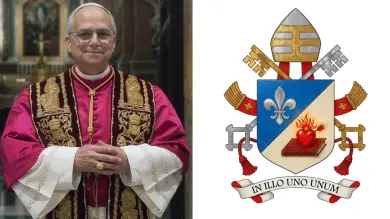
The Holy See has released the official coat of arms, signature, and portrait of Pope Leo XIV: Discover the profound spiritual meaning behind these papal symbols
Church
Cardinal Robert Francis Prevost, now Pope Leo XIV, makes history as the first American Pope: Discover his deep Peruvian heart and his inspiring spiritual life
Church
During his Angelus address, Pope Leo XIV explains the Beatitudes as the ultimate path to true happiness: Discover how God's comforting grace transforms us
Pope Francis