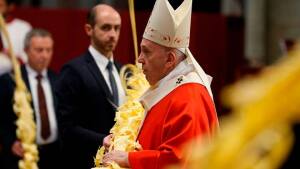
Pope Leo XIV at the Consistory: Walking Together in Loyalty, Fraternity, and Truth
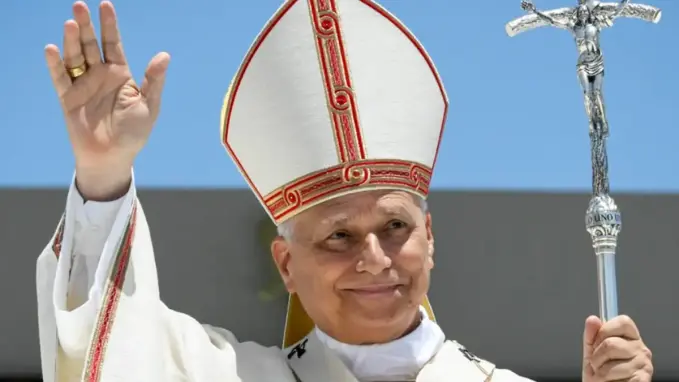
Pope Leo XIV calls for steadfast support from his cardinals during the Consistory: "I cannot carry out this ministry alone," he says, calling for communion
It is dangerously easy to view the papacy as a solitary fortress of absolute power, completely detached from the fragile realities of local parishes. However, during a deeply moving and historic gathering of the world's highest prelates, Pope Leo XIV shattered this illusion with an astonishingly humble and urgent plea. Addressing the College of Cardinals with raw evangelical transparency, the Holy Father openly declared that the complex Petrine ministry cannot be carried out in isolation. This anointed message serves as a brilliant wake-up call, summoning the entire global Church to abandon passive spectator roles and actively embrace a life of radical, shared responsibility.
The Call to Collegiate Unity and Daily Conversion
In a solemn address filled with profound affection and theological precision, the Supreme Pontiff welcomed his closest collaborators to the Vatican, immediately setting a deeply fraternal tone for their collective labor:
"Dear brother Cardinals, I welcome you and thank you most sincerely for having once again accepted my invitation. Your presence demonstrates the concern for the whole Church that we all share in our service to the People of God and to the mission entrusted to us by the Lord. At the Consistory last January, I expressed a simple wish: that these meetings might help us to learn ever more to 'work together in the service of the Church' and to continue 'a dialogue that assists me in serving the mission of the whole Church.' These were not merely introductory words. I continue to believe that this is one of the most important responsibilities entrusted to the College of Cardinals. We too, like the whole Church, learn as we walk forward. Communion is never a result that is achieved once and for all: it remains a daily conversion, which takes shape in prayer, and through concrete actions, relationships of trust, and a willingness to listen to one another."
Through these words, the Holy Father expertly redefines the essence of ecclesiastical authority. He firmly establishes that communion within the Church hierarchy is not an administrative status, but a continuous spiritual journey requiring deep interior humility. The Catechism of the Catholic Church beautifully reminds us that the College of Cardinals enjoys a unique collegiate relationship with the successor of Peter (CCC 880). This specific alignment demands unceasing prayer, mutual vulnerability, and a complete rejection of personal ambition to preserve global Catholic unity.
Building Communion Through Concrete Actions
The Pontiff continuously expanded his teaching by vigorously emphasizing that true ecclesial unity can never be reduced to mere bureaucracy or cold canonical legislation:
"In recent months, I have had the opportunity to recall on several occasions that we are called to be builders of Christ’s communion, a communion that takes shape in a synodal Church in which everyone cooperates in the same mission, each according to their own charism and ministry. As I said to the Roman Curia, this communion 'is built not so much through words and documents as through concrete gestures and attitudes that ought to appear in our daily lives, including in our work' (Address to the Roman Curia for the Exchange of Christmas Greetings, 22 December 2025). We are not guardians of particular interests, but 'disciples and witnesses of the Kingdom of God, called in Christ to be leaven of universal fraternity' (ibid.). For this reason, I desired that our work together here focus on four themes that are deeply interconnected."
In this crucial segment, the Bishop of Rome challenges the Curia to escape the perpetual trap of theological complacency. Documents alone possess absolutely no power to heal human hearts unless they are accompanied by authentic pastoral charity. Saint John Chrysostom famously preached that the altar of the human heart must be decorated with active mercy before we can truly honor the sanctuary. By demanding concrete gestures over abstract words, the Pope urgently calls for an intense structural transformation rooted entirely in the Gospel.
Contemplating the World with the Eyes of Faith
Focusing on the first of the four essential themes, Pope Leo XIV instructed the gathered Cardinals to deeply examine the modern cultural landscape with supernatural vision:
"First of all, we are invited to contemplate the world in which the Church is called to proclaim the Gospel. Before asking ourselves what to do, we must pause to consider reality, looking at it through the eyes of faith and allowing ourselves to be challenged by listening to our brothers and sisters. As I recalled a few weeks ago: 'Jesus travels the streets, crosses the squares and visits our neighborhoods, dwelling in the settings of our daily lives. He is a God who is close to us, who walks with his people, the Lord of history' (Homily in 'Plaza de Cibeles,' Madrid, 7 June 2026). Today, the Lord continues to go before us in history, and the Church is called first and foremost to recognize his presence."
This pastoral directive acts as an explicit warning against the pervasive danger of secular pessimism. The Church must never view the modern world through fear, but through the victorious lens of the Resurrection. As Saint Augustine profoundly taught in his masterpiece The City of God, divine providence actively operates amidst human chaos. Listening intently to our suffering brothers and sisters allows us to discover where Christ is already working, ensuring our evangelization remains incredibly effective and alive.
The Civilization of Love Confronting Polarization
Moving fluidly into the second session of their intense work, the Holy Father tackled the global crises of violence, political hatred, and severe societal division:
"Next, we shall reflect together on the culture of power and the civilization of love. Many of you come from lands marked by war, violence, and social or religious polarization. Yet none of us are immune to the many forms of conflict, oppression, and division that afflict our societies today. For this reason, the discernment that we are called to undertake concerns us all and challenges the Church’s mission in every context. The Encyclical Magnifica Humanitas offers us some valuable insights for understanding our times. I am particularly keen to hear how these pages resonate within your particular Churches, what questions they raise, what perspectives they open up, and what steps they suggest. An encyclical, in fact, continues its journey when it is received, interpreted, and embodied in the concrete life of the Churches."
Here, the Vicar of Christ masterfully frames his magisterial writing, *Magnifica Humanitas*, not as a static text, but as a living instrument of global reconciliation. True spiritual discernment requires local bishops to courageously apply universal truths to specific, bleeding wounds within their dioceses. The civilization of love can only conquer the entrenched culture of power when the global hierarchy stands perfectly unified against modern polarization, offering Christ's radical peace as the ultimate remedy.
The Common Good and Synodal Style
During the third intense session of the Consistory, the Pontiff explored the radical social responsibility of the Church within our highly fragmented contemporary society:
"The third session will then explore Magnifica Humanitas in greater depth, examining the contribution that the Church can make to building up the common good. We live in an age in which the temptation towards fragmentation is growing and particular interests all too easily prevail. The Church’s social teaching reminds us that the common good does not arise spontaneously, but requires shared responsibility. For the Church, this takes on a very specific form: a synodal style at the service of the mission of the Kingdom. The Encyclical Magnifica Humanitas recalls this in paragraph 86, adding that this requires attention to the way in which decisions are made and responsibilities exercised, through transparency, evaluation, and shared responsibility."
This urgent appeal directly targets the dangerous rise of modern individualism that threatens the absolute core of the human family. Pope Leo XIV fiercely defends the unchanging tenets of Catholic Social Teaching, emphasizing that the common good demands explicit accountability, absolute transparency, and fraternal evaluation. Governance within the Church must mirror the selfless style of the Kingdom, showcasing to a deeply suspicious secular world how true co-responsibility operates under grace.
Understanding the True Meaning of Authority
Addressing the fourth and final theme, the Holy Father provided a definitive, highly illuminating clarification regarding the frequently misunderstood process of the Synod:
"Finally, we will devote a session to the process of implementing the Synod. This final session will not introduce a new theme, but bring together and connect what we have shared in the previous sessions. In the face of the wounds of the world, the building up of the common good, and the mission of the Church, synodality points to a way forward: listening, discerning, and taking responsibility together for the choices that the Lord entrusts to us. Synodality is not, first and foremost, a set of procedures; as I have said on several occasions, synodality is an attitude, an openness, a willingness to understand. At times it has been interpreted as a diminishment of authority. In reality, it helps us to understand more deeply the meaning of authority itself, which exists to safeguard communion, to foster the participation of all, and to guide the Church’s common journey."
With spectacular theological clarity, the Pope dismantles the false fears of those who claim synodality completely destroys hierarchical power. True apostolic authority never acts as an instrument of tyrannical control, but exclusively as a sacred mechanism to safeguard holy communion. Pope Saint Gregory the Great beautifully defined the papacy as being the "servant of the servants of God." Synodality purifies our human execution of power, elevating active listening into a vital tool for authentic divine governance.
Mission as the Ultimate Criterion for Church Life
Bringing his brilliant synthesis to a marvelous theological focus, the Pontiff strictly warned the hierarchy against the perpetual danger of turning completely inward:
"These four sessions find their unity in the missionary perspective, which we shared at the last Consistory and which I referred to in my letter this past April. We are not here, first and foremost, to reflect on the internal life of the Church. All the themes we will address — our view of the world, peace, the common good, and synodality — converge on a single question: how can we help our Churches today to proclaim the Gospel with greater fidelity, freedom, and credibility? Mission is not merely one of the Church’s many tasks. It is her very reason for existing and thus, it also becomes the criterion that guides our discernment. When we learn to listen to one another, to share responsibilities, and to recognize the action of the Spirit in the various Churches, we are not merely improving the way we work: we are becoming a Church that is better able to engage with the men and women of our time and to bear witness to them of the joy of the Gospel."
This magnificent definition forcefully reminds us that an introverted Church is a dying Church. Evangelization is the absolute center of our entire Catholic identity. As Pope Paul VI declared in *Evangelii Nuntiandi*, the Church exists exclusively to preach the Gospel. Every internal structure, canonical reform, and episcopal meeting must be rigorously measured by its direct ability to make the salvation of Jesus Christ credible to a secular generation.
An Unprecedented, Urgent Request for Help
In the most emotionally charged and historically significant moment of his entire allocution, Pope Leo XIV made a direct, highly dramatic plea for fraternal loyalty:
"For this reason, I wish to ask you for your help. The ministry which the Lord has entrusted to me cannot be carried out alone. It requires your experience, your pastoral wisdom, and your knowledge of the Churches and of the peoples entrusted to you. I am counting on you to help me discern what the Spirit is saying to the Church today. I need your support: strong, explicit, and public. I need to feel sustained by you, as by brothers. I therefore ask you to accompany me not only during these days of work, but also in the daily service to the communion of the universal Church. Help me to listen to what is emerging in the Churches, to recognize the signs of hope that often grow in silence, but also to not ignore the struggles, misunderstandings, and resistance that can slow down our journey. I need your freedom, your frankness, and your loyalty. Sincere advice is always an act of communion."
This unprecedented papal request completely shatters any remaining myth of an isolated, untouchable papacy. The Successor of Peter openly confesses his profound need for strong, public support from his fellow bishops. True ecclesial loyalty never manifests as silent, blind obedience, but as courageous frankness and transparent advice spoken in complete charity. This deep vulnerability strengthens the Petrine office, ensuring the universal Church faces modern storms in unified strength.
A Challenge to Practice Evangelical Discernment
Concluding his historic address, the Holy Father urged the Cardinals to fully enter into this collaborative exercise with absolute trust and interior freedom:
"I also ask you to uphold, each within your own Church and in your own ministry, this style of ecclesial discernment. I know that it requires patience and sometimes raises questions. Nevertheless, I am convinced that the Lord is teaching us a more evangelical way of living out together the responsibility he has entrusted to us. The credibility of our witness and the fruitfulness of our mission depend on this. I therefore wish to encourage you to engage wholeheartedly in the group work we are undertaking. I am well aware that, for many of us, this is not the usual way of conducting a Consistory. Yet this too is part of the journey along which the Lord is leading us. Naturally, there will still be space for personal contributions and, as always, everyone is free to send me their observations or confidential reflections. But I ask you to enter into this ecclesial exercise with trust. We too learn synodality by practicing it; we learn together to grow in communion. I thank you in advance for your willingness, for your interior freedom, and for your love for the Church. Let us entrust these days to the Holy Spirit, that he may make us docile to his voice and grant us the grace to seek together what best serves the Gospel and the good of the People of God. Thank you."
The Pope also extended his warmest personal blessings to the international English-speaking pilgrims attending the general audience, stating:
"I greet this morning all the English-speaking pilgrims and visitors taking part in today’s Audience, particularly groups from England, Sweden, Malawi, Tanzania, Indonesia, Singapore, South Korea, Canada and the United States of America. Upon all of you and your families, I invoke the peace and joy of our Lord Jesus Christ. God bless you!"
Resting Securely in the Spirit of Co-Responsibility
Embracing this profound call to ecclesial co-responsibility radically demands that we completely abandon our petty divisions and look at history through the victorious eyes of faith. When we actively support the hierarchy in their heavy spiritual duties, we strengthen the entire mystical body of Christ. As Saint Augustine beautifully reminded his flock, "For you I am a bishop, but with you I am a Christian." By walking forward together in complete loyalty and interior freedom, we transform our parishes into vibrant, undeniable centers of evangelization.
Prayer for the Holy Father and the Hierarchy
O Lord God Almighty, supreme Shepherd of Your eternal flock, we fervently beg You to pour out an abundant measure of the Holy Spirit upon our Holy Father, Pope Leo XIV, and all the Cardinals of the Church. Grant them the supernatural gift of unshakeable fortitude to fearlessly navigate the raging storms of our modern era. Infuse their hearts with absolute frankness, fraternal loyalty, and profound wisdom as they discern Your holy will together. Protect them from the poisonous arrows of division and worldly ambition. May their unified witness brilliantly reflect the joy of the Gospel, drawing countless souls into the perfect peace of Your Kingdom. Amen.
True apostolic fruitfulness is completely unlocked the moment we stop consuming church life as passive spectators and begin actively building a genuinely synodal communion. The Holy Spirit is calling you to be an authentic witness of universal fraternity. Will you answer that divine call and strengthen the Church today?
❓ FAQ: Frequently Asked Questions About the Pope's Ministry and Synodality
The Petrine ministry is an immense spiritual and pastoral burden that transcends human capabilities. While the Pope holds supreme authority, Christ established the Church as a body of interconnected members. The Catechism teaches that the College of Cardinals exists to provide essential collegiate support (CCC 880). By working together in deep communion, they safeguard the global flock and effectively implement divine wisdom.
A synodal Church means a community that actively walks together, listening to the Holy Spirit and one another. It does not diminish traditional hierarchy, but enhances shared responsibility. As Saint Paul beautifully wrote, "Now you are Christ’s body, and individually parts of it" (1 Corinthians 12:27). Synodality allows every charism to actively enrich the Church’s universal evangelizing mission.
The visionary Encyclical Magnifica Humanitas addresses contemporary social polarization, devastating wars, and cultural fragmentation by fiercely advocating for a renewed civilization of love. Catholic social teaching firmly reminds us that the common good requires active moral participation. We must look beyond individual interests, operating instead as a powerful global leaven for authentic universal fraternity and profound spiritual healing.
The Cardinals serve as the Pope's chief advisors and closest collaborators in governing the universal Church. They are called to offer completely frank counsel, unshakeable pastoral loyalty, and profound spiritual discernment. Scripture exhorts us to "serve one another through love" (Galatians 5:13). Their unique global perspective ensures that the modern Vicar of Christ remains deeply connected to local communities everywhere.
 Venezuelan, faithful husband and father of a family. Electronic engineer and missionary of the faith. Committed to the proclamation of the Gospel. Solid believer that there are always new beginnings. Whoever has God has nothing to stop him.
Comments
Want to leave comments or also intentions on our homepage?
Register nowBe the first to comment.
Useful Resources
Church
Pope Leo XIV: Love is also Loss; but it bears fruit only through self-giving: Discover how true Christian hospitality and detachment can bring peace
Church
Pope Leo XIV invites the youth to seek perfect joy in God, warning that true happiness and lasting peace are never found on screens or social media platforms
Church
uring his General Audience, Pope Leo XIV deeply reflected on the Holy Eucharist. Discover how this sacred, living mystery actively transforms our Catholic faith
Church
Pope Leo XIV beautifully invites us to deepen our relationship with God through daily contemplation: Discover how silent prayer forms truly credible apostles
Church
The Holy See has released the official coat of arms, signature, and portrait of Pope Leo XIV: Discover the profound spiritual meaning behind these papal symbols
Church
Cardinal Robert Francis Prevost, now Pope Leo XIV, makes history as the first American Pope: Discover his deep Peruvian heart and his inspiring spiritual life
Church
During his Angelus address, Pope Leo XIV explains the Beatitudes as the ultimate path to true happiness: Discover how God's comforting grace transforms us
Pope Francis