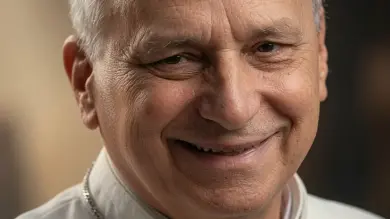
Married Priests and the Latin Mass: Pope Leo XIV Explains His Quest for Unity
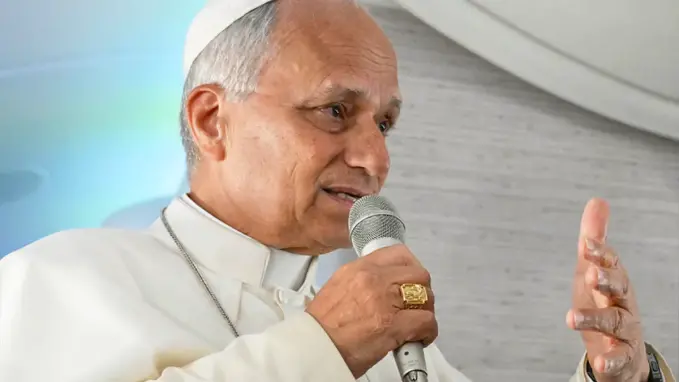
Will Pope Leo XIV ordain married priests or restore the Latin Mass? Discover his powerful words on the flight to Rome and why church unity is his priority
Will Pope Leo XIV finally open the sacred doors to ordaining married priests? For now, the answer remains a loving but firm no. The Holy Father made this perfectly clear during his heartfelt press conference on the papal flight returning to Rome, where he also compassionately explained why he will not relax the liturgical rules surrounding the traditional Latin Mass established in Traditionis Custodes. In a deeply divided world, his profound spiritual vision prioritizes ecclesial communion over rapid administrative changes. Rooted in the rich tradition of the Catholic Church, his gentle words invite every faithful believer to pause, reflect, and trust the eternal guidance of the Holy Spirit. Discover his full response and understand why healing the universal Church is his ultimate pastoral mission.
It was November 16, at the graceful conclusion of his apostolic twelve-day journey through Uruguay, Argentina, and Peru. During an intimate forty-five-minute dialogue, he patiently answered pressing questions regarding his personal health, global politics, and the interior life of the Church. However, two of his responses stand out brilliantly, capturing the immediate attention of the faithful worldwide. These specific answers provide a clear roadmap for his pontificate, illustrating his unwavering dedication to spiritual discernment, pastoral care, and the enduring truth of the Gospel.
The question regarding the Amazon region
Journalist Gerry O’Connell from America Magazine reminded him that in Pucallpa, he had told missionaries their vicariate is larger than many countries yet only has twenty-five priests. He then boldly asked if he would ordain married men to alleviate this severe shortage of clergy. This proposal is certainly not new. During the 2019 Amazon Synod, the final document requested ordaining suitable and esteemed men from the community, who have a fruitful diaconate and a stable, legitimately constituted family, for the most remote areas. That highly debated point received 128 votes in favor and 41 against, highlighting a profound desire for sacramental presence.
Months later, in February 2020, Pope Francis published the apostolic exhortation Querida Amazonia and did not specifically address that request. Instead, he fervently asked bishops to pray for vocations and to actively encourage those with a genuine missionary calling to choose the Amazon region. He emphasized that the true solution lies in a renewed evangelizing zeal rather than merely altering ancient disciplines. The Church must rely on the grace of Christ, who never abandons His flock, inspiring young hearts to embrace the radical gift of celibacy for the Kingdom of God.
This is not the only solution
Pope Leo XIV began by sharing his own rich missionary experience. When he first arrived in Peru as a young missionary, there were about fifteen or twenty American Augustinians and only two Peruvians. 'However, today there are thirty-five Peruvians,' he shared joyfully about the present reality. He added that Pucallpa, Puerto Maldonado, and Iquitos are currently among the vicariates with the highest number of flourishing vocations. This beautiful growth demonstrates that faithful witness and fervent prayer can miraculously transform spiritually barren lands into vibrant communities of faith.
Regarding the ordination of married men, his stance was incredibly direct and clear: 'It is not the only solution, and in some parts of the universal Church, it can cause deep divisions, because not everyone accepts this idea.' He also gently reminded everyone of a fundamental truth that is often overlooked in modern debates: 'The Pope does not change the doctrine of the Church. The bishops must listen.' His profound wisdom reminds us that the Magisterium serves the eternal Word of God, safeguarding the sacred deposit of faith for future generations.
Pope Leo: Unity above all else
The Holy Father carefully explained that one of his absolute priorities is 'to promote, above all, unity and communion among us as members of the Church.' He did not permanently close the door to future developments, acknowledging: 'It is possible that some things may change in the future.' However, his immediate focus remains clear. He added: 'But, for now, I believe that an important part of my ministry in the Church consists in healing and uniting people.' His pastoral proposal is to first gather, reflect on the genuine priorities, and then collectively discern how to move forward.
He humbly recognized that not everyone enthusiastically agrees with this cautious path, closing the complex topic with a profound phrase that leaves ample room for spiritual discernment: 'All these vital questions will require time, and we will move forward as the Lord guides us.' This approach beautifully echoes the enduring patience of Christ, who always accompanies His disciples on their earthly journey. By trusting in divine providence, the faithful are invited to cultivate a spirit of serene obedience, knowing that the Holy Spirit constantly protects and nurtures the beautiful bride of Christ.
The Pope regarding the Latin Mass
Journalist Jean-Marie Guénois from Le Figaro respectfully asked if he planned to relax the strict rules of Traditionis Custodes, the motu proprio with which Pope Francis limited the celebration of the Mass using the 1962 Missal, known as the traditional Latin Mass or Tridentine Mass, in 2021. That specific document establishes that the liturgical books promulgated by Saint Paul VI and Saint John Paul II are 'the unique expression of the lex orandi of the Roman Rite.'
Furthermore, it leaves the authorization of these traditional masses exclusively in the hands of the local diocesan bishop and specifically requests that they not be celebrated in regular parish churches.
We will continue applying it
Pope Leo XIV's response was remarkably serene and resolute: 'Traditionis Custodes was a definitive decision by Pope Francis, and we will continue applying it.' He thoughtfully clarified that the document itself 'contemplates the possibility of granting necessary dispensations or permitting the celebration of the mass according to the Vetus Ordo' under specific conditions.
He then explained his profound underlying reason: 'Therefore, once again, for the ultimate unity of the Church, the vast majority of Catholics in the world celebrate according to the rite of Vatican II, that of Paul VI, and we will continue doing so.' His words seek absolute harmony.
A Pope who wants to heal wounds
These two crucial answers share the exact same spiritual thread: avoiding rapid decisions that could tragically divide the universal Church, while calmly listening to what the Holy Spirit is revealing to the modern world. For some traditionalists, this might feel like a deep disappointment; for others, a profound relief. For absolutely everyone, it is a loving invitation to fiercely protect our ecclesial communion. Ultimately, the Holy Father reminds us that our shared love for Jesus Christ must always transcend our personal liturgical preferences or theological debates.
Do you think we have already had enough with this response from Pope Leo XIV on these topics? Do you believe that priests should marry or that the traditional Mass should be completely restored? We read your thoughts in the comments.
3 curious facts about the Catholic priesthood and liturgy
1. The ancient roots of priestly celibacy
While many believe mandatory celibacy was introduced in the Middle Ages, its profound roots actually trace back to the early Church. Historical councils, such as the Council of Elvira in the early fourth century, strongly demanded perfect continence from all clerics.This beautiful discipline was meant to deeply configure the priest's heart completely to Jesus Christ, offering a powerful, undivided witness of eternal love to a broken world.
2. Eastern Catholic married priests
Interestingly, the Catholic Church already has thousands of married priests in full communion with Rome. The Eastern Catholic Churches, such as the Maronite and Byzantine rites, have consistently maintained their ancient tradition of ordaining married men in their homelands. However, exactly like the Orthodox tradition, once a man is ordained as a priest, he can no longer marry, preserving a unique balance between the sacrament of matrimony and Holy Orders.
3. The origin of the Latin Mass
The traditional Latin Mass, often called the Tridentine Mass, was universally standardized by Pope Saint Pius V in 1570 following the Council of Trent. His majestic goal was to beautifully unify the Roman liturgy across Europe, ensuring theological purity and majestic reverence.For over four hundred years, this exact missal nourished the profound faith of countless saints, martyrs, and mystics throughout the entire history of Western civilization.
Finding peace in our Church's divine guidance
In a world obsessed with rapid changes and instant gratification, the measured wisdom of the Pope reminds us that the Church operates on divine time. True spiritual unity requires profound patience, sacrificial love, and an unwavering trust in the Holy Spirit's continuous presence.
As the Catechism beautifully states, the Church is a mystery deeply rooted in the Trinity. When we surrender our personal preferences and lovingly embrace the universal communion of believers, we reflect the pure light of Christ to a divided world. Let us constantly pray for our shepherds.
Prayer for Church unity and holy vocations
Heavenly Father, we humbly come before Your glorious throne to pray for the enduring unity of Your beloved Catholic Church. Send forth Your Holy Spirit to deeply illuminate the minds of our Holy Father and all bishops, that they may always shepherd Your precious flock with divine wisdom and gentle patience. We fervently ask You to awaken a multitude of holy vocations among our youth, inspiring them to joyfully consecrate their entire lives to Your eternal service. Heal all painful divisions within our spiritual family, and bind us together in the perfect bond of unconditional charity. May we always remain faithfully united in Christ. Amen.
Deepen your faith with our spiritual community
Do not let the confusing noise of the modern world disturb the profound peace of your soul today.
Join thousands of faithful believers who receive our daily reflections and continue walking steadfastly toward the eternal light of Christ's love.
True ecclesial communion is born when we place the love of Jesus above our personal debates. Every prayer you offer strengthens the mystical Body of Christ. Will you commit today to praying a daily Rosary for the Holy Father and the sacred unity of our universal Catholic Church?
❓ FAQ: Frequently Asked Questions About Pope Leo XIV's Recent Statements
During his recent press conference, Pope Leo XIV clarified that ordaining married men is not the only solution for regions lacking clergy. He emphasized that such a move could cause deep divisions within the universal Church. Instead, he invited the faithful to prioritize prayer for vocations, echoing Christ's command: "Ask the Lord of the harvest, therefore, to send out workers into his harvest field" (Matthew 9:38). Unity and careful discernment remain his primary focus.
The Holy Father stated that he will continue applying the directives of Traditionis Custodes, established by Pope Francis. He explained that this decision is fundamentally rooted in preserving the unity of the Church, as the vast majority of Catholics celebrate the modern rite. As Saint John Paul II reminded us, the liturgy must always be an expression of profound ecclesial communion, rather than a source of division among the beloved children of God.
Pope Leo XIV believes his primary ministry is to heal wounds and unite people across the globe. He recognizes that moving forward with divisive issues requires profound patience and time. According to the Catechism of the Catholic Church (CCC 813), the Church is one because of her source, her founder, and her soul. The Pope desires to reflect this divine oneness, ensuring that any future pastoral decisions are guided gently by the Holy Spirit.
The best response from the faithful is to cultivate an attitude of prayerful obedience and peaceful trust in the Holy Spirit's guidance. When we embrace the Pope’s call for communion, we actively participate in building up the Body of Christ. By focusing on our shared mission of evangelization rather than administrative disputes, we demonstrate true spiritual maturity and a sincere dedication to loving our neighbors in our everyday lives.
 Venezuelan, faithful husband and father of a family. Electronic engineer and missionary of the faith. Committed to the proclamation of the Gospel. Solid believer that there are always new beginnings. Whoever has God has nothing to stop him.
Comments
Want to leave comments and intentions on our site?
Be the first to comment.
Useful Resources
Church
Pope Leo XIV: Love is also Loss; but it bears fruit only through self-giving: Discover how true Christian hospitality and detachment can bring peace
Church
Pope Leo XIV calls for steadfast support from his cardinals during the Consistory: "I cannot carry out this ministry alone," he says, calling for communion
Church
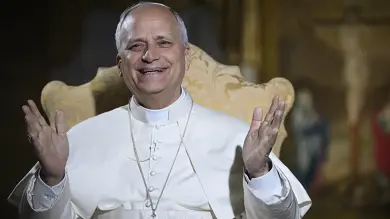
Pope Leo XIV invites the youth to seek perfect joy in God, warning that true happiness and lasting peace are never found on screens or social media platforms
Church
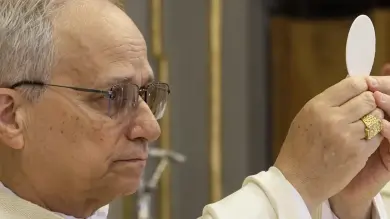
uring his General Audience, Pope Leo XIV deeply reflected on the Holy Eucharist. Discover how this sacred, living mystery actively transforms our Catholic faith
Church
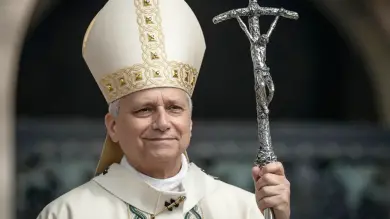
Pope Leo XIV beautifully invites us to deepen our relationship with God through daily contemplation: Discover how silent prayer forms truly credible apostles
Church
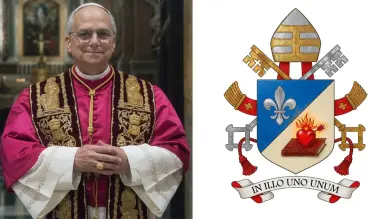
The Holy See has released the official coat of arms, signature, and portrait of Pope Leo XIV: Discover the profound spiritual meaning behind these papal symbols
Church
Cardinal Robert Francis Prevost, now Pope Leo XIV, makes history as the first American Pope: Discover his deep Peruvian heart and his inspiring spiritual life
Church