Life of Saint Cajetan of Thiene: The Holy Priest Who Defended Labor and Dignity
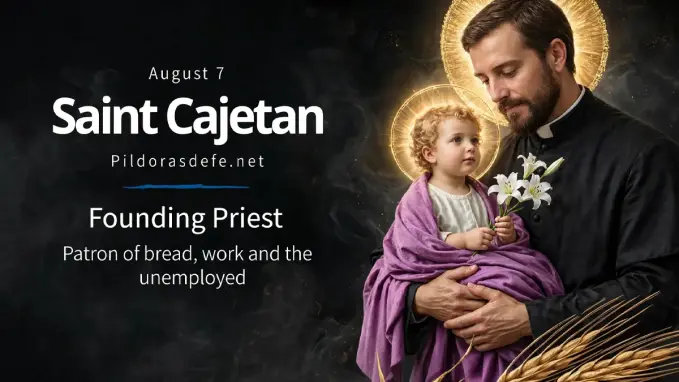
Discover the inspiring life of Saint Cajetan of Thiene, patron saint of bread and work: Learn about his miracles of Divine Providence and labor blessings
When economic instability and workplace uncertainty burden family homes, the Catholic Church invites us to lift our gaze toward Saint Cajetan of Thiene, universally honored among our most beloved patron saints for his miraculous defense of laborers and the unemployed. As our glorious Saint of the day, this sixteenth-century Italian priest revolutionized European society through radical evangelical poverty, proving that Divine Providence never abandons those who trust in God's paternal care. By renouncing his aristocratic inheritance to serve incurable patients and impoverished citizens, his priesthood became a shining beacon of social charity. Today, his heavenly intercession continues to open doors of financial peace, daily sustenance, and occupational dignity for millions of believers seeking hope amidst worldly hardships.
Feast Day: August 7
Roman Martyrology: Saint Cajetan of Thiene, the priest who in Naples dedicated himself to works of pious charity, particularly caring for those suffering from incurable illnesses. He promoted associations for the religious formation of the laity and instituted the Clerics Regular to encourage the periodic renewal of the Church, teaching his disciples the duty of observing the ancient way of life of the Apostles.
Biography of Saint Cajetan of Thiene
Saint Cajetan, deeply loved among workers, merchants, and heads of households for defending them against poverty and economic abandonment, was born in the year 1480 in the Italian city of Vicenza, within the territory of the Republic of Venice. Coming from a noble and wealthy aristocratic family, he suffered the loss of his military father when he was just a child, remaining under the spiritual guidance of his devout mother, who shaped in his soul a profound reverence for Christian virtues.
His brilliant intellect led him to study at the illustrious University of Padua, where he graduated with two doctorates in civil and canon law. There he stood out for his venerable presence, refined kindness, and genuine modesty, which earned him the affection of nobles and commoners alike. After completing his professional education, he traveled to Rome to serve in the papal court, attaining the prestigious position of private secretary and apostolic notary during the pontificate of Pope Julius II.
Despite his academic and diplomatic success, he felt an inner call to total consecration and was ordained a priest at thirty-three years of age. His holy fear of God and the immense awe he felt before the Eucharistic mystery were so profound that he allowed three full months of intense penance and prayer to pass between his priestly ordination and the celebration of his first Holy Mass.
In the Eternal City, he joined the Oratory of Divine Love, a confraternity of devout clerics and laymen who strove for an intense interior life and dedicated themselves to caring for the poor, the sick, and incurables abandoned on the streets.
Observing with sorrow that the Christian fervor of the people and the spiritual witness of the clergy had fallen into lukewarmness and relaxation, Saint Cajetan decided to found a community that would embody the original holiness of the early Christian communities. Thus were born the Clerics Regular, known as the Theatine Fathers after the city of Chieti (Teate), the episcopal see of his co-founder, Bishop Gian Pietro Carafa, the future Pope Paul IV.
In one of his most moving written testimonies, Saint Cajetan confessed to a close friend:
"I feel healthy in body, but sick in soul, when I see how Christ waits for the conversion of all, and yet so very few move to convert."
That burning desire was the inexhaustible engine of his earthly pilgrimage: to inspire every Christian to live the Gospel of Jesus Christ with total coherence across all areas of society.
The Spiritual Revolution of Saint Cajetan
During those years, historical turmoil and crises shook Europe following the rise of the Protestant Reformation led by Martin Luther, who severely attacked the authority of the Catholic hierarchy. While many limited themselves to bitterly criticizing ecclesial errors, Saint Cajetan proclaimed an imperishable truth: "The first step to reform the Church is to reform oneself."
Demonstrating that true renewal springs from personal sacrifice, he voluntarily gave away all his inherited riches to distribute among the marginalized of his time. In a letter, he revealed the depth of his Christ-centered spirituality: "I see my Christ poor, and shall I dare to continue living as a rich man? I see my Christ humiliated and despised, and shall I continue desiring honors? Oh, how I wish to weep when I see that people have no desire to imitate the Crucified Redeemer."
In the bustling city of Naples, a wealthy aristocrat attempted to gift him vast agricultural estates to secure the financial stability and sustenance of his religious community, arguing that citizens there were rarely generous. With rock-solid faith in heavenly providence, Saint Cajetan rejected the offer, exclaiming: "God is the same here and everywhere, and He has never abandoned us, not even for a minute."
To protect humble laborers and combat the ruthless exploitation of moneylenders of the era, he established the famous Mounts of Piety, Catholic charitable lending institutions that granted loans to low-income families with virtually zero interest, restoring dignity to honest work.
The absolute center of his spiritual life was persevering adoration of Jesus in the Blessed Sacrament and a tender devotion to the mysteries of the Holy Infancy of our Savior. The people of Naples venerated him with immense affection, calling him: "The little father who is very wise, but at the same time very holy." He spent every free moment washing the wounds of incurable patients at the Hospital of Santiago of the Incurables.
Miracles Through the Intercession of Saint Cajetan
History records remarkable marvels that confirm divine favor upon his absolute trust. One day at the Theatine convent, the friars lacked food entirely because they had given their last reserves to the needy. Saint Cajetan approached the Tabernacle peacefully, gently knocked on the golden door, and pleaded:
"Beloved Jesus, I remind You that we have nothing to eat today."
A few minutes later, mules laden with abundant food supplies arrived unexpectedly at the convent gates, guided by drivers who departed in silence without ever revealing the name of their benefactor.
On his deathbed, when physicians asked him to allow himself to rest on a wool mattress to ease his bodily suffering, the humble priest refused, exclaiming with unction:
"My Savior died on a rough cross. Please permit me, a poor sinner, to die upon wooden boards."
Saint Cajetan departed to the Father's house on August 7, 1547, in Naples, at sixty-seven years of age, exhausted from laboring for the salvation of souls and the social justice of his people. Immediately, countless miracles of healing and occupational providence sprang forth through his powerful intercession across the Catholic world, leading to his canonization by Pope Clement X in 1671 as the great Patron Saint of Bread, Work, and protector of the unemployed.
4 facts about Saint Cajetan of Thiene
1. The Miraculous Vision of the Holy Child Jesus
During Christmas Eve in the Basilica of Saint Mary Major in Rome, Saint Cajetan experienced a profound mystical ecstasy. As he prayed before the relic of the Holy Crib, the Blessed Virgin Mary appeared to him and placed the Infant Jesus directly into his arms.
This miraculous grace deepened his spiritual purity and ignited an enduring devotion to the mystery of the Incarnation, inspiring him to serve Christ present in the poorest children.
2. The Pioneer of Modern Christian Credit Unions
Long before modern banking reforms, Saint Cajetan recognized how usury destroyed working-class families. He established the Mounts of Piety in Naples, charitable lending institutions that offered zero-interest loans to artisans and farmers. These organizations protected the vulnerable from exploitation and evolved into the Bank of Naples.
His innovative financial model proved that Christian charity could transform economic systems, blending practical justice with deep compassion for marginalized citizens struggling to survive.
3. He Co-Founded an Order With a Future Pope
When Saint Cajetan established the Congregation of Clerics Regular in Rome, his primary co-founder was Bishop Gian Pietro Carafa of Chieti. Decades later, Carafa ascended to the papacy as Pope Paul IV.
Despite having a future Supreme Pontiff among their founding members, the Theatines remained fiercely committed to radical poverty. They took a solemn vow never to beg for alms, relying exclusively on spontaneous donations provided by Divine Providence.
4. The Tradition of Bread and Grain Shrines
Throughout Latin America and Europe, devotees traditionally bring ears of wheat, bread loaves, and job applications to shrines dedicated to Saint Cajetan on August seventh. These blessed tokens are placed in homes to symbolize trust in God's provision
Countless testimonies verify sudden employment offers and financial relief after completing his novena, solidifying his reputation as an unfailing heavenly benefactor who responds rapidly to the sincere cries of unemployed workers.
Embracing Divine Providence in Our Daily Labor
The life of Saint Cajetan challenges our modern obsession with material security and invites us into radical trust. As Saint Paul reminds us:
"My God will supply every need of yours according to his riches in glory in Christ Jesus" (Philippians 4:19).
When we consecrate our professional aspirations and financial anxieties to the Lord, honest work becomes a path of sanctification. Let us never despair during times of scarcity, for the same Providence that fed the saints will faithfully sustain our families and guide our hands.
Prayer to Saint Cajetan for Bread and Work
O glorious Saint Cajetan, venerable servant of Divine Providence and compassionate protector of households in need, I approach your heavenly intercession with childlike trust. You who renounced earthly treasures to serve the suffering Christ, look with mercy upon my professional struggles and family responsibilities. I humbly implore you to open doors of honest employment so that dignified bread may never be lacking on our table. Comfort all who suffer from unemployment, alleviate our financial anxieties, and teach our hearts to rely entirely on the paternal goodness of God. May our daily labor glorify His holy name forever. Through Christ our Lord. Amen.
Entrust Your Professional Journey to Divine Providence Today
Do not let financial anxiety or workplace uncertainty steal the peace from your home and heart.
Join thousands of believers who invoke Saint Cajetan daily, and experience the miracle of God's unfailing provision in your life.
Honoring our Saint of the day reminds us that God's mercy flows powerfully through His patron saints to bless our daily labor. When challenges arise, faith transforms uncertainty into spiritual strength and renewed hope. Are you ready to entrust your work, family needs, and future into the loving hands of Divine Providence today?
❓ FAQ: Frequently Asked Questions About the Life of Saint Cajetan
Saint Cajetan earned this title through his relentless defense of the impoverished and working classes during sixteenth-century economic crises. He established charitable credit unions called Montes de Piedad to protect families from predatory moneylenders. As the Catechism of the Catholic Church teaches, "Human work proceeds directly from persons created in the image of God" (CCC 2427), a principle he defended by ensuring every laborer received dignified sustenance and spiritual peace.
Together with Bishop Gian Pietro Carafa, who later became Pope Paul IV, Saint Cajetan founded the Congregation of Clerics Regular, historically known as the Theatines. This religious order was established in Rome to renew the Catholic Church from within through strict poverty, sacred doctrine, and apostolic zeal. They lived entirely on Divine Providence without asking for alms, demonstrating to the world that God faithfully sustains priests who dedicate themselves completely to evangelization.
Despite inheriting substantial aristocratic wealth, he gave away his entire fortune to hospitals and the destitute. He frequently reminded his brothers of Jesus' words in the Gospel of Matthew: "Seek first his kingdom and his righteousness, and all these things shall be yours as well" (Matthew 6:33). Whenever his religious community lacked daily meals, he approached the tabernacle in prayer, and miraculous provisions invariably arrived to feed both the priests and the poor.
Families experiencing unemployment, debt, or workplace anxiety can invoke Saint Cajetan through novenas, Eucharistic adoration, and acts of charity toward the poor. Devotees traditionally offer prayers on August seventh, placing their resumes or financial needs before his holy image. By imitating his surrender to God, believers discover that genuine security does not stem from material hoarding, but from active faith, honest labor, and unwavering reliance on our Heavenly Father.
Another Daily Saints.
Saint Clare of Assisi: Beloved Disciple of Saint Francis and Founder of the Poor Clares
Discover the life of Saint Clare of Assisi, patron saint of television and eye disease: A faithful disciple of St. Francis who founded the holy Poor Clares
The Feast of the Transfiguration of the Lord: Behold the Radiant Glory of Christ
Discover the mystery of the Feast of the Transfiguration of the Lord: Contemplate Christ's radiant glory on Mount Tabor and awaken your Christian faith today
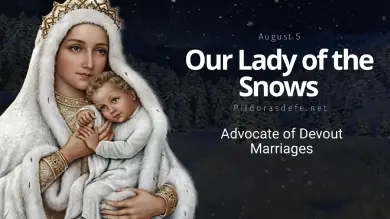
Our Lady of the Snows: The Miraculous Patroness of Rome and Protector of Marriages
Discover the glorious miracle of Our Lady of the Snows, patroness of Rome and advocate for marriages. Learn her history, devotion, and bless your home today
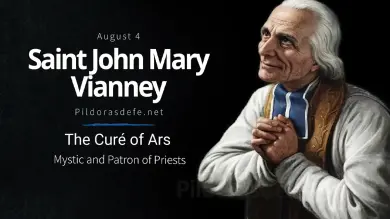
Life of Saint John Vianney: The Humble Patron Saint of Priests and Curate of Ars
Discover the inspiring life of Saint John Vianney, humble Curate of Ars and patron saint of parish priests, an eternal model of confession, prayer, and love
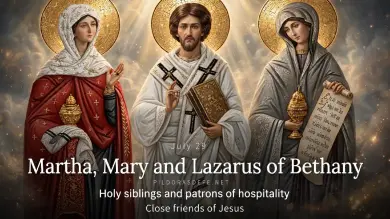
Saints Martha, Mary, and Lazarus of Bethany: Intimate Friends and Hosts of Jesus
Discover the lives of Saints Martha, Mary, and Lazarus, patron saints of hospitality: Learn how their Bethany home became a holy sanctuary of love for Jesus
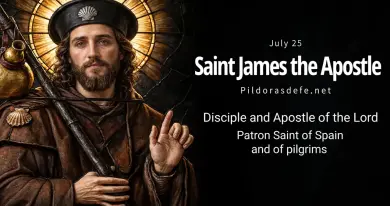
Saint James the Apostle: The Passionate Son of Thunder and First Martyr
Discover the inspiring biography of Saint James the Greater: Learn how Christ transformed this Son of Thunder into the bold patron saint of pilgrims
 Venezuelan, faithful husband and father of a family. Electronic engineer and missionary of the faith. Committed to the proclamation of the Gospel. Solid believer that there are always new beginnings. Whoever has God has nothing to stop him.
Comments
Want to leave comments or also intentions on our homepage?
Register nowBe the first to comment.
Useful Resources
Church
Pope Leo XIV: Love is also Loss; but it bears fruit only through self-giving: Discover how true Christian hospitality and detachment can bring peace
Church
Pope Leo XIV calls for steadfast support from his cardinals during the Consistory: "I cannot carry out this ministry alone," he says, calling for communion
Church
Pope Leo XIV invites the youth to seek perfect joy in God, warning that true happiness and lasting peace are never found on screens or social media platforms
Church
uring his General Audience, Pope Leo XIV deeply reflected on the Holy Eucharist. Discover how this sacred, living mystery actively transforms our Catholic faith
Church
Pope Leo XIV beautifully invites us to deepen our relationship with God through daily contemplation: Discover how silent prayer forms truly credible apostles
Church