Solemnity of Saints Peter and Paul: The Faithful Pillars of the Early Catholic Church
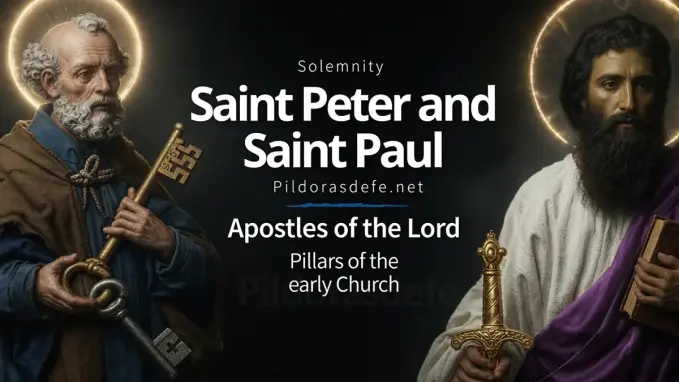
Celebrate the Solemnity of Saints Peter and Paul 🗝️ Discover how these fundamental pillars spread the Gospel and built the early Christian Church with faith
Have you ever wondered how a humble fisherman and a fierce persecutor transformed the Roman Empire and laid the unshakeable foundation of the Catholic faith? The Solemnity of Saints Peter and Paul is not just a historical commemoration; it is a profound celebration of grace, radical conversion, and the triumph of the Gospel. These two men represent the beautiful unity in diversity of the early Church. Peter, the solid rock of apostolic succession, and Paul, the tireless missionary to the Gentiles, teach us that God calls the imperfect to achieve the impossible. As we honor their glorious martyrdom in Rome, we are reminded that their spilled blood became the fertile seed of Christianity, inviting us to live with the same unwavering courage today.
The Solemnity of Saints Peter and Paul is a sacred liturgical feast honoring the martyrdom suffered in Rome by the Lord's apostles, Peter and Paul. The celebration is of very ancient origin, with the selected date marking the anniversary of their death or the translation of their relics. Saint Peter was one of the twelve apostles of Jesus Christ and spent most of his life preaching the Gospel. He died by crucifixion around 67 A.D. and is revered as the first Pope of the Church. Meanwhile, Saint Paul, formerly known as Saul of Tarsus, converted to Christianity on the road to Damascus shortly after the death of Jesus Christ. He became an incredibly influential leader in the Christian Church and was beheaded around 67 A.D., shortly after the execution of Saint Peter.
Feast day: June 29
Roman Martyrology: Solemnity of Saints Peter and Paul, Apostles. Simon, son of Jonah and brother of Andrew, was the first among the disciples to confess Christ as the Son of the living God, and for this, he was called Peter. Paul, Apostle to the Gentiles, preached Christ crucified to both Jews and Greeks. Through the power of faith and their immense love for Jesus Christ, both proclaimed the Gospel in the city of Rome, where, during the reign of Emperor Nero, they both suffered martyrdom (1st century). Peter, as tradition narrates, was crucified upside down and buried in the Vatican, near the Triumphal Way; and Paul was beheaded and buried along the Ostian Way. On this day, their triumph is celebrated throughout the entire world with profound honor and veneration.
Saints Peter and Paul
This magnificent feast, celebrated on June 29, commemorates the martyrdom of two remarkable saints, the two great Apostles: Saint Peter and Saint Paul.
Peter was chosen by the Lord to be the leader of the apostles, the solid rock upon which the Church would be built, thus becoming the very first Pope. On the other hand, Paul, previously known as Saul, converted to Christianity on the road to Damascus when the Lord appeared to him and accused him of being a persecutor. Sacred tradition tells us that they were martyred by order of the cruel Emperor Nero.
The Feast of Saints Peter and Paul is, at the same time, a grateful memorial of the great witnesses of Jesus Christ and a solemn confession for the Church: one, holy, catholic, and apostolic. They were true witnesses of what they proclaimed, always pursuing divine justice and faithfully confessing the Holy Gospel.
Even though they suffered martyrdom on different days, they are celebrated in the same feast because they are fundamental pillars in the propagation of the Good News of Jesus Christ. Saint Peter died first, and Saint Paul followed shortly after. Let us cherish their faith, their lives, their labors, their sufferings, their glorious confession of faith, and their preaching.
Biography of Saint Peter
In the Gospel of Matthew, we find the powerful passage where the Lord grants Peter primacy over His Church: "And I say to you, you are Peter, and upon this rock I will build my church, and the gates of the netherworld shall not prevail against it" (Matthew 16:18).
The Catechism of the Catholic Church reminds us that Peter's pastoral office is the foundation of the Church's visible unity (CCC 882). He did not rely on his human strength, but on the grace bestowed by the Holy Spirit. As Saint Ambrose powerfully declared, 'Where Peter is, there is the Church.' This divine mandate guarantees that Christ's truth remains safeguarded throughout all centuries.
His life holds a deeply privileged place in the Gospels of the New Testament and in the Acts of the Apostles. He was originally called "Simon, son of Jonah." Nowhere in the Scriptures are his parents' names mentioned, but we know he was born in Bethsaida, a lively town on the Sea of Galilee.
The apostle Andrew, who first brought him to Jesus, was his brother. Simon was renamed "Peter" (Rock) by Jesus to indicate that upon him, the Church of Jesus would be unbreakably built.
We also know that Peter was a married man, although we do not know if his wife was alive during his ministry, as the Gospel only mentions that he lived with his mother-in-law. He and Andrew were humble fishermen, called by Jesus to be His disciples at the same time as James and John, the sons of Zebedee.
Saint Peter held a position of tremendous honor among the Apostles and clearly stood out in five key moments of Jesus' ministry:
- When Peter boldly confessed that Jesus was the "Messiah, the Son of the living God," Jesus told him: "...upon this rock I will build my church."
- When he, along with James and John, was chosen to witness the glorious Transfiguration of the Lord.
- After the Last Supper, Peter, along with James and John, was a witness to Jesus' painful agony in the Garden of Gethsemane.
- When Jesus was betrayed, Peter drew his sword to defend Him, but later that same night, he would deny Him three times, exactly as Jesus had foretold.
- After the resurrection, Jesus appeared to the Apostles by the Sea of Galilee. Jesus prompted Peter to confess his love three times, redeeming his denials and instructing him: "Feed my sheep."
Saint Peter suffered martyrdom under the brutal reign of Emperor Nero. He was crucified in the year 64 A.D. upside down, because he declared himself completely unworthy to die in the exact same manner as Christ. His sacred body was buried on the Vatican hill, where later excavations revealed his tomb precisely on the site where St. Peter's Basilica now stands. He is traditionally recognized as the first bishop of Rome.
Biography of Saint Paul
The second pillar of the propagation of early Christianity is Paul of Tarsus, originally known as Saul of Tarsus, and often referred to as the 13th Apostle.
Paul's magnificent epistles continue to nourish the spiritual life of millions across the globe. He understood that true freedom is found in complete surrender to the Lord, proclaiming, 'I can do all things in him who strengthens me' (Philippians 4:13). Saint John Chrysostom praised him as a man whose soul was larger than the world, driven solely by the burning desire to bring every soul to Jesus Christ.
Saint Paul was born around the same time as Our Lord. He made himself known as the Apostle to the Gentiles. Paul never met Jesus during His earthly ministry, but he became His most faithful Apostle due to a miraculous event famously known as the road to Damascus.
Saul, the devout Jew, hated and fiercely persecuted Christians as heretics; he was even present at the tragic stoning of Saint Stephen, the protomartyr. On his way to Damascus, intending to arrest a group of Christians, the most famous conversion in the history of Christianity took place.
The Book of the Acts of the Apostles narrates this staggering event (Acts 9:1-9). Saul is thrown to the ground by a blinding, brilliant light coming directly from Heaven. The light was so overwhelming that Saul was struck blind. He heard the voice of Jesus Christ saying: "Saul, Saul, why are you persecuting me?" to which Saul replied: "Who are you, Lord?" and Jesus answered: "I am Jesus, whom you are persecuting." Then Jesus instructed him to go into Damascus, where he would be told what to do. Saul, now completely blind, did not eat or drink for three days. In Damascus, the Lord sent a faithful disciple named Ananias to him, who restored his vision, filled him with the Holy Spirit, and baptized him.
After being baptized, Saul changed his name to Paul to reflect his entirely new identity in Christ, and he immediately began traveling and preaching about Jesus in the synagogues of Damascus. The Jews conspired to kill him, but he escaped with the clever help of some Christians who lowered him in a basket from the top of the city wall.
Many Christians view the Apostle Paul as a profoundly important interpreter of Jesus' teachings. He is widely considered the most vital disciple of Jesus and, next to Jesus Himself, the most significant figure in the early development of Christianity.
Three years after his radical conversion, Saint Paul traveled to Jerusalem to meet with Peter and stayed with him for fifteen days.
The Apostle Paul was executed in Rome during the horrific persecution by the mad emperor Nero. Nero's persecution of Christians lasted for four brutal years, from 64 to 68 A.D. It was also during this terrible persecution that the Apostle Peter was executed.
As a Roman citizen with the legal right to a swift death, Saint Paul was beheaded with a sword near Rome, possibly on this very day, June 29, in the year 67 A.D.
Saint Paul was the most remarkable of the early Christian missionaries, standing alongside Saint Peter. His body was reverently buried in the catacombs along the Via Appia, where it remained until it was later moved by Lucina and Pope Cornelius to the crypts of Lucina.
Both apostles, handpicked by our Lord, were absolutely instrumental in the rapid spread and steadfast growth of the early Church through their unmatched boldness, spiritual strength, and the divine wisdom provided by the Holy Spirit.
In this way, Saints Peter and Paul are universally recognized as the towering pillars of the Church, having offered absolutely everything, even unto death, for the glorious cause of the Gospel of Christ. Saints Peter and Paul, pray for us.
4 facts about Saints Peter and Paul
1. The inverted crucifixion of Saint Peter
When facing his execution under Emperor Nero, Saint Peter requested to be crucified upside down. He felt a profound sense of unworthiness to die in the exact same manner as his beloved Savior, Jesus Christ. This ultimate act of humility remains one of the most powerful testimonies of his deep contrition and reverent love for the Lord.
2. Saint Paul's Roman citizenship
Unlike Peter, Saint Paul was a Roman citizen by birth. This privileged legal status granted him specific rights throughout the Roman Empire, including a swift execution by beheading rather than the agonizing and prolonged torture of crucifixion. His citizenship was instrumental in allowing him to travel extensively and appeal his trials directly to Caesar.
3. The shared feast day
Although historical evidence suggests they may have been martyred on different days or even different years, the Church celebrates them together on June 29. This ancient tradition dates back to the year 258, highlighting their inseparable spiritual brotherhood and their united role as the twin founders of the Roman See.
4. The resting places of the Apostles
The monumental St. Peter's Basilica in the Vatican is built directly over the actual tomb of Saint Peter, fulfilling Christ's prophecy that he is the rock of the Church. Meanwhile, the Basilica of Saint Paul Outside the Walls houses the mortal remains of the Apostle of the Gentiles, resting peacefully along the ancient Ostian Way.
Prayers for the Feast of Saints Peter and Paul
Below we present 3 powerful prayers for the Feast of Saints Peter and Paul, beloved apostles of the Lord.
Prayer to Saints Peter and Paul #1
Lord our God, grant us, we pray, that we may be sustained by the intercession of the blessed Apostles Peter and Paul, so that, just as through them you gave your Church the foundations of her heavenly office, in the same way, you may, through them, help her toward eternal salvation. Through our Lord Jesus Christ, your Son, who lives and reigns with you in the unity of the Holy Spirit, one God, forever and ever. Amen. (Source: Roman Missal)
Prayer to Saints Peter and Paul #2
O God, who on the Solemnity of the Apostles Peter and Paul, grant us the noble and holy joy of this day, we pray that you allow your Church to follow in all things the teaching of those through whom she received the beginnings of true religion. Through our Lord Jesus Christ, your Son, who lives and reigns with you in the unity of the Holy Spirit, one God, for ever and ever. Amen. (Source: Roman Missal)
Prayer to Saints Peter and Paul #3
O holy Apostles, Saint Peter and Saint Paul, I choose you today and always to be my special patrons and advocates; to you, Saint Peter, Prince of the Apostles, because you are the Rock upon which Almighty God has built His Church; to you, Saint Paul, because you were chosen by God as the Vessel of election and the Preacher of truth throughout the world. I implore you to obtain for me a living faith, a firm hope, and an ardent love; a complete detachment from myself, a disregard for worldly vainness, patience in adversity, humility in prosperity, attention in prayer, purity of heart, a right intention in all my works, diligence in fulfilling the duties of my state in life, constancy in my resolutions, resignation to the will of God, and perseverance in the grace of God until death; so that, through your intercession and your glorious merits, I may overcome the temptations of the world, the flesh, and the devil, and be made worthy to appear before the supreme and eternal Shepherd of souls, Jesus Christ, who with the Father and the Holy Spirit lives and reigns for ever and ever, to enjoy His presence and love Him eternally. Amen.
Embracing the legacy of the Apostles today
The extraordinary lives of Saints Peter and Paul remind us that God does not choose the perfect, but rather perfects the chosen. Their profound legacy challenges us to step out of our comfort zones, overcome our past failures, and boldly proclaim the Gospel to a broken world.
Let us carry their unshakeable faith in our hearts, trusting that the same Holy Spirit who empowered them is alive and actively working within us today. As Pope Benedict XVI beautifully stated, "The Church is always built upon the foundation of the Apostles."
Prayer for the intercession of Saints Peter and Paul
O Almighty and eternal God, who bestowed upon your Church the magnificent joy of this Solemnity, we humbly ask for the powerful intercession of your blessed Apostles, Peter and Paul. Just as they heroically shed their blood to plant the seeds of truth, grant us the courage to witness your boundless love daily.
Og God, purify our intentions, strengthen our wavering faith, and bind us together in the inseparable unity of your Holy Spirit. Protect the Holy Father, guide our spiritual leaders, and help us overcome the turbulent storms of this modern world. May we, inspired by their glorious martyrdom, faithfully proclaim your Gospel and attain the eternal Kingdom. Amen.
Build your faith upon the Rock of Christ
Do not let the distractions of this modern world weaken your apostolic zeal. Stand firm in the truth and let your life become a courageous testimony of God's infinite mercy.
Share this inspiring message with your parish community and invite others to discover the unparalleled strength of Saints Peter and Paul.
When we surrender our fears to God, He transforms our deepest weaknesses into glorious victories for His Kingdom. The apostles proved that true strength lies in absolute trust. Are you ready to embrace your divine calling and become a fearless pillar of faith in your own community today?
❓ FAQ: Frequently Asked Questions About Saints Peter and Paul
We celebrate them together because they are the two foremost pillars of the early Church. Though they had different missions, Peter to the Jews and Paul to the Gentiles, their united witness built the foundation of our faith. Saint Augustine beautifully noted that "one day is assigned for the celebration of the martyrdom of the two apostles," symbolizing their inseparable brotherhood in Christ.
Changing Simon's name to Peter, meaning "Rock," established his unique role as the first Pope. Jesus declared, "You are Peter, and upon this rock I will build my church" (Matthew 16:18). The Catechism of the Catholic Church explains that this name change signifies his new mission as the unshakeable foundation of the faithful, holding the keys to the eternal Kingdom of Heaven.
Saint Paul's radical conversion on the road to Damascus transformed him from a fierce persecutor into the greatest missionary. His profound encounter with the Risen Christ expanded the Church's reach to the Gentile world. As he wrote to the Galatians, "It is no longer I who live, but Christ who lives in me" (Galatians 2:20). His epistles remain central to Catholic theology.
Their martyrdom teaches us the ultimate cost and unparalleled joy of discipleship. Both apostles willingly sacrificed their earthly lives in Rome out of absolute love for the Gospel. Tertullian famously declared that "the blood of the martyrs is the seed of the Church." Their supreme sacrifice inspires modern Catholics to remain steadfast in faith, embracing our crosses with courage, hope, and unwavering devotion.
Another Daily Saints.
Saint Clare of Assisi: Beloved Disciple of Saint Francis and Founder of the Poor Clares
Discover the life of Saint Clare of Assisi, patron saint of television and eye disease: A faithful disciple of St. Francis who founded the holy Poor Clares
Life of Saint Cajetan of Thiene: The Holy Priest Who Defended Labor and Dignity
Discover the inspiring life of Saint Cajetan of Thiene, patron saint of bread and work: Learn about his miracles of Divine Providence and labor blessings
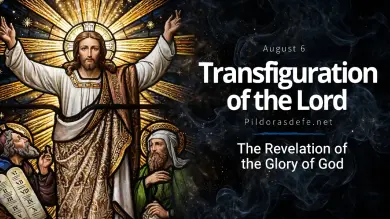
The Feast of the Transfiguration of the Lord: Behold the Radiant Glory of Christ
Discover the mystery of the Feast of the Transfiguration of the Lord: Contemplate Christ's radiant glory on Mount Tabor and awaken your Christian faith today

Our Lady of the Snows: The Miraculous Patroness of Rome and Protector of Marriages
Discover the glorious miracle of Our Lady of the Snows, patroness of Rome and advocate for marriages. Learn her history, devotion, and bless your home today
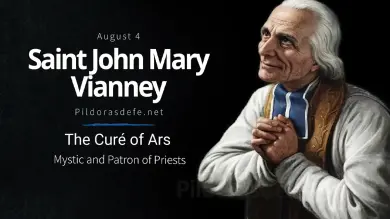
Life of Saint John Vianney: The Humble Patron Saint of Priests and Curate of Ars
Discover the inspiring life of Saint John Vianney, humble Curate of Ars and patron saint of parish priests, an eternal model of confession, prayer, and love
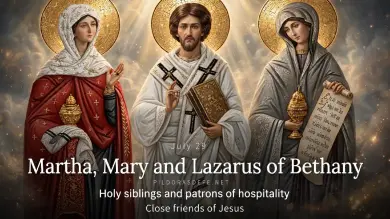
Saints Martha, Mary, and Lazarus of Bethany: Intimate Friends and Hosts of Jesus
Discover the lives of Saints Martha, Mary, and Lazarus, patron saints of hospitality: Learn how their Bethany home became a holy sanctuary of love for Jesus
 Venezuelan, faithful husband and father of a family. Electronic engineer and missionary of the faith. Committed to the proclamation of the Gospel. Solid believer that there are always new beginnings. Whoever has God has nothing to stop him.
Useful Resources
Church
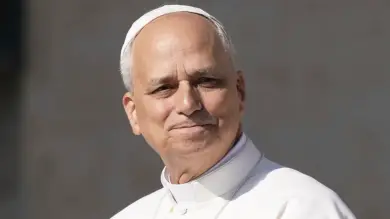
Pope Leo XIV: Love is also Loss; but it bears fruit only through self-giving: Discover how true Christian hospitality and detachment can bring peace
Church
Pope Leo XIV calls for steadfast support from his cardinals during the Consistory: "I cannot carry out this ministry alone," he says, calling for communion
Church
Pope Leo XIV invites the youth to seek perfect joy in God, warning that true happiness and lasting peace are never found on screens or social media platforms
Church
uring his General Audience, Pope Leo XIV deeply reflected on the Holy Eucharist. Discover how this sacred, living mystery actively transforms our Catholic faith
Church
Pope Leo XIV beautifully invites us to deepen our relationship with God through daily contemplation: Discover how silent prayer forms truly credible apostles
Church