You may have hidden idols at home without knowing it. An exorcist explains lucky charms, occult objects, and how to cleanse your house with Catholic faith
Have you ever felt a strange heaviness in the atmosphere of your home, as if an invisible shadow were stealing your daily peace? You may walk past them every day without suspicion: a charm above the door, a crystal on the shelf, a figurine sold as good energy. Yet hidden idols at home can quietly drain household peace, weaken trust in God, and open the door to superstition, syncretism, and spiritual oppression. Catholic tradition calls us to spiritual discernment, home cleansing, and fidelity to the first commandment, not fear, but clarity. An exorcist's guidance helps families spot occult objects, renounce magical thinking, and restore the domestic church to Christ. If restlessness, quarrels, or fear linger where lucky symbols sit, this is your moment to inspect the heart of your home, break false attachments, and choose the living God again with a clean conscience.
What is an idol?
An idol can be any object you value above God, trusting it to control one area or every part of your life. It may also be anything to which you give your heart and mind more than to the Lord, attributing to it a special power it does not possess. When that happens, the object stops being decoration and becomes a rival throne inside the soul, even if no one in the family names it openly as worship.
Idols are not limited to statues. Anything that absorbs nearly all your energy and focus can become one: sex, money, fame, a relationship, career success, academic achievement, social media validation, or the constant pursuit of security. The form changes, but the movement of the heart is the same: looking for salvation where only God can grant it.
What makes idolatry deceptive is that idols often look harmless at first glance. Idolatry happens when we direct our deepest trust toward something other than God, as if it held a mysterious force able to secure our well-being. That is why two homes can display similar objects, yet only one has turned them into a refuge against fear, illness, or uncertainty.
St. Augustine taught that our hearts are restless until they rest in God. When an object or habit receives the worship only the Creator deserves, the soul slowly loses its anchor and begins to negotiate with anxiety. Spiritual health, therefore, begins with honest questions, not panic, but with truth spoken in prayer before any object is removed from a shelf.
Idols according to the Bible
Scripture offers the clearest lens for understanding idols today. One passage answers three urgent questions believers still ask in every generation: What is an idol? Why is it dangerous? What forms does it take in modern homes, pockets, and imaginations? When we read with the Church, we are not hunting superstition; we are recovering the primacy of God.
"Put to death, then, the parts of you that are earthly: immorality, impurity, passion, evil desire, and the greed that is idolatry. Because of these, the wrath of God is coming upon the disobedient." (Colossians 3:5-6)
As we see, idols are not only objects credited with supernatural power. They are also inner attachments that enslave the will and distance us from God's love. Greed itself can become idolatry, which means a person may fall without owning a single amulet, simply by organizing life around possession rather than around the Lord who gives all good things.
"You shall not bring any abominable thing into your house and become accursed with it; you shall detest and abominate it, for it is under a ban." (Deuteronomy 7:26)
This command is not about material things alone. We can also bring adultery, greed, lies, or envy into the home through habits and relationships. Still, Scripture is explicit: some objects must be rejected when we treat them as if they shared in God's sovereignty. The house of a believer is meant to be a domestic church, not a storage room for competing powers.
The Catechism teaches that idolatry divinizes what is not God and turns away from the living Lord (CCC 2112-2114). That doctrinal clarity protects families from confusing culture with consecration, and it gives parents a language children can understand when something pretty must be removed for the sake of faith, even if relatives call the decision exaggerated or disrespectful toward tradition.
Idols in your home
In an article published on the Portaluz website, an exorcist explains that you may have idols in your house without knowing it, and he also teaches how to cleanse your home of idols.
His counsel reaches many Catholics who sincerely love God yet keep symbols of protection inherited from relatives, neighbors, or popular culture. The problem is rarely malice; it is often ignorance mixed with fear of illness, poverty, or conflict. That is why discernment must be pastoral and clear, helping the family distinguish decoration from dependence on powers that are not Christ.
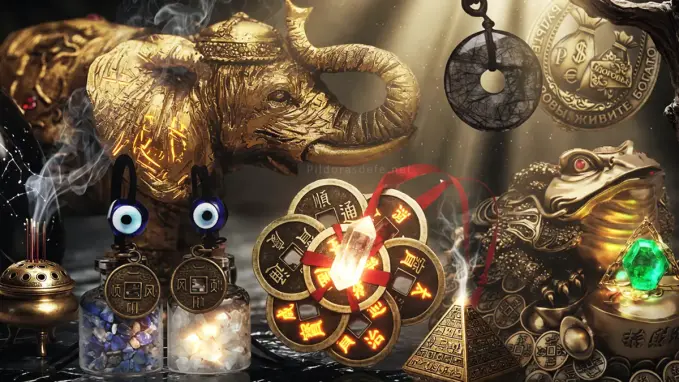
Look around your home with calm attention and ask whether any of the following objects occupy a place of honor, receive gestures of trust, or were placed to prevent harm. The goal is not to create fear, but to see clearly what has been silently teaching your family where to place hope when trials arrive.
- Is an elephant with its trunk raised the main decoration in your living room?
- Is there a horseshoe behind your door?
- Do golden toads sit in several corners of your house?
- Is your home decorated with quartz stones, pendulums, or skulls?
- At bedroom entrances, is aloe tied with red ribbons always present?...
"Get rid of them, cleanse your home and your family of every object of idolatry, because far from bringing luck, fortune, and protection, you are turning your back on God and heading straight toward initiating a relationship with the world of Satan."
That is what Fr. Guillermo Barba Mojica states in this interview. He serves as coordinator of exorcists for the Archdiocese of Mexico, according to the church website that published the report.
Read in the light of the Gospel, his words are not a call to paranoia, but to repentance. When an object is kept to manipulate fate, the heart slowly learns to negotiate with fear instead of praying with filial trust. Removing such items is therefore an act of faith that protects children, strengthens marriage, and restores the home as a place where Christ is recognized as Lord without competition or secret reliance on symbols.
His warning is pastoral, not sensational: when a baptized home trusts charms more than Christ, faith becomes fragile and peace grows unstable. Cleansing is therefore an act of love, not superstition in reverse. Many families discover that arguments, insomnia, or dread lose intensity once objects tied to magical promises are removed with prayer and priestly guidance.
Why idols are abominations
The gravest danger of these practices is that they despise faith; worse still, they wound our relationship with the God of love and mercy who cares for us with an everlasting love. We place idols, objects credited with supernatural power, where only God should reign, the priest emphasizes.
Fr. Guillermo explains that, as Deuteronomy teaches, such pagan customs are abominations before the Lord your God. To practice them is to break the first commandment:
"The Lord our God is Lord alone! You shall love the Lord your God with all your heart, with all your soul, with all your mind, and with all your strength." (Mark 12:29-30)
He adds that man, tempted to control life and the future, one motive behind these objects, usurps a place that belongs to God alone. The desire to manage outcomes without surrender to Providence is ancient, yet it becomes especially visible when charms are treated as guarantees against harm, illness, or financial collapse.
Pope Francis writes in the apostolic exhortation Lumen Fidei:
"The idol is a pretext for putting oneself at the centre of reality, adoring the work of one's own hands."
This is intensified by religious syncretism, New Age culture, and neopagan trends. Many Catholics who do not know their faith well become vulnerable to an atmosphere shaped by sin.
The root problem is ignorance of Christ and the Gospel. Evangelization is urgent: baptized persons distant from the sacraments and from Scripture may fall into idolatry, trusting objects they even treat as powers before which they bow.
When faith is weak, superstition offers quick language and visible rituals, which is why pastors insist on Scripture, catechesis, and the sacraments. A home educated in the Gospel recognizes sooner when an innocent ornament has become a silent teacher of fear, and it knows how to turn again to the living God without shame, trusting that repentance always opens more space for peace than concealment does.
Fr. Guillermo now answers questions every believer should keep in mind when practicing the faith. His responses are especially important for parents, because children imitate not only what adults say about God, but what adults fear, hide, kiss, or refuse to remove when grace asks for a clean conscience in the home. What adults tolerate today, children often sanctify tomorrow without ever hearing the name of Christ proclaimed as Lord.
When the first commandment is wounded, every other duty becomes unstable, because the soul no longer knows whom it serves. That is why the Church speaks bluntly here: not to shame families, but to free them from attachments that promise control and deliver dependence, slowly teaching children that safety comes from symbols instead of from the Eucharist and prayer.
Can objects be linked to sin without being noticed?
Anything that tries to replace God can do so, from a sentimental keepsake we idolize to something we prize more than life itself. Often these are simple objects meant to feed the ego, even though no creature holds authority over man unless it comes from God, and He does not grant authority to objects. The danger grows quietly when we kiss, hide, or rearrange an item during every crisis, as if it were a person who could hear us.
Discernment asks a plain question: does this item draw me to prayer, charity, and the sacraments, or does it make me negotiate with fear? If the second, it already competes with the first commandment, even when it looks decorative. Many sins enter unnoticed because they arrive dressed as tradition, gift, or "harmless culture," until the heart depends on them.
Should the faithful be warned about these idols?
As Pope Francis teaches in the encyclical Lumen Fidei, the Church does not combat superstition with slogans, but with encounter. Warning the faithful is therefore an act of charity, because many baptized persons drift into idolatry without recognizing the shift until peace has already weakened in the family, and by then charms feel indispensable rather than optional:
"Faith, as it breaks with idolatry, is a conversion to the living God, to the God who encounters us in Jesus Christ."
Therefore, the only path to uproot superstition and idolatry is a living, personal encounter with Jesus Christ through the kerygmatic proclamation of the Gospel, followed by solid catechesis. Warning without encounter rarely heals; encounter with truth liberates. Parents, catechists, and pastors serve families best when they name the risk clearly and then lead them to Christ, not merely to rules that never touch the heart or free the home from hidden rivals.
How idols affect households
Objects of idolatry can become a strategy to weaken believers' faith. By placing trust in them, a person may open the way to the realm of Satan, because whoever relies on them ceases to be a true believer and becomes merely credulous. The Catechism warns that superstition disrespects the sovereignty of God and can prepare the heart to accept lies as protections (CCC 2110-2111).
There is also psychological harm. Some people develop an unhealthy fixation on these objects, even experiencing auditory or visual disturbances, which reinforces magical thinking and can escalate into family-wide distress. Children learn quickly what adults fear, and fear taught by charms is rarely neutral; it shapes imagination for years, teaching them to seek control before seeking God in prayer.
Economic harm follows as well, because families often spend heavily on rituals, amulets, and consultations. The Church warns clearly in the Catechism that we must guard against such temptations (CCC 2110-2117). Money given to superstition is often money taken from charity, education, or sacramental life, which deepens the wound in already strained homes and quietly teaches children that protection must be purchased rather than received as grace.
Household peace is not built on symbols, but on Christ's lordship, daily prayer, and the sacramental life. When charms replace that foundation, anxiety usually grows, not protection. Couples may argue more, sleep may break, and prayer may feel distant, not because God abandoned the home, but because a rival claim was welcomed at the door.
Should these idols be removed?
A step toward conversion is renouncing objects of idolatry, not only inwardly but explicitly. One sign of renunciation is destroying them so others are not drawn into the same error. The best practice is to bring them to a priest, who may offer a brief prayer of liberation and advise the proper way to dispose of them. Confession and family prayer should accompany the act, so the house is not only cleaned, but spiritually reordered under Christ.
Renunciation is not contempt for culture, but love for souls. A home set free from hidden idols becomes again a domestic church, where Christ, not fear, sets the tone of daily life. After removal, families should replace empty spaces with a crucifix, Scripture, holy water, and regular prayer, so the heart does not refill the gap with new superstitions.
4 striking facts about idols in the home
1. The Catechism names idolatry a constant temptation
The Church teaches that idolatry is not only ancient pagan worship; it remains a permanent temptation for believers today, because the human heart easily divinizes what is not God (CCC 2113). This is why a Catholic home needs ongoing discernment, not a one-time cleanup, especially when popular culture normalizes charms as wellness, energy, or personal protection. What enters through social media and gifts can teach children a theology without words.
2. Pope Francis links idols to self-worship
In Lumen Fidei, Pope Francis writes that the idol becomes a pretext for placing oneself at the center of reality. Many lucky objects function that way, quietly shifting trust from God to human control, so that man begins to adore the work of his own hands rather than the Creator who gives life. That is why spiritual writers repeat: the first idol is often the self, and the second is whatever the self uses to feel safe.
3. Scripture forbids bringing abominations home
Deuteronomy 7:26 forbids introducing abominable things into one's house. Catholic exorcists apply this pastorally to occult items kept for protection, not as archaeology, but as active trust in another power. The text reminds us that what enters the home can shape the conscience of everyone who lives there, especially children who learn religion by watching what parents fear, kiss, hide, or refuse to remove.
4. Faith is described as a departure from idols
Lumen Fidei presents faith itself as breaking with idolatry and returning to the living God through a personal encounter with Jesus Christ. That is the path the Church proposes instead of fear-based rituals, and it explains why catechesis and sacramental life are more effective than superstitious replacements. Encounter precedes cleanup, yet cleanup confirms that encounter in the concrete choices of daily family life.
Choose the living God over hidden charms
Your home should echo the Shema, not the marketplace of superstition. When you remove what competes with God, you make room for peace, sacramental life, and courage. The Lord does not abandon those who repent with sincerity, even if the process feels uncomfortable or relatives resist the change. A cleansed house is not empty; it is prepared for Christ to reign without rivals in every room and every heart that dwells beneath its roof. As Scripture says:
"Children, be on your guard against idols" (1 John 5:21).
Prayer to cleanse the home from idols
Lord Jesus Christ, You alone are holy and worthy of adoration. Enter my home with Your light and reveal anything I have kept out of fear, habit, or false hope.
I renounce every idol, charm, and occult object that has taken Your place, and I ask Your mercy for me and for my family. Free our hearts from superstition, syncretism, and magical thinking. Make this house a domestic church where Your name is blessed, Your peace is guarded, and Your love guides our decisions.
I believe You are the living God who saves, and I entrust my home to You now. Amen.
Today, open your doors to Christ alone
Walk through your home with honest eyes. Remove what you have trusted above God, and do not postpone the freedom He is offering you now.
Bring what must be renounced to a priest, pray with your family, and let this house breathe faith again, because peace returns where the living God is welcomed without rivals.
Grace begins with one truthful step, and that step is available today. Walk slowly through each room, name what troubles your conscience, and ask Jesus for courage to choose Him without delay. Will you inspect your home this week and invite your family to pray so Christ reigns without rivals in every room?
❓ FAQ: Frequently Asked Questions About Hidden Idols at Home
An idol is anything that receives the trust and devotion belonging to God alone, whether an object, habit, relationship, or fear-driven ritual. The Catechism teaches that idolatry divinizes what is not God (CCC 2113). Lucky charms, occult décor, and protective symbols kept for power can become idols even when they appear decorative, cultural, or harmless to visitors.
Culture and faith can coexist when an item carries no spiritual claim and does not promise protection, luck, or control over the future. The problem begins when an object is credited with power greater than God. Deuteronomy 7:26 warns against bringing abominable things into the house. Discernment with a priest helps families distinguish art, heritage, and decoration from active superstition that shapes daily choices.
Fr. Guillermo Barba Mojica explains that trusting charms can turn the heart away from God and open a person to spiritual harm. His warning is pastoral clarity, not panic: renounce idolatry, cleanse the home, and return to Christ through prayer and the sacraments. The Church presents this as part of conversion, because what we keep for protection often becomes the teacher of our fears.
Renunciation should be explicit, not only interior. The article recommends bringing items to a priest for a brief prayer of liberation and guidance on proper disposal, which may include destruction so others are not led into the same practice. As Scripture teaches, put to death what is earthly, including greed, which is idolatry (Colossians 3:5). This act honors the first commandment with concrete freedom.
Pope Francis teaches that faith breaks with idols through encounter with the living God in Jesus Christ (Lumen Fidei). Kerygmatic proclamation, Scripture, sacramental life, and solid catechesis uproot superstition more effectively than fear alone. A home rooted in daily prayer becomes a domestic church where Christ, not charms, guards conscience, marriage, children, and lasting peace.
 Venezuelan, faithful husband and father of a family. Electronic engineer and missionary of the faith. Committed to the proclamation of the Gospel. Solid believer that there are always new beginnings. Whoever has God has nothing to stop him.
Useful Resources
Aprende sobre tu fe

The glorious mystery of the Holy Trinity has challenged theologians for ages. Discover five essential truths about the Father, Son, and Holy Spirit right now
Caminando en la fe

Saint Philip Neri beautifully teaches us the profound power of penance in confession with a simple anecdote: Discover the severe penance nobody wants to do
Caminando en la fe

The Holy Spirit is the silent, effective protagonist of all salvation history: Discover 7 essential things you must firmly know about the master of your heart
Caminando en la fe

The Glorious Feast of Pentecost commemorates the descent of the Holy Spirit and the powerful birth of the Church. Discover 9 essential facts about it right now
Caminando en la fe

Discover 10 powerful facts about Pentecost and the descent of the Holy Spirit: Open your weary heart to the transforming fire of divine love right now
Aprende sobre tu fe
The late Chief Exorcist Father Gabriele Amorth explains what an evil hex is and exactly how to defend yourself from dark forces using prayers of liberation
Caminando en la fe

The Sacrament of Confession brings forgiveness, healing and peace to your soul. Discover its benefits and how regular confession draws you closer to God's grace
Caminando en la fe