Solemnity of the Nativity of Saint John the Baptist: The Great Forerunner of Christ
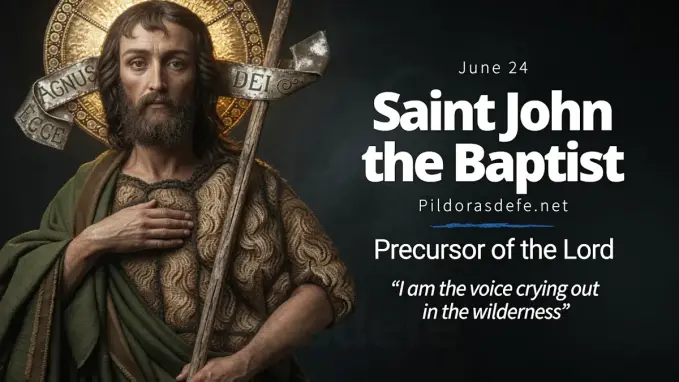
Celebrate the Solemnity of the Nativity of Saint John the Baptist, the great forerunner of Christ. Discover his miraculous birth and profound spiritual legacy
Before the eternal Word became flesh to dwell among us, the arid desert sands trembled at the thunderous voice of a solitary prophet. Saint John the Baptist did not merely predict the dawn of salvation; he physically tore through the spiritual darkness of his generation to herald the arrival of the promised Messiah. His miraculous birth shattered decades of barren silence, igniting a blazing trail of radical repentance and unwavering truth that still challenges our comfortable modern lives. Discover how the awe-inspiring legacy of Christ’s glorious forerunner can violently awaken your dormant faith and completely transform your spiritual destiny today.
The Nativity of Saint John the Baptist, or the Birth of John the Baptist, universally celebrates the awe-inspiring arrival of the Lord's great forerunner, the man who was officially chosen to bear witness to the divine light and fiercely become the voice crying out in the barren wilderness. Saint John, also universally revered simply as the Baptist, is profoundly recognized as a major prophet across three massive world religions: Christianity, Islam, and Mandaeism. He is the ultimate, glorious precursor of Jesus Christ. Theologians consider him the very last of the great prophets of the Old Testament and simultaneously the absolute first of the glorious saints of the New Testament. Saint John was the fearless prophet who urgently preached the imminent coming of Christ as the true Messiah. He also delivered a powerful message regarding the swift approach of God's final judgment, faithfully gathered numerous dedicated disciples, and baptized countless repentant souls along the muddy banks of the Jordan River. Remarkably, he is the only saint, aside from the Blessed Virgin Mary, whose earthly birth is honored with a major liturgical feast.
Feast Day: June 24th
The Catholic Church uniquely honors this glorious Solemnity on June 24th, exactly six months before the joyful celebration of Christmas. As the Catechism beautifully explains, "John surpasses all the prophets, of whom he is the last" (CCC 719). His nativity is a radiant festival of hope, reminding us that God’s redemptive promises are always faithfully fulfilled in His perfect, divine timing.
We celebrate on this spectacular day the Solemnity of the Birth of Saint John the Baptist, the courageous Forerunner of the Lord, the miraculous son of Saints Zechariah and Elizabeth; who was beautifully filled with the Holy Spirit while still securely resting in his mother's womb.
Biography of Saint John the Baptist
Saint John the Baptist was providentially born into a traditional priestly family, but he absolutely did not become a temple priest as society rigidly expected. The four Holy Gospels powerfully testify that Saint John emerged from the desert exclusively as a wild prophet, anointed to prepare and permanently smooth the rugged path before Jesus Christ.
Saint John the Baptist was the miraculous son of Saint Zechariah, a dedicated priest serving faithfully in the majestic Temple in Jerusalem, and Elizabeth, an older relative of the Blessed Virgin Mary, who traveled in haste to visit her. Jesus Christ and John the Baptist were bound by blood, as their holy mothers, Mary and Elizabeth, were close cousins.
Saint John the Baptist was born exactly six months before Jesus Christ, and the stunning angelic announcement of his miraculous birth is meticulously detailed in the Gospel of Saint Luke (1:5-25). It powerfully recounts that his elderly father, Zechariah, was silently ministering inside the holy sanctuary when, suddenly, a radiant Angel of the Lord appeared and delivered the impossible news that his barren wife, Elizabeth, would give birth to a baby boy entirely filled with the Holy Spirit from the very moment of his conception. It is universally presumed that it was the magnificent Saint Gabriel the Archangel who appeared to him, since he was also the heavenly messenger entrusted to announce to Mary the glorious arrival of the eternal Messiah, though early texts leave this beautiful detail unverified.
Because human frailty clouded his faith, Zechariah deeply doubted the solemn word of the Angel. Consequently, the divine messenger disciplined Zechariah by striking him completely mute until the joyful day of John's birth, when his tongue was finally loosed to praise Almighty God.
Saint John and the Baptism of Repentance
Thirty long years later, during the historic fifteenth year of the reign of Tiberius Caesar, perfectly corresponding to what we identify as the year 26 A.D., Saint John the Baptist boldly commenced his intense public ministry of baptism when he was roughly thirty years of age.
Saint John the Baptist wore a rough leather belt and a scratchy tunic woven entirely of camel's hair. He survived by eating wild locusts and sweet wild honey found in the harsh desert, and he unapologetically preached a fiery message of radical repentance to the entire population surrounding Jerusalem. He successfully converted massive crowds, powerfully leveling the spiritual road for the glorious arrival of Jesus.
John stationed himself in an isolated, untamed area along the rushing waters of the Jordan River. Desperate people flocked to him from absolutely everywhere, especially from the regions of Judea and the bustling city of Jerusalem, eager to hear John preach and to obediently heed his urgent call to repent from their dark sins and be spiritually cleansed.
His baptism passionately invited all individuals to completely abandon their toxic path of sin, ensuring that their corrupt past died and was permanently buried beneath the waters. By rising out of the river as entirely renewed individuals, they obtained divine forgiveness and a miraculous opportunity to begin a fresh life, fully equipped to conquer evil and fiercely resist the terrible temptations to sin.
The massive crowds baptized by Saint John the Baptist were incredibly receptive and quick to listen to the urgent message of salvation he heralded. They felt deep within their souls that the arrival of the promised Messiah, prophesied since ancient times, was breathtakingly close. Seeking practical guidance, the people asked John: "What then should we do?" Saint John the Baptist boldly replied: "Whoever has two cloaks should share with the person who has none. And whoever has food should do likewise."
Seven hundred years prior to the Nativity of our Lord Jesus Christ, the great prophet Isaiah accurately described how the agonizing Messiah would be "led like a lamb to the slaughter" as a supreme sacrifice to completely remove our terrible sins (Isaiah 53:7). Therefore, when Saint John the Baptist saw Jesus approaching him at the river, he emphatically declared to his stunned disciples: "Behold, the Lamb of God, who takes away the sin of the world!"
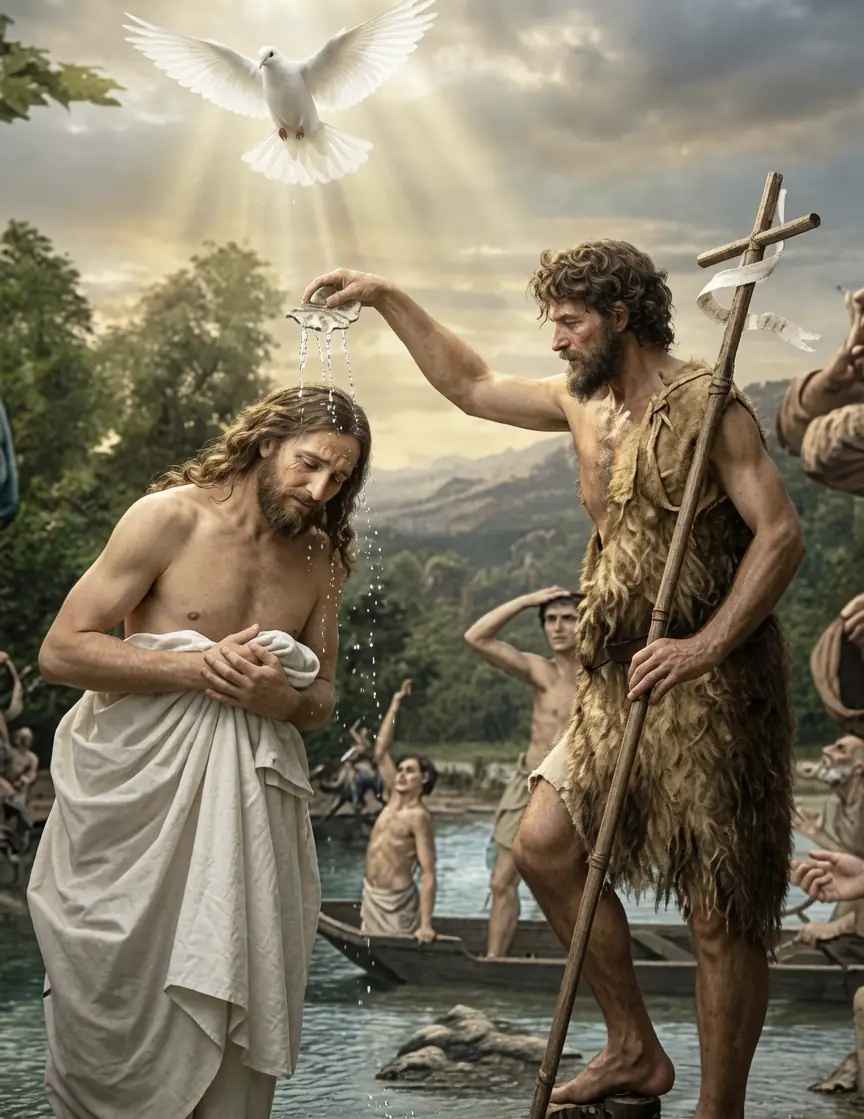
In a moment of supreme humility, Saint John the Baptist baptized Christ in the Jordan River, after which he selflessly instructed his own loyal disciples to leave his side and faithfully follow Jesus from that moment forward.
When speaking of Jesus' ultimate supremacy, John the Baptist testified: "I am baptizing you with water, but one mightier than I is coming. I am not worthy to loosen the thongs of his sandals. He will baptize you with the Holy Spirit and fire" (Luke 3:16).
The Glorious Martyrdom of Saint John the Baptist
Saint John the Baptist had fearlessly and publicly reprimanded King Herod for unlawfully taking his own brother's wife, Herodias, as his own. Furious at this public humiliation, Herod commanded that the righteous prophet be heavily chained and thrown into a dark, damp dungeon. Herodias harbored an incredibly deep, venomous grudge against John because of his moral condemnation, and she eagerly awaited the perfect, bloodthirsty opportunity to completely annihilate him.
Herod, on the other hand, secretly considered John to be a deeply righteous and holy man. Furthermore, because the Jewish population overwhelmingly revered him as a massive, untouchable prophet, the paranoid king was utterly terrified of executing him and causing a violent public uprising.
Roughly a year after the unjust imprisonment of Saint John the Baptist, King Herod threw a lavish, drunken birthday banquet for his royal courtiers, military commanders, and leading officials. Salome, the captivating daughter of Herodias and stepdaughter of Herod, unexpectedly attended the decadent feast.
She performed a sensual dance for Herod, and her performance was so incredibly pleasing to the intoxicated ruler that he was completely enchanted. In a moment of foolish arrogance, Herod swore a public oath to Herodias' daughter, promising to reward her with absolutely anything she desired, even up to half of his entire kingdom. Unsure of what to request, Salome sprinted to her wicked mother for advice. Herodias, her heart still overflowing with lethal hatred, coldly instructed her daughter to demand the severed head of Saint John the Baptist presented on a silver platter.
Salome immediately rushed back before Herod and ruthlessly demanded the bloody head of John the Baptist. This barbaric, horrifying request completely startled the wicked tyrant himself; however, strictly bound by the foolish oath he had boastfully made in front of his entire royal court, he cowardly dispatched a royal executioner to swiftly decapitate the holy saint in the silent depths of the prison.
The ruthless soldier executed the king's gruesome order, brought the bleeding head of John the Baptist on a silver platter, and handed it directly to Salome, who then callously delivered it to her wicked mother, Herodias. Shortly after, the heartbroken disciples of John bravely retrieved his headless body, granted him a dignified burial, and immediately went to inform Jesus of the tragic, agonizing event (Matthew 14:3-12; Mark 6:17-29).
Thus died the magnificent precursor of our Lord and Savior, roughly two years after he triumphantly commenced his public ministry, and exactly one year before the horrific crucifixion of the King of kings. When his devastated disciples heard the terrible news regarding the brutal murder of John the Baptist, they came, tenderly took his sacred body, and reverently placed it inside a silent tomb.
The exact historical date of the tragic death of Saint John the Baptist, currently assigned as August 29th on our Catholic liturgical calendars, cannot be verified with absolute mathematical certainty because it relies entirely on fragments of ancient documents. His final burial place has been firmly established by deep, unbroken tradition in Sebaste (Samaria). His precious, venerated relics are carefully guarded today in the historic Church of San Silvestro in Capite, located in Rome, Italy, and in the majestic Cathedral of Amiens, France.
3 Facts About Saint John the Baptist
1. The Miraculous Leap in the Womb
Saint John holds the absolutely unique biblical distinction of recognizing the presence of Jesus Christ before either of them was even born. When the pregnant Blessed Virgin Mary greeted Elizabeth, the infant John physically leapt for joy inside the womb, perfectly signaling his first prophetic act of acknowledging the hidden presence of the eternal Messiah.
2. The Only Earthly Birthday Celebrated
In the rich two-thousand-year history of the Catholic liturgical calendar, there are only exactly three earthly birthdays that are officially celebrated as major feasts: the Nativity of Jesus Christ, the Nativity of the Blessed Virgin Mary, and the Nativity of Saint John the Baptist. All others are remembered on the day they entered eternal life.
3. The Relic of the Right Hand
The incorrupt right hand of Saint John the Baptist, the exact same hand that miraculously poured the waters of the Jordan River over the sacred head of Jesus Christ, is considered one of the most powerful and highly venerated relics in all of Christianity. It is currently preserved in a golden reliquary in Montenegro.
Embracing the Prophet's Call
The unwavering courage of Saint John the Baptist challenges us to completely abandon our spiritual complacency. In a world desperately thirsting for authentic truth, we are actively called to be fearless voices crying out in the modern wilderness.
By boldly embracing radical repentance and pointing others toward the Lamb of God, our lives become a radiant testimony of hope, actively preparing the way for the Lord's glorious return. As Christ Himself testified:
"Among those born of women there has been none greater than John the Baptist" (Matthew 11:11).
Prayer to Saint John the Baptist
O glorious Saint John the Baptist, courageous forerunner of the eternal King, I humbly kneel before you today to seek your powerful heavenly intercession. You who fearlessly preached radical repentance and pointed a broken world directly to the Lamb of God, ignite within my weary soul that same unquenchable fire for divine truth. Grant me the unshakeable supernatural strength to boldly defend my Catholic faith against the hostile, toxic currents of our modern society. Help me to decrease completely so that Jesus Christ may gloriously increase within my daily actions. Purify my hidden intentions, cleanse my wandering heart, and guide my fragile steps so that I may joyfully prepare the way for the Lord’s triumphant, eternal reign in my life. Amen.
Answer the prophetic call of the wilderness Today
Do not let the terrifying silence of this secular world extinguish the blazing fire of your Catholic faith.
Boldly arise like the great Baptist, radically prepare the way for the Lord, and share this vital message of salvation with a soul in need right now!
The radical humility of Saint John the Baptist continuously reminds us that our highest earthly purpose is always to gloriously magnify Jesus Christ. When the terrifying shadows of moral compromise threaten your soul, will you bravely stand firm and passionately defend the unshakeable truth of the Gospel today?
❓ FAQ: Frequently Asked Questions About the Nativity of Saint John the Baptist
Saint John the Baptist stands at the crucial threshold between the Old and New Testaments. As the Catechism beautifully teaches, "In him, the Holy Spirit concludes his speaking through the prophets" (CCC 719). He is the ultimate forerunner who not only prophesied from afar but physically pointed to the Lamb of God, definitively preparing the human heart for the arrival of the promised Messiah.
The Catholic Church typically honors the saints on the day of their martyrdom, representing their glorious birth into heaven. However, Saint John the Baptist is a profound exception. Sacred Scripture reveals he was miraculously sanctified in Elizabeth's womb when the Blessed Virgin Mary visited her (Luke 1:41). Because he was born entirely free from original sin, his earthly nativity is a magnificent festival of immense joy.
The ritual washing performed by the Baptist was a powerful exterior sign of a radical interior conversion. He urgently called sinners to fundamentally change their lives and turn away from darkness. Saint Ambrose profoundly noted, "The baptism of John did not wash away sins, but it prepared the way for the one who would." It was the essential spiritual awakening required before receiving Christ's sacramental grace.
In an increasingly noisy and distracted modern culture, the harsh wilderness powerfully represents intentional spiritual detachment. By deliberately stripping away our comfortable worldly attachments, we create a silent interior space where God's voice can finally be heard. We must actively embody his radical humility, allowing our own selfish egos to constantly decrease so that the glorious life of Jesus Christ may completely increase within us.
Another Daily Saints.
Saint Clare of Assisi: Beloved Disciple of Saint Francis and Founder of the Poor Clares
Discover the life of Saint Clare of Assisi, patron saint of television and eye disease: A faithful disciple of St. Francis who founded the holy Poor Clares
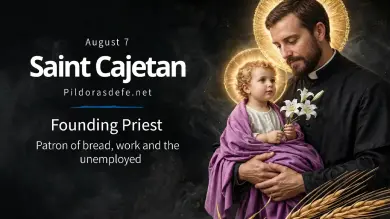
Life of Saint Cajetan of Thiene: The Holy Priest Who Defended Labor and Dignity
Discover the inspiring life of Saint Cajetan of Thiene, patron saint of bread and work: Learn about his miracles of Divine Providence and labor blessings
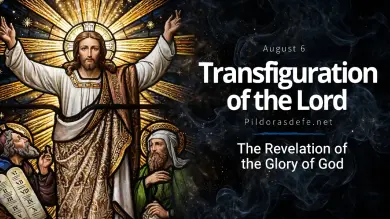
The Feast of the Transfiguration of the Lord: Behold the Radiant Glory of Christ
Discover the mystery of the Feast of the Transfiguration of the Lord: Contemplate Christ's radiant glory on Mount Tabor and awaken your Christian faith today

Our Lady of the Snows: The Miraculous Patroness of Rome and Protector of Marriages
Discover the glorious miracle of Our Lady of the Snows, patroness of Rome and advocate for marriages. Learn her history, devotion, and bless your home today
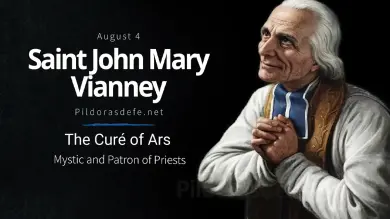
Life of Saint John Vianney: The Humble Patron Saint of Priests and Curate of Ars
Discover the inspiring life of Saint John Vianney, humble Curate of Ars and patron saint of parish priests, an eternal model of confession, prayer, and love
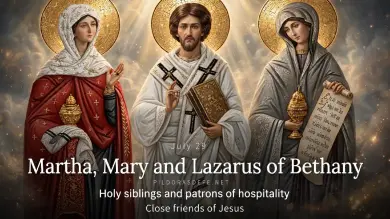
Saints Martha, Mary, and Lazarus of Bethany: Intimate Friends and Hosts of Jesus
Discover the lives of Saints Martha, Mary, and Lazarus, patron saints of hospitality: Learn how their Bethany home became a holy sanctuary of love for Jesus
 Venezuelan, faithful husband and father of a family. Electronic engineer and missionary of the faith. Committed to the proclamation of the Gospel. Solid believer that there are always new beginnings. Whoever has God has nothing to stop him.
Comments
Want to leave comments or also intentions on our homepage?
Register nowBe the first to comment.
Useful Resources
Church
Pope Leo XIV: Love is also Loss; but it bears fruit only through self-giving: Discover how true Christian hospitality and detachment can bring peace
Church
Pope Leo XIV calls for steadfast support from his cardinals during the Consistory: "I cannot carry out this ministry alone," he says, calling for communion
Church
Pope Leo XIV invites the youth to seek perfect joy in God, warning that true happiness and lasting peace are never found on screens or social media platforms
Church
uring his General Audience, Pope Leo XIV deeply reflected on the Holy Eucharist. Discover how this sacred, living mystery actively transforms our Catholic faith
Church
Pope Leo XIV beautifully invites us to deepen our relationship with God through daily contemplation: Discover how silent prayer forms truly credible apostles
Church