The Extraordinary Life of Saint Benedict of Nursia: Glorious Patron Saint of Europe
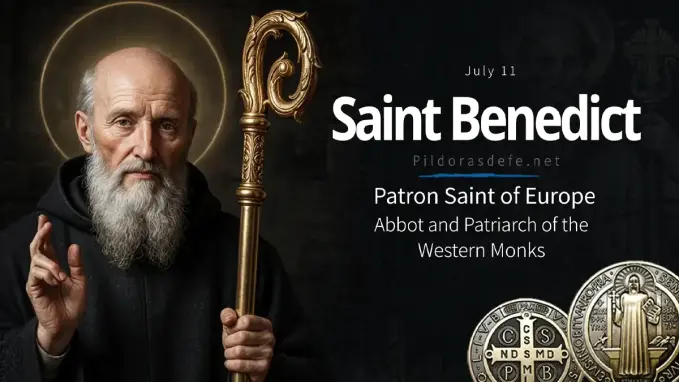
Discover the extraordinary biography of Saint Benedict of Nursia: Dive deeply into his Holy Rule and uncover the miraculous power of his sacred cross and medal
In an era fractured by relentless noise and superficial distractions, the majestic figure of our Saint of the Day, Saint Benedict of Nursia, emerges as an unshakable fortress of divine wisdom and supernatural order. This colossal spiritual architect of Western civilization masterfully charted a definitive path toward eternal redemption, strictly founded upon the perfect equilibrium between fervent, silent prayer and sanctifying physical labor. Immersing ourselves in the sheer magnitude of his awe-inspiring biography, we quickly discover that fleeing the world's chaotic illusions to relentlessly seek the face of the Almighty never implies abandoning humanity, but rather sustaining it secretly from the holy trenches of cloistered silence. Through his indestructible Holy Rule, this giant patriarch hands us the absolute master keys to defeat all modern temptations.
Feast Day: July 11
Roman Martyrology: Memorial of Saint Benedict, abbot and glorious patron saint of all Europe, who was born in Nursia, within the historical Umbria region, and profoundly educated in Rome. He heroically initiated a hermit's ascetic existence in the desolate region of Subiaco, rapidly gathering a multitude of fervent disciples around him. Following a prolonged period of intense spiritual recollection, he journeyed toward Monte Cassino, where he majestically founded the legendary monastery and penned a sacred rule that cemented his immense legacy, rightfully earning him the meritorious title of Patriarch of Western Monks. According to millennial tradition, his heavenly transit occurred on March 21.
Biography of Saint Benedict
The luminous existence of Saint Benedict blossomed around the year 480, in the rugged, mountainous district of Nursia, located in the Umbrian center of Italy. Universally venerated as the undisputed patriarch of Western monasticism, he majestically holds the grand ecclesiastical title of co-patron of Europe, proudly sharing this supreme Catholic honor with the great Slavic apostles, Saints Cyril and Methodius.
His noble family provided him with an atmosphere of traditional Roman virtue, laying the essential groundwork for his future spiritual triumphs. This privileged upbringing, however, could never satisfy the immense supernatural hunger rapidly awakening within his youthful soul. He intuitively recognized that true, imperishable greatness required deliberately abandoning fleeting earthly comforts to radically embrace the liberating power of the cross of Jesus Christ.
During the vibrant splendor of his youth, he was sent to the bustling metropolis of Rome to perfect his advanced literary and juridical studies. He quickly perceived the devastating moral decay that was actively corroding Roman society, choosing to abruptly abandon the prestigious academy with the burning desire to consecrate his intellect and his absolute purity entirely to God.
Witnessing the tragic spiritual collapse of the once-mighty Roman Empire profoundly shook his innocent conscience. Instead of yielding to the seductive temptations surrounding him, the young student radically severed all worldly attachments. He boldly traded his promising patrician future for the rough garments of a humble pilgrim, completely trusting in God's divine providence to safely guide his uncertain steps.
Seeking absolute isolation, he took refuge in a wild, rugged landscape near Subiaco, directly adjacent to the decaying ruins that once housed the ostentatious villa of Emperor Nero, located about fifty miles from the Roman capital. Today, this mystical cavern is the universally venerated sanctuary known as the Holy Cave (Sacro Speco), standing majestically as one of the most sublime and spiritually charged pilgrimage epicenters in all of Europe, drawing thousands of faithful believers annually.
Within the absolute isolation of Subiaco, the holy abbot endured an existence of extreme physical austerity, completely submerged in ceaseless, intimate colloquies with the Divine for nearly three entire years, secretly assisted by a remarkably pious monk named Romanus. This intense ascetic period suffered an abrupt, painful interruption when, moved solely by pastoral compassion, he accepted the role of superior at a neighboring abbey. That specific community of rebellious monks, entirely incapable of tolerating his unbreakable discipline and moral rigor, wickedly conjured a vile plot to lethally poison him. Miraculously saved by the victorious power of the Holy Cross when he blessed the tainted chalice, he calmly departed from their treacherous midst, returning triumphantly to the profound quietude of his beloved cave.
The exquisite fragrance of his unshakeable sanctity effortlessly pierced the imposing mountain barriers, magnetically attracting an immense legion of eager disciples desperately thirsting for evangelical perfection. Demonstrating unparalleled organizational mastery and spiritual discernment, he successfully founded twelve small, thriving monasteries nestled within the peaceful valleys of Subiaco, firmly consolidating his position as the undisputed spiritual father and wise director of souls for them all.
These early foundational communities operated as radiant beacons of hope amidst the terrifying darkness of the devastating barbarian invasions. By instilling rigorous daily schedules centered entirely around the sacred liturgy and communal charity, Benedict successfully forged impenetrable sanctuaries of peace. His monks actively preserved the flickering flame of faith, ensuring that true Christian civilization would beautifully survive the surrounding cultural collapse.
After the year 530 had passed, directly guided by providential, heavenly inspirations, the great Abbot left Subiaco firmly escorted by his most loyal, dedicated disciples, ascending toward the towering, majestic summit of Monte Cassino. There, he systematically cemented a robust and completely indivisible religious community, miraculously transforming that barren, rocky peak into the ultimate cradle of theological knowledge and intense piety, dwelling permanently within this sacred, cloistered enclosure until the glorious day of his earthly transit in the year 547.
Saint Benedict and the Announcement of His Death
Endowed with the extraordinary supernatural gift of prophecy, Saint Benedict profoundly scrutinized the hidden arcana of eternity and announced with unprecedented exactitude the imminent approach of his own bodily death. He solemnly gathered his deeply dismayed disciples to formally notify them that his arduous earthly pilgrimage was finally concluding, strictly ordering them to dig his sepulchral grave precisely six days before exhaling his very last breath. Barely had the grieving monks culminated the heavy excavation when a devastating, sudden fever entirely consumed the remaining physical strength of the holy patriarch. On the solemn day of March 21 in the year 543, while completely immersed in the sacred liturgy of Holy Thursday, he was beautifully nourished with the Holy Eucharist, the Bread of Angels.
Firmly supported by the loving arms of his devoted spiritual sons, he softly murmured beautiful canticles of heavenly praise and triumphantly surrendered his pure spirit while standing completely upright within the abbey chapel, his victorious hands lifted high toward the celestial vaults. His final, resounding verbal testament will continuously echo throughout the subsequent centuries: 'One must have an immense, unquenchable desire to go to heaven.'
This awe-inspiring, majestic departure perfectly encapsulated his unyielding lifelong posture of absolute vigilance and joyful spiritual readiness. By choosing to die standing up in the holy presence of the altar, he demonstrated that a true Christian warrior never retreats before the shadow of death. He actively embraced eternity not with crippling fear, but with the burning, expectant love of a faithful servant.
His venerable mortal remains were subsequently deposited with immense, tearful devotion directly alongside those of Saint Scholastica, his profoundly beloved twin sister, whose immaculate chastity was entirely consecrated to the Lord since her earliest childhood, miraculously preceding him to the eternal paradise by only a very narrow margin of time.
Their profound, unbreakable sibling bond beautifully illustrated how natural human affection can be radically elevated and perfected through the purifying fire of divine grace. Together, they essentially formed a glorious spiritual diptych of Western monasticism, continuously teaching us that authentic holiness deeply enriches family ties, transforming earthly love into a magnificent, eternal symphony of absolute devotion to Jesus Christ.
Their deeply venerated shared tomb was securely located within the sacred oratory of Saint John the Baptist, which had been heroically erected directly upon the ancient, profaned altar of the pagan god Apollo, forcefully eradicating that demonic idolatry forever. Saint Gregory the Great beautifully recounts that, at the exact, precise instant of his holy transit, two devout monks who were fervently praying at a great distance simultaneously visualized a magnificent, luminous pathway thickly carpeted with brilliant tapestries and blazing torches ascending directly toward the celestial homeland, exclaiming in absolute, ecstatic rapture: 'Undoubtedly, this is our Holy Father Benedict, who has triumphantly flown into eternity.'
The universal liturgical calendar joyfully honors the venerable memory of Saint Scholastica on February 10. The Catholic Church solemnly celebrates Saint Benedict on the days of March 21, marking the glorious anniversary of his holy dormition, and on July 11, which serves as the traditional historical commemoration of the solemn transfer of his highly venerated sacred relics.
These deeply cherished liturgical feast days offer the global faithful continuous opportunities to passionately invoke his powerful, unyielding heavenly patronage. By actively participating in these annual sacred celebrations, believers intentionally align their fragile hearts with the robust, timeless spiritual discipline that this legendary patriarch so masterfully established, securing profound grace for their own difficult earthly journeys.
The Rule of Saint Benedict
Standing upright as a completely docile pen resting firmly within the almighty hands of the Holy Spirit, Saint Benedict masterfully legislated a profound compendium of ascetic wisdom immortalized as The Holy Rule, a monumental document that would permanently lay the juridical and spiritual foundations for nearly all subsequent monastic orders founded in Western history.
This brilliantly crafted spiritual masterpiece effortlessly transcends the rigid boundaries of its ancient historical context, offering an incredibly balanced, psychologically astute framework for daily communal living. Rather than imposing crushing, unbearable burdens upon the monks, the text perfectly harmonizes rigorous personal discipline with profound paternal mercy, gently guiding human frailty toward the ultimate heights of divine perfection.
This magisterial treatise teaches the supreme, beautiful art of living an orderly existence, successfully forging a deeply rooted sense of belonging and unbreakable stability that anchors the human heart against the terrifying volatility of the secular world. In our modern times, countless congregations of dedicated laypeople joyfully commit themselves to deeply encarnate the essential core of these sacred precepts, seamlessly adapting their immense spiritual richness to the demanding exigencies of the secular family vocation. You can read the complete Rule of Saint Benedict.
The absolute quintessence of the authentic Benedictine spirit beautifully crystallizes within the imperishable, legendary motto 'Ora et labora' (pray and work). It forcefully underlines that the entire existence of the consecrated individual demands an intimately profound interpenetration between the exhausting clamor of material action and the sublime ecstasy of silent, heavenly contemplation. The magnificent ideal flawlessly described within these holy statutes provides incredibly portentous psychological and ascetic tools perfectly designed to attain true, lasting earthly happiness without ever losing sight of the approaching eternal glory.
The holy legislator adamantly and repeatedly emphasizes that authentic, enduring peace will absolutely never stem from the fleeting, deceptive indulgence of the physical senses, but rather from a resilient heart firmly cemented in God. The impenetrable armor of ceaseless prayer is strictly indispensable to fiercely guard interior quietude and immediately extinguish all dangerous sparks of fraternal discord. The Almighty Creator demands that we radically transform ourselves into active reconciling agents, forcefully eradicating the toxic antagonisms that constantly plague our fragile human environment.
Recommendations of Saint Benedict
- Primarily, the non-negotiable, absolute foundation of the entire spiritual edifice (immediately following supreme charity) is profound, sacred humility.
- The holy oratories and temples of the house of God are exclusively destined for deep, uninterrupted prayer, strictly suppressing all idle, worldly conversation.
- Whoever exercises authority must strive daily to administer true justice with the deeply tender, compassionate heart of a good father.
- The spiritual bursar or custodian of material goods is strictly obligated never to humiliate the dispossessed nor afflict the brethren in any way.
- Every true disciple of Christ must painstakingly endeavor to constantly manifest an exquisite, affable, and profoundly reverent treatment toward their neighbor.
- Monastic communities must constitute a beautiful, living anticipation of the heavenly family, constantly radiating a mutual love that flawlessly defeats any division.
- It is absolutely imperative to thoroughly banish all vulgarity from Christian conduct. As Saint Ambrose wisely affirmed: "To behave with true nobility is a great virtue."
- The authentic seeker of God cannot be "proud, violent, gluttonous, sleepy, lazy, gossipy, nor a denigrator," but must forge themselves as a soul that is "chaste, meek, humble, zealous, and obedient."
The monumental historical transcendence of the Rule of Saint Benedict is so incredibly vast that modern scholars unanimously consider it the indestructible spinal column of the civilization and profound cultural development of Christian Europe. Its sacred mandates successfully established the absolute foundational discipline for literally all the cloisters of monks and nuns across the entire Western geography.
Without the stabilizing, intellectual sanctuary provided by these thriving Benedictine monasteries, the priceless literary and theological treasures of classical antiquity would have been entirely obliterated. These silent, hardworking monks meticulously copied ancient manuscripts, cultivated barren lands, and taught vital agricultural skills, effectively rescuing a deeply fractured continent from the devastating abyss of total cultural darkness.
Throughout the unfolding centuries, the Supreme Pontiffs have gloriously crowned the majestic figure of Saint Benedict with magnificent, sovereign titles, deeply recognizing his unparalleled, lasting contribution to the universal faith. His immense spiritual footprint remains entirely inextinguishable, continuously shaping the rich theological heritage of the Church.
Because of this staggering, enduring legacy, the Vatican has consistently upheld his sacred teachings as the absolute gold standard of authentic monastic discipline. Every succeeding generation of ecclesiastical leaders profoundly acknowledges that the deep roots of our modern Christian society were painstakingly planted by his tireless, faithful spiritual sons across the globe, ensuring the faith survived.
"Messenger of Peace, Architect of Unity, Professor of Culture and Civilization, Father of Western Monasticism, Herald of the Christian Faith, and Supreme Father of all Europe."
In the present era, the massive legions of spiritual children belonging to this great abbot, men and women of completely irreproachable dedication, fervently guard the five inhabited continents of the globe, actively perpetuating the sacred mandate of prayer and work as blazing, unquenchable torches of deep piety and eternal redemption.
Their quiet, hidden daily sacrifices continue to powerfully sustain the modern Church during its most turbulent, challenging periods of historical crisis. By faithfully adhering to the ancient rhythm of the sacred liturgy and rigorous manual labor, these modern Benedictines offer a vibrant, living testament to the absolute supremacy of God in a deeply secularized world.
The Medal of Saint Benedict
The precise, historical origins of the material devotion to the powerful medal of Saint Benedict gradually fade into the mists of history; nevertheless, irrefutable, ancient manuscripts firmly attest to its truly prodigious and highly frequent usage around the year 1600. The very first numismatic designs beautifully depicted the robust, holy saint triumphantly wielding the sacred cross in his right hand, while grasping the strict monastic laws upon the reverse side of the sacred coin.
These potent sacramentals forcefully incorporated the terrifying, ancient initials directly corresponding to the solemn prayer of spiritual exorcism, instantly infusing absolute terror into the dark, invisible hosts of the demonic underworld. After meticulously documenting countless miraculous healings and indisputably resounding spiritual liberations, Pope Benedict XIV joyfully imparted the official, infallible pontifical approval for its widespread public use in the year 1741.
This definitive papal endorsement catapulted the sacred medal into the absolute forefront of Catholic spiritual warfare, transforming it into an essential, ubiquitous weapon against the unseen forces of darkness. Believers across the entire globe rapidly embraced this incredibly powerful sacramental, experiencing firsthand its astonishing capacity to actively break generational curses, repel vicious demonic oppressions, and restore profound, lasting peace to heavily afflicted households.
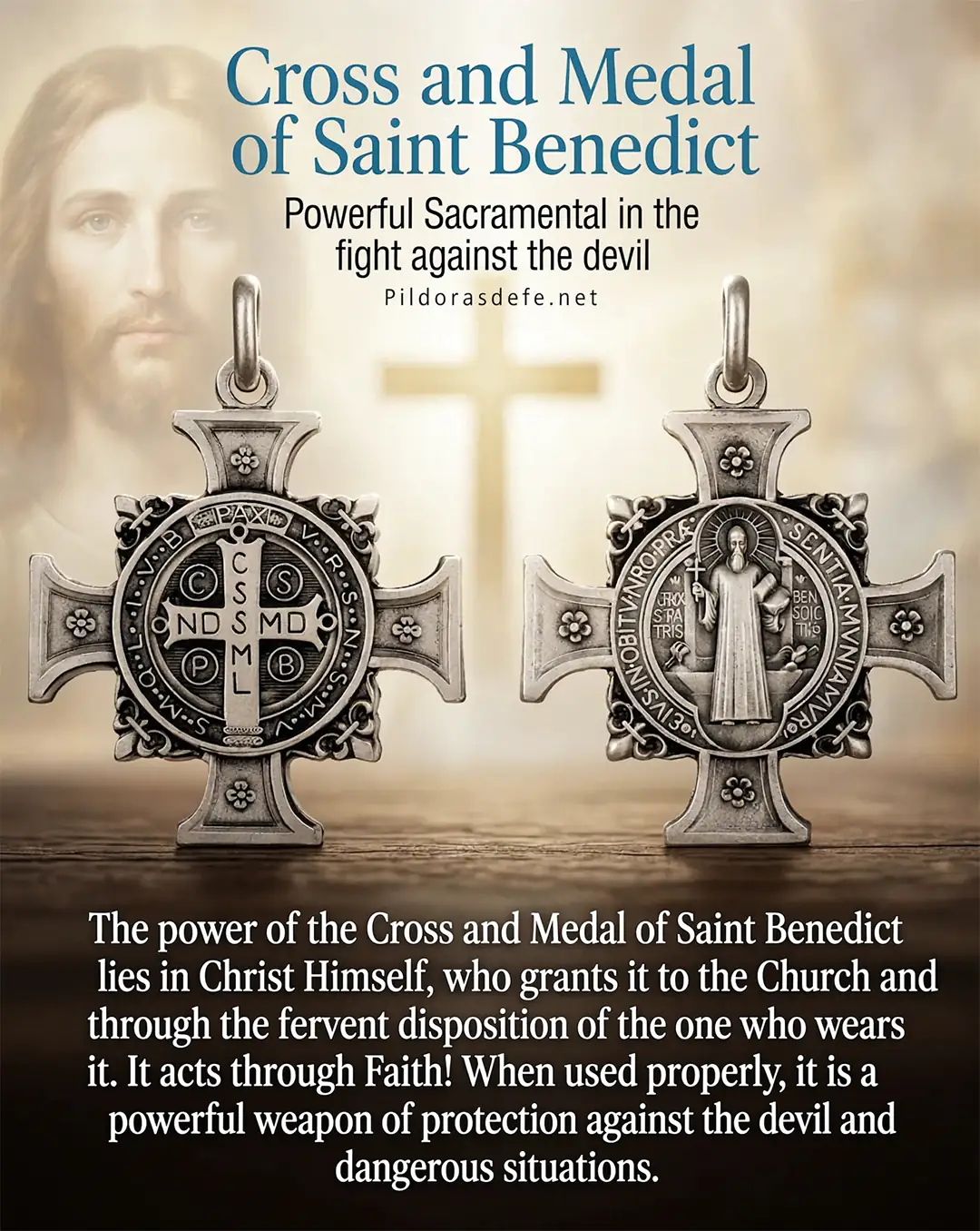
The glorious, worldwide jubilee of 1880 commemorated with unparalleled, majestic splendor the fourteen-hundredth anniversary of the great patriarch's blessed birth. To properly exalt this monumental ecclesiastical milestone, the Vatican graciously granted the faithful heirs of Monte Cassino the exclusive faculty to strike a beautifully renewed medal design, powerfully impregnated with an immense, unprecedented liturgical force.
This stunning, updated artistic rendition incorporated intricate, deeply symbolic elements that perfectly captured the sheer magnitude of his victorious theological legacy. The newly minted jubilee medal quickly became a massive, highly sought-after spiritual treasure, physically reminding the faithful that the triumphant cross of Jesus Christ remains our only true, invincible defense against the relentless snares of the ancient enemy.
This illustrious, deeply revered devotional jewel was triumphantly proclaimed worldwide as The Jubilee Medal, being heavily enriched by the Holy See of Peter with formidable, boundless plenary indulgences and absolutely inestimable heavenly favors designed specifically for the complete, impenetrable protection of deeply afflicted and desperately tempted human souls.
Whenever we devoutly wear this incredibly powerful Jubilee Medal with genuine faith, we actively invoke the towering, unyielding spiritual authority of Saint Benedict to constantly stand guard over our vulnerable lives. It operates as a continuous, silent prayer of absolute deliverance, forcefully demanding that all evil spirits immediately depart from our presence and return permanently to the abyss.
4 facts about Saint Benedict of Nursia
1. The Miraculous Subiaco Raven
While living as an isolated hermit in the rugged Subiaco wilderness, Saint Benedict was miraculously protected by a deeply loyal raven. When a fiercely jealous local priest wickedly attempted to assassinate the holy abbot by offering him poisoned bread, the saint discerningly commanded the faithful bird to carry the lethal food far away where it could never harm anyone. The obedient raven swiftly executed this urgent divine command, successfully thwarting the sinister, demonic plot and completely saving his master's life.
2. The Restoration of the Broken Sieve
During his incredibly early youth, his deeply devoted nurse accidentally dropped a borrowed earthenware sieve, shattering it completely into multiple useless pieces. Witnessing her immense, uncontrollable sorrow, the compassionate young saint gathered the fractured fragments and immersed himself in intensely profound, tearful prayer. Miraculously, the shattered vessel was instantly and perfectly restored without a single visible crack remaining. This astonishing, early miracle rapidly spread his fame, prompting him to ultimately flee into the deep mountains to passionately seek true humility.
3. The Incredible Vision of the Entire World
Saint Gregory the Great beautifully recounts an extraordinary, breathtaking mystical experience where Saint Benedict, while maintaining a deeply intense nighttime vigil, suddenly saw the entire, vast universe gathered together within a single, blinding ray of glorious, heavenly light. This incredibly profound theological vision powerfully demonstrated that for a soul firmly anchored in the infinite immensity of God the Creator, the entire material creation appears remarkably small, fleeting, and profoundly insignificant compared to the breathtaking majesty of eternal, heavenly glory.
4. The Resurrection of the Crushed Monk
While the dedicated brethren were arduously constructing the massive, towering walls of the great Monte Cassino monastery, a heavy stone unexpectedly collapsed, completely crushing a young, vibrant monk beneath its immense, unbearable weight. Filled with absolute, unyielding faith, Saint Benedict urgently commanded the devastated brothers to bring the mangled, lifeless body directly into his personal cell. Through intensely fervent, miraculous intercessory prayer, the young builder was completely restored to perfect physical health and immediately returned to his strenuous, daily labor.
The Eternal Triumph of the Benedictine Cross
The awe-inspiring, magnificent legacy of Saint Benedict of Nursia forcefully reminds every Christian believer that the triumphant cross of Jesus Christ is our only true, invincible salvation.
By boldly embracing his rigorous, uncompromising discipline and wielding the immense spiritual authority of his sacred medal, we can successfully conquer all modern demonic illusions. As the timeless Catechism of the Catholic Church powerfully affirms:
"The way of perfection passes by way of the Cross. There is no holiness without renunciation and spiritual battle."
Prayer to Saint Benedict for Unfailing Protection
O glorious and victorious Saint Benedict of Nursia, sublime, impenetrable bulwark of all Christendom and absolute terror of the invisible infernal spirits, we humbly approach your majestic heavenly throne today, desperately imploring your continuous, unyielding celestial protection. You, who courageously preferred the harsh, unforgiving austerity of a solitary mountain cave over the deceptive, fleeting vanities of this passing world, teach us to utterly despise the disordered earthly attachments that heavily chain our immortal souls. Grant us the invincible, miraculous fortitude of your sacred Jubilee medal to powerfully repel the relentless snares of the evil one, malicious envy, and all physical dangers threatening our vulnerable families. Infuse within our hearts the true spirit of holy obedience and perpetual humility, so that, diligently forging our eternal salvation through honest daily labor and ceaseless prayer, we may ultimately behold the radiant face of Jesus Christ forever. Amen.
Arm your soul with the unbreakable power of faith.
Do you feel constantly overwhelmed by the relentless spiritual battles and heavy anxieties of our chaotic modern world?
Join our deeply devoted global Catholic community today to receive incredibly powerful daily prayers, exclusive saintly reflections, and unbeatable spiritual weapons sent straight to your inbox.
Click here to subscribe immediately and transform your home into an impenetrable fortress of divine grace and unshakeable peace!
Reflecting upon the monumental, unshakeable courage of our glorious patron perfectly challenges our modern, comfortable spiritual complacency. True, lasting heavenly victory absolutely demands radical, daily sacrifice and intense, unwavering prayer. Are you truly prepared to courageously wield the triumphant, powerful cross of Christ against the gathering shadows today?
❓ FAQ: Frequently Asked Questions About Saint Benedict of Nursia
Saint Benedict was a holy sixth-century abbot who fundamentally shaped Western civilization. Disgusted by Rome's moral decay, he sought God in silent solitude before founding Monte Cassino. Pope Paul VI proclaimed him Patron of Europe because his monasteries preserved Christian culture. As the Catechism states, "The Church is the seed and beginning of this kingdom." Benedict’s monastic communities truly planted those heavenly seeds across the entire European continent.
The Holy Rule is a magnificent spiritual guide perfectly balancing prayer and physical labor, summarized by the famous motto "Ora et labora." It teaches authentic humility, unshakeable obedience, and fraternal charity. Saint Benedict famously wrote, "Listen carefully, my son, to the master's instructions, and attend to them with the ear of your heart." This timeless wisdom continues to guide countless religious and laypeople toward a profoundly disciplined Christian life.
The sacred medal is a highly powerful sacramental universally recognized for its spiritual protection against demonic forces. It features the holy cross and the solemn initials of an ancient exorcism prayer. The Church grants numerous indulgences to those who wear it faithfully. We must always remember the biblical truth found in James: "Resist the devil, and he will flee from you." The medal visually weaponizes this exact apostolic command.
He initially chose radical isolation in the cave of Subiaco to completely detach his heart from worldly illusions and focus solely on pleasing the Almighty. However, his profound holiness inevitably attracted eager disciples. He beautifully demonstrated that true solitude is not misanthropy, but an intense communion with the Creator. By retreating from worldly noise, he gained the supernatural strength necessary to spiritually rebuild a fallen and chaotic earthly society.
Another Daily Saints.
Saint Clare of Assisi: Beloved Disciple of Saint Francis and Founder of the Poor Clares
Discover the life of Saint Clare of Assisi, patron saint of television and eye disease: A faithful disciple of St. Francis who founded the holy Poor Clares
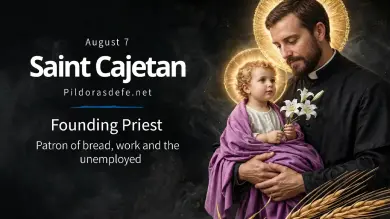
Life of Saint Cajetan of Thiene: The Holy Priest Who Defended Labor and Dignity
Discover the inspiring life of Saint Cajetan of Thiene, patron saint of bread and work: Learn about his miracles of Divine Providence and labor blessings
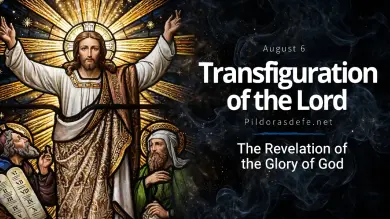
The Feast of the Transfiguration of the Lord: Behold the Radiant Glory of Christ
Discover the mystery of the Feast of the Transfiguration of the Lord: Contemplate Christ's radiant glory on Mount Tabor and awaken your Christian faith today

Our Lady of the Snows: The Miraculous Patroness of Rome and Protector of Marriages
Discover the glorious miracle of Our Lady of the Snows, patroness of Rome and advocate for marriages. Learn her history, devotion, and bless your home today
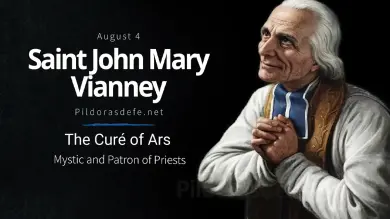
Life of Saint John Vianney: The Humble Patron Saint of Priests and Curate of Ars
Discover the inspiring life of Saint John Vianney, humble Curate of Ars and patron saint of parish priests, an eternal model of confession, prayer, and love
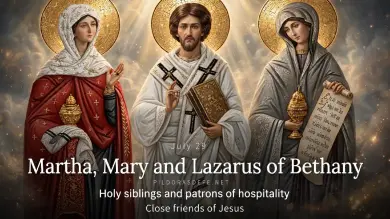
Saints Martha, Mary, and Lazarus of Bethany: Intimate Friends and Hosts of Jesus
Discover the lives of Saints Martha, Mary, and Lazarus, patron saints of hospitality: Learn how their Bethany home became a holy sanctuary of love for Jesus
 Venezuelan, faithful husband and father of a family. Electronic engineer and missionary of the faith. Committed to the proclamation of the Gospel. Solid believer that there are always new beginnings. Whoever has God has nothing to stop him.
Comments
Want to leave comments and intentions on our site?
Be the first to comment.
Useful Resources
Church
Pope Leo XIV: Love is also Loss; but it bears fruit only through self-giving: Discover how true Christian hospitality and detachment can bring peace
Church
Pope Leo XIV calls for steadfast support from his cardinals during the Consistory: "I cannot carry out this ministry alone," he says, calling for communion
Church
Pope Leo XIV invites the youth to seek perfect joy in God, warning that true happiness and lasting peace are never found on screens or social media platforms
Church
uring his General Audience, Pope Leo XIV deeply reflected on the Holy Eucharist. Discover how this sacred, living mystery actively transforms our Catholic faith
Church
Pope Leo XIV beautifully invites us to deepen our relationship with God through daily contemplation: Discover how silent prayer forms truly credible apostles
Church