Saint of the Day: The Inspiring Life of Saint Bede the Venerable, Doctor of the Church
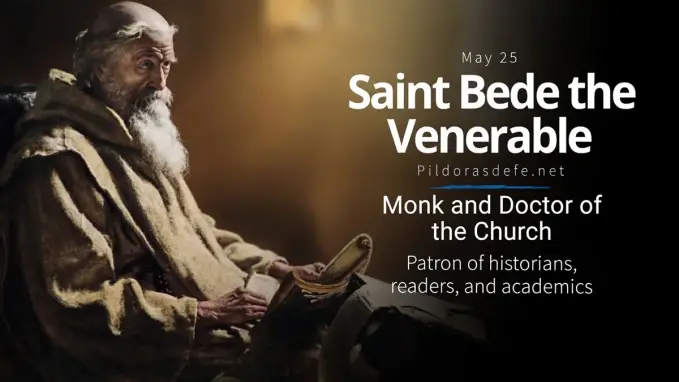
Saint of the day: Saint Bede the Venerable was a wise Benedictine monk, great theologian, and patron saint of historians. Discover his inspiring life today
Are you desperately seeking profound wisdom and spiritual clarity in an age dominated by overwhelming noise and fleeting information? Enter the magnificent life of Saint Bede the Venerable, the saint of the day, an extraordinary Benedictine monk who transformed the quiet shadows of a medieval monastery into a blazing beacon of intellectual and theological light. Widely revered as the most brilliant mind of his era, this remarkable eighth-century priest did not need to travel the globe to change it; his fierce devotion to God and his relentless pursuit of truth made him one of the greatest Anglo-Saxon theologians and historians in history. By boldly embracing the hidden life of prayer, study, and discipline, Saint Bede became an unparalleled Doctor of the Catholic Church. Discover how this powerful patron saint of scholars, historians, and readers can dramatically inspire your own relentless pursuit of eternal truth today.
Feast: May 25
Roman Martyrology: Saint Bede the Venerable, devoted priest and Doctor of the Church, who beautifully became a servant of Christ at the tender age of eight. He spent his entire, magnificent life in the monastery of Jarrow in Northumbria, England, entirely dedicated to deep meditation and the profound explanation of the Sacred Scriptures. He maintained a faithful, unshakeable observance of monastic discipline and the daily exercise of singing in the Church choir. He always found immense, holy pleasure in learning, teaching, and writing.
The Inspiring Biography of Saint Bede the Venerable
There is not an abundance of detailed historical information available regarding the early childhood or specific family background of Saint Bede the Venerable. What is historically certain is that, at the very young age of seven, he was confidently entrusted to the spiritual care of Benedict Biscop, who in the year 674 had beautifully founded the monastery of Saint Peter at Wearmouth. In the year 682, Saint Bede permanently relocated to the twin monastery at Jarrow, where he peacefully and productively spent the rest of his earthly life. By the age of 19, he had already become a dedicated deacon, and he was highly promoted to the sacred priesthood exactly at the age of 30.
Saint Bede was widely known as a profoundly kind, deeply affectionate, and immensely generous person toward all others. He lived absolutely every single second of his life as a man completely filled with burning love for Almighty God and his fellow human beings, a true man of unshakeable faith and continuous prayer. His life perfectly embodied the ancient Benedictine motto: Ora et Labora (Pray and Work).
A Glorious Life of Deep Study and Teaching
From the exact moment of his sacred priestly ordination right up until the very day of his holy death, Saint Bede assiduously dedicated himself to relentless learning, prolific writing, and passionate teaching.
In addition to the countless theological books that he painstakingly copied by hand, Saint Bede personally composed 45 magnificent original books, which impressively included 30 deep theological commentaries on various books of the Holy Bible. He remarkably dedicated his only brief moments of earthly recreation to intense, silent prayer and joyful singing in the monastic choir.
Thus, Saint Bede the Venerable deeply learned the immense love of true scholarship, profound personal devotion, and strict spiritual discipline. He flawlessly mastered Latin, Greek, and Hebrew, and possessed an astonishingly good knowledge of both the ancient classical scholars and the early Fathers of the Church.
The vast, brilliant writings of Saint Bede comprehensively cover a massive spectrum that beautifully includes natural history, sacred poetry, precise biblical translation, and the profound exposition of the Sacred Scriptures.
One of his oldest known biblical commentaries was highly likely based on the prophetic Book of Revelation. He is also historically credited with the brilliant writing of at least three very well-known, beautiful Latin hymns.
The Magnificent Works of Saint Bede
The vast writings of Saint Bede are traditionally classified as scientific, historical, and deeply theological. The scientific works brilliantly include complex treatises on grammar (written specifically for his students), a profound work on natural phenomena (*De rerum natura*), and two massive, influential works on historical chronology (*De temporibus* and *De temporum ratione*).
However, he is primarily and universally remembered for his monumental masterpiece, the "Ecclesiastical History of the English People." This massive five-volume work meticulously records the crucial historical events in Great Britain from the ancient incursions of Julius Caesar in 54 to 55 B.C., right up to the glorious arrival of the very first missionary from Rome, Saint Augustine of Canterbury, in the year 597.
The brilliant writings of Saint Bede are widely considered the absolute best historical summary of this specific period of history that has ever been drafted. Many renowned scholars have confidently called it "the absolute best historical work of the entire Early Middle Ages."
The Ultimate Purpose of Saint Bede's Writings
Saint Bede clearly and boldly stated exactly what the ultimate spiritual purpose of his writings was:
"If history faithfully records the good things of good men, the attentive hearer is strongly encouraged to imitate what is truly good, and if it accurately records the evil of wicked men, good or religious readers will be deeply encouraged to avoid, in every possible way, what is sinful and perverse, and thus strictly follow what is good and entirely pleasing to God."
The entire life of Saint Bede beautifully revolved around the strict, rhythmic monastic schedule of deep prayer, hard work, intense study, and passionate teaching. Saint Bede humbly declared:
"I was born in the lands of this very monastery, and, upon turning seven years old, I was confidently entrusted by my family first to the most reverend abbot Benedict and later to the abbot Ceolfrid for my education. I have spent the entire rest of my life in this monastery and have completely dedicated myself to the intense study of the Scriptures. And although I have strictly observed the regular monastic discipline and have joyfully sung the choir offices daily in the church, my principal pleasure has absolutely always been deep study, teaching, and writing."
Although because of his immense, legendary wisdom, Saint Bede was anxiously sought after by powerful kings and other great notables of the era, and even by Pope Sergius himself, Saint Bede miraculously managed to remain peacefully hidden in his own humble monastery until the day of his death. Only on one single occasion did he briefly leave the monastery for a few months with the sole, specific purpose of teaching at the archbishop's prestigious school in York.
🌟 4 Amazing Facts About the Life of Saint Bede
1. The Origin of "Anno Domini" (A.D.)
While Saint Bede did not invent the "A.D." (Anno Domini) dating system, he is universally credited with popularizing it throughout Western Europe. By strictly utilizing this Christian dating method in his famous "Ecclesiastical History," he fundamentally shifted how the entire world records time, anchoring all of human history directly to the glorious birth of Jesus Christ.
2. The Only "Venerable" Saint
Saint Bede holds a unique title in the Catholic Church. He was widely recognized as "Venerable" shortly after his holy death, a rare title explicitly acknowledging his staggering earthly wisdom and unparalleled monastic holiness. He is the only saint in history to be universally known primarily by this specific, majestic title rather than just his given name.
3. The Miracle of the Singing Angels
A beautiful, ancient legend claims that when Saint Bede became completely blind in his old age, his mischievous guide led him to a valley full of stones, falsely telling him a massive crowd was waiting to hear him preach. Bede preached a magnificent, fiery sermon, and when he finished, the very stones miraculously cried out, "Amen, Venerable Bede!"
4. The Final Translation
Even as he was agonizingly dying of a severe respiratory illness, Saint Bede absolutely refused to stop working for the Kingdom of God. On the very day of his holy death, he dictated the final, missing chapter of his Anglo-Saxon translation of the Gospel of John to a young scribe, proving his unshakeable dedication to spreading the Word of God.
The Glorious Death and Legacy of Saint Bede
The very last work of Saint Bede, which he triumphantly completed on his actual deathbed, was a beautiful, groundbreaking translation of the Gospel of Saint John directly into the native Anglo-Saxon language.
Saint Bede died peacefully in the year 735 while joyfully praying his absolute favorite prayer:
"Glory be to the Father, and to the Son, and to the Holy Spirit, as it was in the beginning, is now, and ever shall be, world without end. Amen."
It did not take long at all for Almighty God to powerfully work wonderful miracles through the direct intercession of Saint Bede. Immediately after his death, incredible, verified miracles were directly associated with his holy relics. He was then officially canonized and magnificently declared a Doctor of the Church on November 13, 1899, by Pope Leo XIII.
The original house of Saint Bede, located in Jarrow, was tragically destroyed during the brutal dissolution of the monasteries, although the ancient, holy ruins can still be respectfully visited by pilgrims today.
The massive, unparalleled knowledge of Saint Bede comprehensively covered a huge variety of subjects, including profound commentaries on the Bible, sharp observations of nature, beautiful music, and poetry. His most famous work, which remains a vital, key source for the modern understanding of early British history and the dramatic arrival of Christianity, is the "Historia Ecclesiastica Gentis Anglorum" or "The Ecclesiastical History of the English People," which was brilliantly completed in the year 731. It is the very first major historical work in which the AD dating system is extensively utilized.
Saint Bede also wrote extensively on natural philosophy, the deep philosophical principles of Aristotle, complex astronomy, basic arithmetic, strict grammar, ecclesiastical history, the inspiring lives of the saints, and, most especially, on the Sacred Scripture.
The life of Saint Bede was truly extraordinary, absolutely not only because of his brilliant, erudite writings, but most especially because of his heroic, silent holiness as a humble little monk of study and prayer, which ultimately earned him the glorious title of "Saint Bede the Venerable."
Reflection on True Catholic Wisdom
The extraordinary life of Saint Bede powerfully teaches us that authentic wisdom is absolutely never found in arrogant intellectual pride, but in profound, prayerful humility.
In our modern era, obsessed with shallow opinions and fleeting viral trends, Saint Bede reminds us that deep, silent meditation on the eternal Word of God is the only true path to illuminating the terrifying darkness of the world. As the Book of Proverbs declares:
"The fear of the Lord is the beginning of wisdom" (Proverbs 9:10).
Magnificent Prayer to Saint Bede the Venerable
Oh, Venerable Saint Bede, glorious patron saint of scholars and historians, we humbly thank you for being a radiant, unmatched example of heroic holiness, profound goodness, and eternal wisdom. Thank you for deeply inspiring us to be lifelong, dedicated students who are always fiercely eager to know more about the truth. Powerfully inspire us to diligently read and fiercely listen to the Word, and actively help us to intimately know Jesus Christ and to boldly follow His narrow paths. Saint Bede, help us to passionately love Almighty God with absolutely all our hearts, and to deeply love and respect our peers, our teachers, and our fragile families. Safely guide us to always use our words with immense kindness and divine wisdom so that we may be highly effective communicators, who listen attentively and speak with great care. Oh, humble monk Saint Bede, far above all things, grant us the invincible courage to live exactly as Jesus lived. Amen.
Illuminate Your Mind with God's Truth Today
Do not allow the toxic noise of this world to completely paralyze your spiritual growth.
Fiercely invoke the powerful intercession of Saint Bede the Venerable right now!
Ask this great Doctor of the Church to dramatically sharpen your mind, protect your studies, and set your weary soul on fire with a relentless, burning passion for the eternal Gospel!
The glorious patron saint of historians is eagerly waiting to actively assist you in your own academic and spiritual battles right now. Will you courageously open your mind to the exact same Holy Spirit that brilliantly illuminated the cell of Saint Bede?
❓ FAQ: Frequently Asked Questions About Saint Bede the Venerable
Saint Bede is the patron saint of scholars, historians, and academics because he dedicated his entire earthly existence to the rigorous pursuit of truth. His massive body of work, spanning theology, history, science, and poetry, proves that deep intellectual study, when united with intense prayer, is a profound act of worship to Almighty God.
The prestigious title "Doctor of the Church" is reserved for saints whose immense theological writings have significantly shaped and defended the Catholic faith. Pope Leo XIII officially granted this title to Saint Bede in 1899. The Catechism affirms that the Church is built upon the foundation of such holy teachers who "hand on the faith" (CCC 77).
Remarkably, almost never. From the time he entered the monastery at age seven until his death at age sixty-two, he remained in the twin monasteries of Monkwearmouth and Jarrow. He proves the profound spiritual truth that one does not need to travel the world to change it; radical holiness in hidden, ordinary duties can literally alter the course of human history.
Saint Bede approached the Sacred Scriptures with absolute reverence, viewing them as the living voice of God. He utilized the allegorical method taught by Saint Augustine, always seeking the deep, spiritual meaning behind the historical text. As Saint Paul taught, "All scripture is inspired by God and is useful for teaching" (2 Timothy 3:16), and Bede lived this reality daily.
Modern students facing severe anxiety, exams, or intellectual blockages should invoke Saint Bede for the virtues of deep focus, holy discipline, and clarity of thought. You can simply pray: "Saint Bede, you who found immense joy in learning and teaching, intercede for me that I may use my mind to discover truth and give greater glory to God."
Another Daily Saints.
Saint Clare of Assisi: Beloved Disciple of Saint Francis and Founder of the Poor Clares
Discover the life of Saint Clare of Assisi, patron saint of television and eye disease: A faithful disciple of St. Francis who founded the holy Poor Clares
Life of Saint Cajetan of Thiene: The Holy Priest Who Defended Labor and Dignity
Discover the inspiring life of Saint Cajetan of Thiene, patron saint of bread and work: Learn about his miracles of Divine Providence and labor blessings

The Feast of the Transfiguration of the Lord: Behold the Radiant Glory of Christ
Discover the mystery of the Feast of the Transfiguration of the Lord: Contemplate Christ's radiant glory on Mount Tabor and awaken your Christian faith today

Our Lady of the Snows: The Miraculous Patroness of Rome and Protector of Marriages
Discover the glorious miracle of Our Lady of the Snows, patroness of Rome and advocate for marriages. Learn her history, devotion, and bless your home today
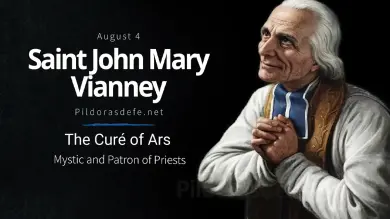
Life of Saint John Vianney: The Humble Patron Saint of Priests and Curate of Ars
Discover the inspiring life of Saint John Vianney, humble Curate of Ars and patron saint of parish priests, an eternal model of confession, prayer, and love
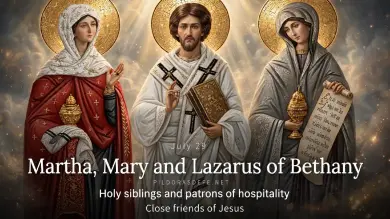
Saints Martha, Mary, and Lazarus of Bethany: Intimate Friends and Hosts of Jesus
Discover the lives of Saints Martha, Mary, and Lazarus, patron saints of hospitality: Learn how their Bethany home became a holy sanctuary of love for Jesus
 Venezuelan, faithful husband and father of a family. Electronic engineer and missionary of the faith. Committed to the proclamation of the Gospel. Solid believer that there are always new beginnings. Whoever has God has nothing to stop him.
Useful Resources
Church
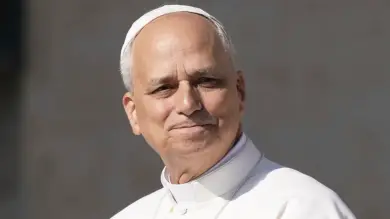
Pope Leo XIV: Love is also Loss; but it bears fruit only through self-giving: Discover how true Christian hospitality and detachment can bring peace
Church
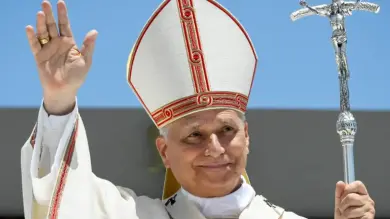
Pope Leo XIV calls for steadfast support from his cardinals during the Consistory: "I cannot carry out this ministry alone," he says, calling for communion
Church
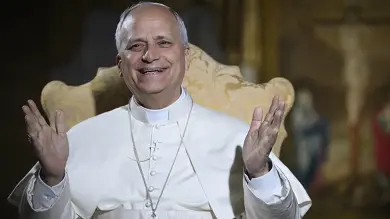
Pope Leo XIV invites the youth to seek perfect joy in God, warning that true happiness and lasting peace are never found on screens or social media platforms
Church
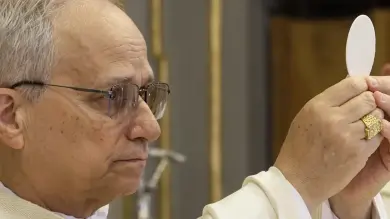
uring his General Audience, Pope Leo XIV deeply reflected on the Holy Eucharist. Discover how this sacred, living mystery actively transforms our Catholic faith
Church
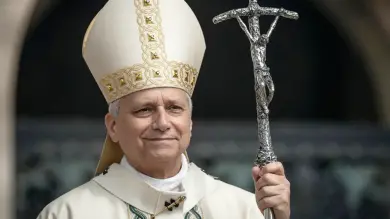
Pope Leo XIV beautifully invites us to deepen our relationship with God through daily contemplation: Discover how silent prayer forms truly credible apostles
Church