Saint Bonaventure: The Seraphic Doctor and Wise Franciscan Bishop of the Church
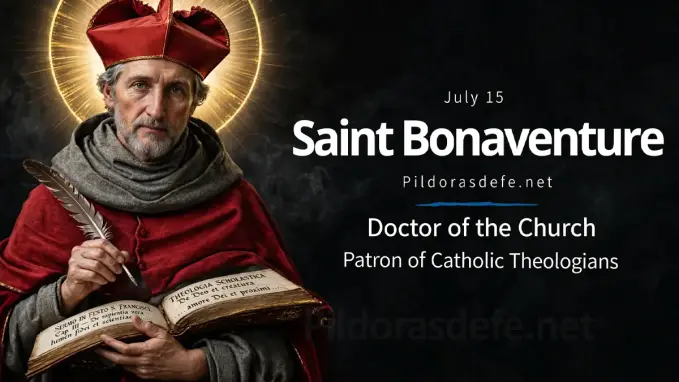
Saint Bonaventure guided the Franciscan Order with divine wisdom: Discover this Seraphic Doctor, a giant of theology, mystical love, and Catholic devotion
Considered the second founder of the Franciscan Order and universally acclaimed as the Seraphic Doctor, Saint Bonaventure stands as a colossal thirteenth-century giant who masterfully fused the highest academic erudition with profound mystical contemplation. Our magnificent Saint of the day teaches us that his earthly existence was never a mere intellectual exercise, but rather a passionate, relentless pursuit of the suffering face of Jesus Christ. As an untiring peacemaker, a remarkably wise bishop, and a theologian with a burning heart, he beautifully demonstrates that true knowledge of God is never a cold, distant concept. Instead, this great figure among patron saints reveals a transformative spiritual journey that fully immerses our souls into the inexhaustible abyss of immense divine love and mercy.
Feast: July 15
Roman Martyrology: Memorial of the deposition of Saint Bonaventure, bishop and doctor of the Church, who illuminated doctrine with holiness of life and distinguished works in the service of the Church. He directed with the wisdom of the Spirit the Order of Friars Minor of Saint Francis of Assisi, in which he was minister general, and in his numerous writings united supreme erudition with burning compassion. While he exerted himself greatly at the Ecumenical Council of Lyon, he merited to reach the beatific vision of God.
Biography of Saint Bonaventure
Saint Bonaventure came into the world in the picturesque region of Bagnoregio, Italy, around the year 1217. His baptismal name was Giovanni di Fidanza, being the beloved son of Giovanni of Fidanza, a highly respected local physician, and the devout Maria of Ritella.
During his tender childhood, a monumental event marked his destiny forever. Little Giovanni fell prey to a fulminating illness that threatened to snatch away his life prematurely. According to the saint's own testimony, his miraculous healing was not the work of earthly medicine, but the beautiful fruit of the direct intercession of Saint Francis of Assisi, to whom his anguished mother had cried out with profound faith.
Guided by an insatiable intellect, in the splendor of his youth he entered the illustrious University of Paris in the year 1235. After years of rigorous study, he graduated with highest honors, obtaining his desired master of arts degree in 1243. Moved by the grace that palpitated within him since that childhood miracle, he decided to renounce worldly honors to join the incipient order of the "Friars Minor". It was there, in 1244, that he definitively received the name "Bonaventure", an eternal echo of the prophetic exclamation of the patriarch of Assisi.
Already immersed in religious life, Saint Bonaventure continued his theological studies under the wise direction of the eminent master Alexander of Hales. The latter, marveling at the intellectual prodigy before him, immediately recognized in the young friar an astonishing memory and an unusually brilliant intelligence that entirely transcended the ordinary.
But Bonaventure did not seek knowledge for academic vanity. He transformed his rigorous search for theological truth into a sublime act of adoration to God, perfectly integrating intellectual speculation with the deep humility and extreme poverty of the Franciscan mendicant life.
His teaching career emerged rapidly. In the year 1248, he began to teach classes on the Sacred Scriptures; and during the fruitful period from 1251 to 1253, he held the chair on the famous book of the "Sentences", the summit text of medieval theology masterfully compiled by Peter Lombard in the twelfth century.
Saint Bonaventure: brilliant teacher and defender of theology
In the glorious year of 1254, Saint Bonaventure was officially anointed as a master of theology, assuming the immense responsibility of directing the school of the Franciscan Order in the agitated intellectual environment of Paris. From that privileged chair, he illuminated minds until the year 1257.
During that fertile stage, his pen did not rest, engendering treatises of incalculable value, among them his irreplaceable biblical commentaries, profound studies on prayer, and, most especially, his work the *Breviloquium* ("Summary"). In this masterful compendium, he condensed, with astonishing clarity, all the immensity of his profound systematic theology.
These formidable writings revealed not only an absolute mastery of Divine Revelation but also an encyclopedic knowledge of the early Fathers of the primitive Church, standing out for his undeniable intellectual harmony with Saint Augustine of Hippo, as well as a vast and deep knowledge of the classical philosophical framework, especially grounded in Aristotle.
His spiritual courage was beautifully demonstrated in 1256 when he boldly defended the pure Franciscan ideal of consecrated life against the violent attacks of William of Saint-Amour. This controversial university professor launched harsh calumnies, accusing the mendicant orders of gravely defaming the Holy Gospel by practicing absolute poverty, seeking thereby to expel Franciscans and Dominicans from the classrooms of the Church.
The eloquent and irrefutable defense that Bonaventure wielded, added to the transparent holiness of his personal testimony, caused such a powerful impact that his brothers unanimously elected him as Minister General of the Franciscan Order on an emblematic February 2, 1257.
The leafy community founded by Saint Francis of Assisi was then going through a critical moment of grave internal discord. One side, the so-called spirituals, threatened the peace by promoting an asphyxiating and extreme interpretation of the vow of poverty; on the other hand, the Relaxati fractured unity by fostering a dangerously comfortable attitude far removed from the ascetic ideal.
Assuming the helm with firmness and exquisite supernatural prudence, Saint Bonaventure pacified the first extremist group with paternal patience and reprimanded the second side with just authority. With this delicate balance, he miraculously managed to preserve internal unity and reform the entire structure, ensuring that the original spirit of the beloved Saint Francis would remain completely intact throughout the centuries.
Despite the immense administrative weight, he never ceased to be a tireless pastor. In his continuous journeys across Europe, Bonaventure preached the holy Gospel incessantly, captivating multitudes with an oratory so penetrating and elegant that he was universally recognized as an unparalleled preacher.
"Christ is both the way and the door. Christ is the staircase and the vehicle, like the throne of mercy over the Ark of the Covenant, and the mystery hidden from the ages. A man should turn his full attention to this throne of mercy, and should gaze at him hanging on the cross, full of faith, hope and charity, devoted, full of wonder and joy, marked by gratitude, and open to praise and jubilation. Then such a man will make with Christ a pasch, that is, a passing-over. Through the branches of the cross, he will pass over the Red Sea, leaving Egypt and entering the desert. There he will taste the hidden manna, and rest with Christ in the sepulcher, as if he were dead to things outside. He will experience, as much as is possible for anyone who is still living, what was promised to the thief who hung beside Christ: Today you will be with me in paradise." (Excerpt from The Journey of the Mind to God by Saint Bonaventure. Mystical wisdom is revealed by the Holy Spirit)
As a consummate mystical theologian, he grounded the much-desired reactivation of religious fervor in his highly elevated conception of contemplative love. These teachings were immortalized in his masterful mystical treatises, evidencing that the contemplative and Christocentric experience of the Franciscans constitutes the authentic perfection of the Christian state. His acclaimed treatise *The Journey of the Mind to God* (written in 1259) was and continues to be an absolute literary jewel; in it, he masterfully reveals the exact itinerary by which the creature, moved by grace, rises toward the contemplation of its Creator eternally guided by the luminous life and passion of the Lord, just as Francis experienced it.
The immense wisdom and prodigious mediating capacity of Saint Bonaventure to conciliate fiercely opposed positions so deeply impressed Pope Gregory X that he decided to appoint him Cardinal Bishop of the see of Albano, Italy, in May 1273. Obedient to the papal mandate, he was consecrated by the Supreme Pontiff himself in November in the city of Lyon, which forced him to definitively resign from his beloved position as Minister General of the Franciscans in the spring of 1274.
Death of Saint Bonaventure
During the development of the transcendental Second Council of Lyon, the serene and powerful figure of Saint Bonaventure shone as the fundamental piece to promote the urgent reform of ecclesial morals and foster the desired pastoral conciliation between the diocesan secular clergy and the thriving mendicant orders. His charitable eloquence also played a critical role in the noble attempt to restore communion between the divided Greek church and the Petrine see in Rome.
Upon miraculously concluding the conciliar sessions with immense spiritual success, the holy cardinal felt that exhaustion was consuming his final vital forces. On the longed-for July 15, 1274, surrounded by unanimous fervor, he died a holy death, spiritually assisted by the Pope himself in person. In a scene of moving sorrow, all the prelates and bishops of the Council attended his massive funeral. As an unprecedented sign of veneration in ecclesiastical history, the Holy Father dictated that absolutely all ordained priests throughout the world must offer the Holy Sacrifice of the Mass for the eternal rest of this unparalleled soul.
The unexpected physical departure of Saint Bonaventure plunged Christendom into profound consternation; his death was unanimously lamented as the painful loss of an exceptionally wise and extraordinarily holy man, whose inexhaustible compassion and heroic virtues managed to irretrievably captivate, with the fire of pure love, all those who had the immense privilege of crossing their paths with his.
That same day he was buried with great celestial honors in the Franciscan church of Lyon. His immaculate biography as a mendicant and the indelible mark that his powerful doctrine perpetually imprinted upon the devotional spirituality of the West, motivated Pope Sixtus IV to solemnly enroll him in the catalog of the saints of God; later, in 1587, Pope Sixtus V crowned this recognition by officially designating him as a magnificent Doctor of the universal Church.
Even today, the most rigorous academics and historians agree in considering him one of the most illustrious and exceptional minds ever forged in the history of the European Middle Ages, an intrepid and invincible defender of human dignity and the unfathomable truths of God. It is profoundly significant and logical that the prestigious first Franciscan University established in the United States, majestically located in New York, exhibits with immense pride and devotion the illustrious name of this distinguished saint, forever honoring the most gigantic, influential, and dazzling of all the countless and wonderful Franciscan theologians.
4 curious facts about Saint Bonaventure
1. The origin of his unique name
When the infant Giovanni was miraculously cured from his deadly illness through the prayers of Saint Francis of Assisi, the legendary patriarch joyfully exclaimed "O buona ventura!" which translates to "Oh, good fortune!" This prophetic phrase forever became his new name, perfectly foreshadowing the immense spiritual blessing his life would eventually bring to the entire Catholic Church.
2. A close friendship with Thomas Aquinas
Saint Bonaventure shared a deeply beautiful and legendary friendship with another towering intellect of his time, Saint Thomas Aquinas. While Aquinas approached theology with unparalleled scholastic logic, Bonaventure embraced a profoundly mystical and affective style. Together, these two brilliant patron saints created a perfect harmony of faith and reason that permanently elevated medieval Catholic theology.
3. Washing dishes as a Cardinal
True to his humble Franciscan roots, he never let ecclesiastical honors inflate his ego. Historical accounts reveal that when the papal envoys arrived to officially present him with his cardinal's hat, they found the brilliant theologian peacefully washing pots outside the friary kitchen. He humbly asked them to hang the red hat on a nearby tree until his hands were clean.
4. The incorrupt tongue miracle
Decades after his holy death, when his sacred remains were solemnly translated to a new shrine in the year 1450, witnesses discovered something absolutely astonishing. While the rest of his earthly body had naturally decayed, his tongue remained perfectly intact, fresh, and red. This incredible miracle beautifully signified how eloquently and passionately he had spoken and written about divine love.
Finding God through burning love
The magnificent legacy of Saint Bonaventure reminds us that intellectual knowledge is entirely useless if it fails to ignite a profound fire of love within our souls. As the Catechism clearly teaches, "The desire for God is written in the human heart" (CCC 27).
We must never seek theology merely to win arguments, but rather to intimately encounter the living Christ. Let his seraphic wisdom inspire your daily journey, transforming your mind into a sacred temple where the eternal Truth is adored and deeply cherished forever.
Communion Prayer of Saint Bonaventure
Print or download the following prayer of St. Bonaventure. It is especially fitting to pray this prayer after sacramental or spiritual communion, but it is a beautiful prayer to pray anytime.
Pierce the depths of my soul, O sweetest Lord Jesus, with the most delightful and most wholesome wound of your love, with true, serene, and most holy apostolic charity, that my soul may always languish and melt with love and longing for you. May it yearn for you and swoon for your courts, and long to be detached and be with you.
Grant that I may hunger for you, the bread of angels, the refreshing food of holy souls, our daily, life-sustaining bread, containing all sweetness and relish, and all delicate delight.
May I always hunger for you and feed on you–you on whom the angels desire to gaze. May the depths of my soul be filled with the sweetness of your taste.
May my heart always thirst for you, the flowing source of life, the fountain of wisdom and knowledge, the fountain of eternal light, the gushing stream of pleasure, the abundance of the house of God.
May my heart always desire you, seek you, and find you. May I run to you and reach you; meditate on you, speak of you, and do all things to the praise and glory of your name, with humility and discretion, with love and delight, with ease and affection, and with perseverance until the end.
May you always be my only hope, my complete assurance, my wealth, my delight, my pleasure, my joy, my rest and tranquility, my peace, my delicacy, my fragrance, my sweetness, my food, my refreshment, my refuge, my help, my wisdom, my inheritance, my possession, and my treasure–in you, may my mind and heart be fixed and fastened and immovably rooted now and always. Amen
Awaken your seraphic heart today
Are you feeling completely disconnected or emotionally dry in your daily spiritual life?
Let the burning passion of Saint Bonaventure rekindle your faith and profoundly transform your earthly struggles into a mystical ascent toward heaven.
Do not settle for a cold, distant religion; dive fearlessly into the consuming fire of Christ's infinite love!
The extraordinary wisdom of this Seraphic Doctor proves that authentic holiness intimately unites a brilliant mind with a passionately loving heart. His enduring legacy continually invites us to seek the suffering Christ in all things. Will you allow his Franciscan spirituality to deeply transform your own journey today?
Preguntas Frecuentes sobre Saint Bonaventure: The Seraphic Doctor and Wise Franciscan Bishop of the Church
Saint Bonaventure was a brilliant thirteenth-century theologian, a wise bishop, and the second founder of the Franciscan Order. He earned the prestigious title of Seraphic Doctor because his profound academic writings were completely infused with burning, seraphic love for Jesus Christ. He masterfully proved that true intellectual pursuit must always lead the seeking soul to a deep, transformative, and mystical union with our eternal Creator.
As Minister General, he powerfully saved the Franciscan Order from division. He beautifully balanced the strict poverty of Saint Francis with the need for structured theological study. Like the Catechism of the Catholic Church affirms, "The Holy Spirit builds, animates, and sanctifies the Church" (CIC 747). Bonaventure used this divine guidance to preserve the original charism while wisely organizing the community for future centuries of service.
While not universally assigned a single patronage, patron saints like Bonaventure powerfully intercede for theologians, academics, and those struggling with severe childhood illnesses. Because he was miraculously cured by Saint Francis as a child, many faithful mothers fervently pray for his heavenly intercession when their children face life-threatening sickness, trusting fully in God's immense mercy and the powerful prayers of this magnificent and compassionate saint.
His undisputed masterpiece is "The Journey of the Mind to God". In this mystical text, he brilliantly outlines how all creation reflects the Creator and guides our souls upward. Reflecting beautiful biblical truth, he wrote with the absolute conviction that "In him we live and move and have our being" (Acts 17:28), teaching us to faithfully see every earthly experience as a glorious stepping stone.
Another Daily Saints.
Saint Clare of Assisi: Beloved Disciple of Saint Francis and Founder of the Poor Clares
Discover the life of Saint Clare of Assisi, patron saint of television and eye disease: A faithful disciple of St. Francis who founded the holy Poor Clares
Life of Saint Cajetan of Thiene: The Holy Priest Who Defended Labor and Dignity
Discover the inspiring life of Saint Cajetan of Thiene, patron saint of bread and work: Learn about his miracles of Divine Providence and labor blessings
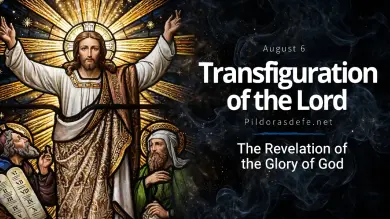
The Feast of the Transfiguration of the Lord: Behold the Radiant Glory of Christ
Discover the mystery of the Feast of the Transfiguration of the Lord: Contemplate Christ's radiant glory on Mount Tabor and awaken your Christian faith today

Our Lady of the Snows: The Miraculous Patroness of Rome and Protector of Marriages
Discover the glorious miracle of Our Lady of the Snows, patroness of Rome and advocate for marriages. Learn her history, devotion, and bless your home today
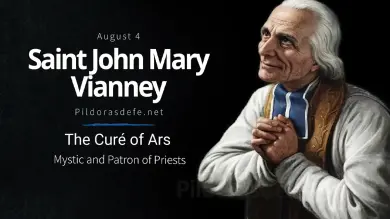
Life of Saint John Vianney: The Humble Patron Saint of Priests and Curate of Ars
Discover the inspiring life of Saint John Vianney, humble Curate of Ars and patron saint of parish priests, an eternal model of confession, prayer, and love
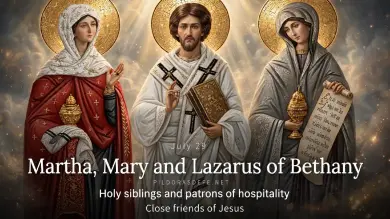
Saints Martha, Mary, and Lazarus of Bethany: Intimate Friends and Hosts of Jesus
Discover the lives of Saints Martha, Mary, and Lazarus, patron saints of hospitality: Learn how their Bethany home became a holy sanctuary of love for Jesus
 Venezuelan, faithful husband and father of a family. Electronic engineer and missionary of the faith. Committed to the proclamation of the Gospel. Solid believer that there are always new beginnings. Whoever has God has nothing to stop him.
Comments
Want to leave comments or also intentions on our homepage?
Register nowBe the first to comment.
Useful Resources
Church
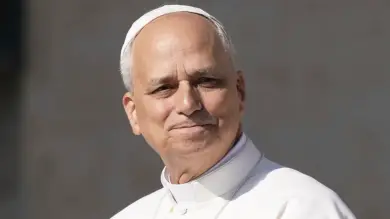
Pope Leo XIV: Love is also Loss; but it bears fruit only through self-giving: Discover how true Christian hospitality and detachment can bring peace
Church
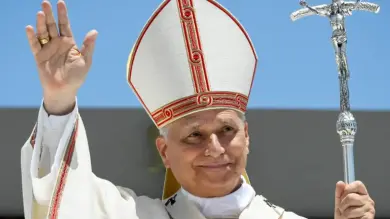
Pope Leo XIV calls for steadfast support from his cardinals during the Consistory: "I cannot carry out this ministry alone," he says, calling for communion
Church
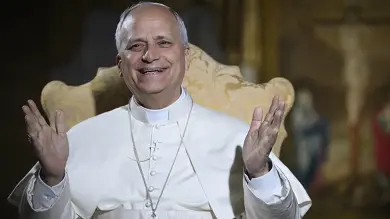
Pope Leo XIV invites the youth to seek perfect joy in God, warning that true happiness and lasting peace are never found on screens or social media platforms
Church
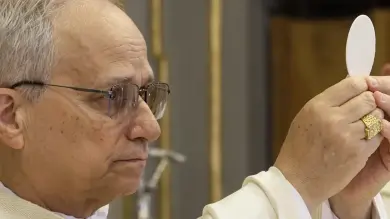
uring his General Audience, Pope Leo XIV deeply reflected on the Holy Eucharist. Discover how this sacred, living mystery actively transforms our Catholic faith
Church
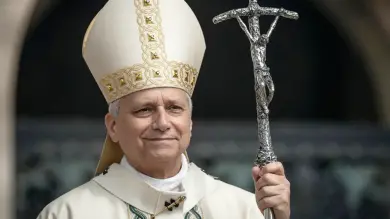
Pope Leo XIV beautifully invites us to deepen our relationship with God through daily contemplation: Discover how silent prayer forms truly credible apostles
Church