Discover 9 Powerful and Amazing Facts About the Glorious Feast of Pentecost Today
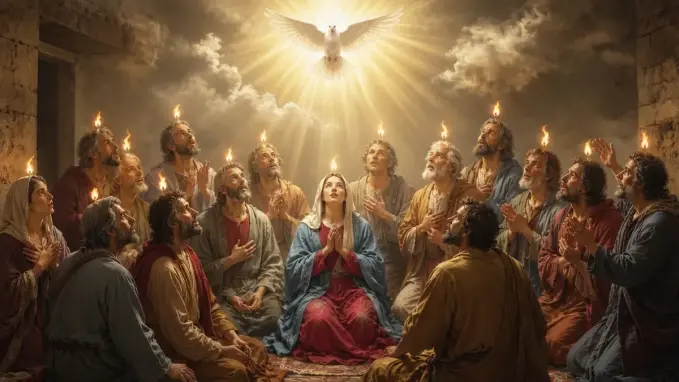
The Glorious Feast of Pentecost commemorates the descent of the Holy Spirit and the powerful birth of the Church. Discover 9 essential facts about it right now
Are you feeling spiritually exhausted, desperately searching for a profound renewal of your weary soul amid daily trials? The glorious Solemnity of Pentecost is not merely an ancient historical event; it is the explosive, ongoing manifestation of Almighty God's living breath within the Catholic Church. When the Holy Spirit violently descended upon the terrified Apostles in the Upper Room, He instantly transformed their paralyzing fear into an unstoppable, blazing apostolic zeal that permanently changed human history. Pentecost originally stems from a sacred Jewish festival, but Christ magnificently elevated it to become the definitive birth of our universal faith. By fiercely embracing these nine essential truths about this majestic celebration, you beautifully open your broken heart to the exact same divine fire that holy saints constantly invoked to miraculously overcome absolutely impossible worldly crises.
The glorious feast of Pentecost, for the Holy Catholic Church, proudly bears this specific name because it joyfully occurs exactly fifty days after the magnificent celebration of Easter. It profoundly commemorates the miraculous coming of the Holy Spirit upon the trembling Apostles and the spectacular, definitive birth of the universal Church.
9 Essential Things You Must Know About Pentecost
Below, and in absolutely no particular order, discover 9 powerful things that you strictly must know about Pentecost, the spectacular day of the coming of the Holy Spirit that miraculously caused the newborn Church to be invincibly strengthened.
1. What does the word "Pentecost" actually mean?
Pentecost originates strictly from the ancient Greek word Πεντηκοστή, meaning 'the fiftieth day.' The absolute theological reason for this title is that Pentecost Sunday is celebrated exactly on the fiftieth day after the glorious Resurrection of Easter. Saint Thomas Aquinas taught that this specific number perfectly represents the ultimate fullness of divine grace and the magnificent culmination of Christ's redemptive work.
Saint Jerome profoundly noted that the number fifty represents the ultimate fullness of forgiveness and absolute divine liberation, deeply echoing the ancient Jewish Jubilee year. The Catechism beautifully affirms this sacred timeline, stating:
"On the day of Pentecost, when the seven weeks of Easter had come to an end, Christ's Passover is fulfilled in the outpouring of the Holy Spirit" (CCC 731).
This specific fiftieth day marks the glorious moment when heaven permanently intersected with our earthly reality.
2. What exactly do we celebrate on Pentecost?
We joyfully celebrate Pentecost Sunday as the spectacular day the Holy Spirit powerfully descended upon the Apostles. Jesus faithfully kept His divine promise to never leave us orphans. The holy Church was placed in the hands of ordinary men, instantly moved by the unshakeable strength of the Spirit. This is the exact same creative divine Spirit hovering over the primordial waters.
Saint Irenaeus of Lyons masterfully taught that the Holy Spirit descended upon the Son of God so that He might beautifully become accustomed to dwelling seamlessly with the human race. Furthermore, the Holy Scriptures fiercely remind us of Christ’s unbreakable promise:
"But the Advocate, the Holy Spirit, whom the Father will send in my name, will teach you all things and will remind you of everything I have said to you" (John 14:26).
We celebrate His faithful arrival.
3. Pentecost is the definitive birth of the Church
On Pentecost, the Catholic Church is officially born. The unstoppable diffusion of the Holy Gospel radically begins when Peter, the first Pope, receives the Holy Spirit. He bravely addresses the massive crowd, fiercely preaching about the brutal death and glorious resurrection of Jesus for the forgiveness of sins, miraculously securing the first three thousand converts. The Spirit continuously builds the Church.
The Catholic Church was miraculously made manifest to the world exactly on this sacred day. The Catechism clearly instructs us:
"When the work which the Father gave the Son to do on earth was accomplished, the Holy Spirit was sent on the day of Pentecost in order that he might continually sanctify the Church" (CCC 767).
Saint Augustine beautifully added that what the human soul is to our physical body, the Holy Spirit is to the Church.
4. The various historical names of Pentecost
In the Old Testament, it is richly known by several titles: 'The Feast of Weeks,' 'The Harvest Festival,' and 'The Day of First Fruits.' In England, it is historically called 'Whitsunday,' referencing the white garments of the newly baptized. Notably, the nine days the Apostles spent waiting with Mary perfectly birthed the powerful Catholic tradition of praying miraculous novenas.
Sacred Scripture directly establishes these ancient agricultural titles to emphasize a massive spiritual harvest. God explicitly commanded His chosen people:
"You shall keep the feast of Weeks with the first of the wheat harvest, and the feast of the Ingathering at the turn of the year" (Exodus 34:22).
Saint John Chrysostom brilliantly preached that this earthly harvest perfectly foreshadowed the massive spiritual ingathering of the first three thousand precious souls miraculously reaped by the Apostles on Pentecost.
5. The Holy Spirit and the miraculous gift of tongues
Through an astonishing, undeniable miracle of the Holy Spirit at Pentecost, the terrified Apostles courageously began to preach in the native languages of the diverse people present. Pilgrims had traveled from absolutely all corners of the vast Roman Empire. Every single person listening was completely amazed because they perfectly understood the saving Gospel in their own mother tongue.
This stunning linguistic miracle completely reversed the devastating curse of the ancient Tower of Babel, where human pride tragically fractured human communication. As the biblical text powerfully declares:
"And they were all filled with the holy Spirit and began to speak in different tongues, as the Spirit enabled them to proclaim" (Acts 2:4).
Saint Cyril of Jerusalem wisely observed that the Spirit granted them one unified voice of divine love that instantly healed all earthly cultural divisions.
6. Devout Jews also celebrate Pentecost
Devout Jews also celebrate Pentecost, but for a profoundly different reason. They strictly observe God delivering the Ten Commandments to Moses on Mount Sinai, exactly fifty days after the Exodus. However, at the Christian Pentecost, Almighty God no longer rigidly writes His sacred law on cold stone tablets, but violently engraves it upon our burning hearts with the Holy Spirit.
The astonishing transition from the rigid Old Covenant to the glorious New Covenant is beautifully visible here. The mighty prophet Jeremiah explicitly foretold this divine transformation long ago:
"But this is the covenant I will make... I will place my law within them, and write it upon their hearts" (Jeremiah 31:33).
Saint Thomas Aquinas profoundly explained that the Holy Spirit Himself is the New Law of the Gospel, entirely replacing cold stone tablets with unshakeable burning love.
7. The profound meaning of the color red
In Western Churches, Pentecost is always visually represented by the vibrant color red, which perfectly symbolizes the consuming fire of the Holy Spirit and the burning flame of God's love. Consequently, priests wear red vestments. This sacred color equally represents the Spirit transformed into miraculous tongues of fire, and the glorious, spilled blood of the brave Christian martyrs.
The brilliant red hues physically represent the purifying and illuminating properties of the Holy Spirit's divine fire. The Catechism clearly emphasizes this majestic symbolism, officially teaching:
"While water signifies birth and the fruitfulness of life given in the Holy Spirit, fire symbolizes the transforming energy of the Holy Spirit's actions" (CCC 696).
Saint Catherine of Siena passionately urged all believers to violently throw their fragile hearts into this blazing furnace of God's redemptive, eternal love.
8. What does the violent, strong wind signify?
In the majestic history of our salvation, God has intimately breathed the Holy Spirit upon humanity only twice: when He gently breathed into Adam to give him earthly life, and when the resurrected Jesus breathed upon His Apostles to confer the supreme power to forgive sins. The violent, rushing wind of Pentecost powerfully represents the invincible breath of God's life.
This sacred, invisible breath fundamentally changes the entire trajectory of human history. The Holy Gospel explicitly records this majestic second breathing:
"And when he had said this, he breathed on them and said to them, 'Receive the holy Spirit'" (John 20:22).
Saint Gregory of Nyssa profoundly meditated on this reality, stating that exactly as the physical lungs desperately require oxygen to survive, the Christian soul must constantly inhale the invisible wind of the Holy Spirit.
9. How to actively live Pentecost in our daily life
The Holy Spirit guides us toward the absolute fullness of God's truth. As Saint John Paul II constantly begged for a 'New Pentecost,' we are urgently called to reach beyond our earthly limits. Empowered by the divine Spirit, every baptized Catholic is fiercely summoned to witness the Kingdom of God. We must actively allow the Paraclete to conquer our crises.
Embracing Pentecost daily means violently rejecting a life of mediocre lukewarmness and allowing the Spirit to produce abundant divine fruit. Saint Paul forcefully reminds every believer:
"In contrast, the fruit of the Spirit is love, joy, peace, patience, kindness, generosity, faithfulness, gentleness, self-control" (Galatians 5:22-23).
Saint Josemaría Escrivá perfectly synthesized this daily mission, boldly teaching that we must become deeply docile to the Paraclete, allowing Him to safely steer the fragile boat of our earthly existence.
4 Amazing Curiosities About the Power of the Holy Spirit
1. The Unseen Divine Architect
While the Father created the world and the Son redeemed it, the Holy Spirit is the unseen architect who actively sanctifies it.
Every single Sacrament of the Catholic Church strictly relies on the invocation of the Holy Spirit (the Epiclesis) to completely transform ordinary matter, like bread, wine, water, and oil, into the glorious, life-giving presence of Almighty God.
2. The Unforgivable Sin Explained
Jesus sternly warned that blasphemy against the Holy Spirit will never be forgiven. This is not because God's mercy is limited, but because this specific sin is the deliberate, stubborn refusal to accept God's saving mercy.
By actively rejecting the Holy Spirit, the soul completely blocks the only divine medicine capable of curing its fatal spiritual wounds.
3. The Sweet Guest of the Soul
Through the Sacrament of Baptism, your physical body literally becomes a living, breathing temple of the Holy Spirit.
He does not merely guide you from a distant heaven; He permanently takes up intimate residence within your very soul, constantly whispering divine counsel, supernatural comfort, and unshakeable courage directly into your heart during your darkest moments of despair.
4. The Fire That Does Not Consume
The Holy Spirit chose to brilliantly manifest as tongues of fire because spiritual fire possesses a dual, miraculous nature: it violently burns away the ugly impurities of human sin, while simultaneously illuminating the dark mind with divine truth.
Unlike earthly fire that destroys, the fire of Pentecost magnificently purifies the soul without ever consuming its unique, beautiful identity.
Embracing the Transforming Fire of the Holy Spirit
When the fierce storms of life violently threaten to shatter your fragile peace, you must courageously remember that the exact same Holy Spirit who descended at Pentecost permanently resides within your baptized soul. You are never fighting your impossible battles alone.
Do not allow worldly fear to extinguish this divine flame. Surrender your deepest anxieties to the Paraclete today, trusting blindly that His majestic wind will radically renew your spiritual earth. As the Catechism beautifully teaches:
"The Holy Spirit is the master of the interior life" (CCC 2684).
Magnificent Prayer to the Holy Spirit
The following is the magnificent prayer of Cardinal Jean Verdier, a devoted French cardinal who served as the courageous Archbishop of Paris during the turbulent twentieth century. It is undeniably one of the most universally known and widely spread invocations to the Holy Spirit throughout the entire global Catholic world.
For many decades, this profound prayer has been the ultimate, unshakeable spiritual lighthouse for all those who actively seek to maintain a daily, intimate dialogue with the Divine Creator.
Oh Holy Spirit, infinite Love of the Father and the Son, constantly inspire me in what I must think, exactly what I must say, precisely how I must say it, what I must silently keep secret, how I must act, and exactly what I must do, strictly for the greater glory of God, the ultimate good of all souls, and my own eternal sanctification.
Holy Spirit, come and grant me sharp mental acuity to perfectly understand, massive capacity to retain, divine method to learn, deep subtlety to properly interpret, and immense grace and spiritual efficacy to speak. Grant me absolute accuracy when beginning, perfect divine direction when progressing, and flawless perfection when finally finishing. Amen.
Unleash the power of Pentecost in your life!
God does not want you to live in paralyzing fear. The Holy Spirit is desperately waiting to fill you with unshakeable courage and fierce divine joy.
Claim this magnificent spiritual inheritance right now, and boldly share these transformative truths with a broken soul who desperately needs heaven's invincible fire today!
The explosive, miraculous power of Pentecost is fiercely waiting to completely revolutionize your weary heart right now. Will you courageously open your shattered soul to the rushing wind of heaven and allow the Holy Spirit to conquer your impossible battles today?
❓ FAQ: Frequently Asked Questions About the Feast of Pentecost
Yes, it absolutely is. Because Pentecost always falls on a Sunday, it inherently carries the strict Sunday obligation. The Catechism clearly teaches that "On Sundays and other holy days of obligation the faithful are bound to participate in the Mass" (CCC 2180). It is one of the most supremely important solemnities in the entire liturgical calendar.
The seven majestic gifts perfectly equip the soul for fierce spiritual combat. As beautifully derived from Isaiah 11:2-3, they are: Wisdom, Understanding, Counsel, Fortitude, Knowledge, Piety, and Fear of the Lord. Saint Thomas Aquinas profoundly taught that these indispensable divine gifts make the faithful soul incredibly docile to the promptings and the gentle voice of the Holy Spirit.
Fire is a magnificent biblical symbol of God's transforming, purifying presence. When the Holy Spirit violently descended as tongues of fire, it visibly demonstrated that the Apostles' minds were brilliantly illuminated with absolute divine truth, and their once-fearful hearts were entirely consumed by a blazing, unstoppable passion to fiercely preach the saving Gospel to all nations.
The Holy Spirit is the invisible, divine engine behind every single Sacrament. The Catechism affirms that the Sacraments are "actions of the Holy Spirit at work in his Body, the Church" (CCC 1116). For example, during the Mass, the priest specifically invokes the Holy Spirit to descend upon the bread and wine to miraculously transform them into Christ's Body and Blood.
Absolutely. While you permanently received the Holy Spirit at your Baptism and were deeply sealed with His power at Confirmation, you can and strictly should pray daily for a profound "renewal" or a fresh, powerful outpouring of His graces. Saint John Paul II constantly urged the faithful to eagerly beg for a continuous, personal Pentecost in their daily lives.
 Venezuelan, faithful husband and father of a family. Electronic engineer and missionary of the faith. Committed to the proclamation of the Gospel. Solid believer that there are always new beginnings. Whoever has God has nothing to stop him.
Comments
Want to leave comments and intentions on our site?
Be the first to comment.
Useful Resources
Walking in Faith

Discover how to protect your mental and spiritual health with these effective Catholic strategies to prevent depression, leaning entirely on God's daily grace
Walking in Faith
Whoever receives the Brown Scapular commits to the Carmelite spirituality. Discover nine essential things you need to know about this powerful sacramental
Walking in Faith

Spiritual therapy offers a profound path to heal depression: Discover three essential Catholic steps to restore your mental health and find lasting peace today
Walking in Faith
Experience the miraculous healing anointing of the Sacred Heart of Jesus through this prayer: Discover how His infinite mercy can heal and transform your life.
Walking in Faith
Discover the 12 promises of the Sacred Heart of Jesus: Learn how these divine blessings of mercy, love, and protection can transform your family and life today
Walking in Faith