Saint of the Day: Saint George, Guardian Against Disease and Danger
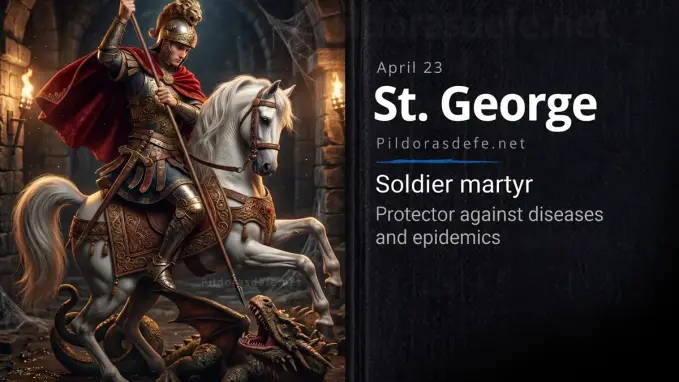
Discover the Saint of the Day: Saint George. The Great Martyr who protects against diseases, plagues, and urgent dangers. Invoke his divine help today. Pray now!
What would you do if you stood face-to-face with a beast that devours not only bodies but the hope of an entire people? Today, in our Saint of the Day section, we invoke the presence of Saint George, the invincible soldier of Christ whose lance pierced the dragon of despair to grant us the victory of faith. In 2026, as diseases and dangers lurk around every corner, the figure of Saint George emerges as the protective shield we desperately need. He is not merely an ancient legend; he is the cry of a martyr who preferred to lose his head rather than deny his love for Jesus. Prepare to discover the warrior who conquered the plague, leprosy, and the devil himself with the power of the Gospel. Your protection begins today!
Saint George (in Latin, Georgius) is honored as a martyr of Christ by all the churches of East and West since ancient times. Popular tradition portrays him as the knight who confronts the dragon, a symbol of bold faith that triumphs over the power of evil. His memory is celebrated on April 23 also in the Syrian and Byzantine rites, uniting Christendom under the banner of courage.
Feast: April 23
Martirologio romano: Saint George, martyr, whose glorious struggle, which took place in Diospolis or Lydda, in Palestine, is celebrated by all the churches of East and West since ancient times as a triumph of light over darkness.
Biography of Saint George: Patron of Nations and Hearts
Saint George is the patron saint of England, of entire regions in Spain, Portugal, and Lithuania; of cities such as Genoa, Campobasso, Ferrara, Reggio Calabria, and hundreds of other cities and countries that see in him the ideal of justice. Several orders of chivalry bear his name and symbols, among the best known: the Order of Saint George, the Teutonic Order, the Order of Calatrava of Aragon, the Sacred Constantinian Order of Saint George, and others, perpetuating his legacy of spiritual nobility.
The name Saint George derives from the Greek, meaning "georgos," or farmer, and has been carried through the centuries by many celebrities as well as kings and princes, such as Washington and Gagarin. The Eastern Church reverently calls him the "Great Martyr," recognizing that his sowing was not in the earth but in heaven with his own blood.
Considering the absence of definitive and conclusive historical information proving the detailed work of his physical life, in 1969 his cult was placed in the liturgy as an optional memorial; however, the faithful in all the places where he is venerated have continued this great devotion, proving that the faith of the people is stronger than historical archives.
The Mysterious Life of Saint George: The Tribune of Christ
The figure of Saint George has always been surrounded by mystery and mysticism. For several centuries, many scholars tried to determine who Saint George really was; the few reports received are in the "Passio Georgii" of the "Decretum Gelasianum" of the year 496, a document that attests to his heroic existence.
According to this document, which was translated into Latin, Coptic, Armenian, Ethiopian, and Arabic, Saint George was born in Cappadocia and was the son of Gerontius the Persian and Polychronia of Cappadocia; he was educated as a fervent Christian from his cradle. As an adult, he became a tribune in the army of the Persian emperor Dacian, although other historians affirm that he belonged to the army of Diocletian, emperor of the Romans, who, with the edict of the year 303, began a harsh and terrible persecution against all Christians.
The tribune George, with his heart aflame, could not resist the charms of the Lord, so it was not long before he rebelled against the unjust orders of his own army to follow the laws of the King of Kings.
Saint George joyfully distributed all his goods to the poor and then, in the middle of the main square of the city of Nicomedia, energetically and with great fury tore down the imperial edict that prohibited Christian worship and, before all those present, ripped it apart, despising the emperor’s order in favor of eternal truth.
The Arrest and Glorious Tortures of Saint George
After some time, Saint George was arrested for this act of holy rebellion, and when asked why he had done it, he confessed with a firm voice before his persecutors his total faith in Jesus Christ. He was repeatedly exhorted to renounce his faith and repent of what he had done, but Saint George rejected every worldly order and proclaimed even more his absolute faith and love in Jesus. Unable to convince him with words, he was subjected to horrendous tortures and then sent to a dark prison.
Numerous superhuman torments were inflicted on him for many days during his imprisonment, including the wheel of swords and quicklime, but none of them succeeded in making him change his mind, for God miraculously strengthened him. Finally, seeing his unbreakable constancy, he was handed over to his executioner, who with a single blow of the axe, cut off his head, crowning him with martyrdom.
The cult of Saint George began almost immediately, spreading like fire throughout the empire. His tomb is located at the place of his martyrdom, in Lydda, where countless prodigies have been documented to this day.
The Golden Legend of Saint George and the Dragon
Tradition tells that in the city of Silene in Libya there was a great pond in which a dragon that came from a hidden place would land and kill with its pestilent breath a high number of people who approached. The poor inhabitants offered it two sheep a day to appease it, and when these began to run short, they offered one sheep and one young girl chosen by lot.
After seeing many of their children die, the people of the town rebelled and demanded that the king’s daughter be sacrificed. After eight days of intense protest, the king finally had to yield, and all the young people wept for the girl as she made her way to the dragon’s lair, dressed as a bride for her death.
The young Saint George, who was already aware of this sacrifice through a divine revelation, calmed the princess and promised to intervene to save her in the name of God. When the dragon emerged from the water, spewing jets of fire and pestilent smoke from its nostrils, Saint George was not afraid; he invoked the name of Christ, mounted his horse, and stood before the dragon, piercing it with his sacred lance and wounding it gravely, causing it to fall to the ground.
Then he told the king’s daughter not to be afraid and wrapped his belt around the dragon’s neck; once this was done, the dragon began to follow the young girl to the city docilely, like a domestic dog, to the astonishment of all.
The inhabitants were terrified to see the monster approaching, but Saint George reassured them with authority: "Do not be afraid; God has sent me to you to free you from the dragon. Embrace the faith in Christ, receive baptism, and I will kill the monster."
Then the king and all the people converted to the true faith, and Saint George killed the dragon outside the city. Popular imagination portrayed the heroic martyr of Cappadocia as a symbol of Christ, who conquers evil and sin (the devil), represented by the figure of the dragon.
Saint George is considered the patron of knights, armorers, soldiers, explorers, marksmen, cavalry, archers, and saddlers. He is invoked with great efficacy against the plague, leprosy, and syphilis, venomous snakes, head diseases, and especially in the countries on the slopes of Vesuvius against destructive volcanic eruptions.
🌟 4 Curious Facts and Miracles of Saint George
1. One of the Fourteen Holy Helpers
Saint George belongs to the select group of the "Fourteen Holy Helpers," a group of saints whose intercession is considered especially effective against diseases and plagues. During the Black Death in the Middle Ages, his invocation was key to the protection of entire towns, consolidating his reputation as a spiritual physician of both body and soul.
2. The Rose of Saint George and the Miracle of Love
In Catalonia and other regions, there is a tradition of giving roses on his feast day. Legend says that from the blood of the dragon defeated by George sprang a rosebush with intensely red flowers. The knight cut the most beautiful rose and gave it to the saved princess, symbolizing the triumph of beauty and grace over the ugliness of sin.
3. The Lance "Ascalon" and the Power of the Name
Medieval tradition named Saint George’s lance "Ascalon," after the city of Ascalon. It is said that it was not an ordinary lance but had been blessed never to break while used to defend the faith. It represents the word of God, which is "living and active, sharper than any two-edged sword."
4. Incorruptibility and the Fragrance of Holiness
Throughout history, several pilgrims who visited his tomb in Lydda reported that a sweet perfume, known as the "odor of sanctity," emanated from the sepulcher. Despite the centuries, veneration at his place of martyrdom has never ceased, and it is said that the oil from the lamps burning beside his tomb has performed miraculous healings of blindness and paralysis.
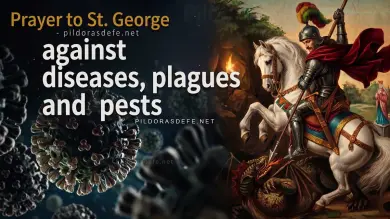
Prayer to Saint George Against Illness
Oh, faithful servant of God and invincible martyr, Saint George, you were favored by God with the gift of faith and inflamed with an ardent love for Christ. You fought valiantly against the dragon of pride, falsehood, and deceit. Neither pain, nor torture, nor the sword, nor death could separate you from the love of Christ. I fervently implore you, for the sake of this love, to help me through your intercession to overcome the temptations and sorrows that surround me. Help me to be delivered from all evil and the sickness that lurks around me.
Help me, dear Saint George, to bear with courage the trials that oppress me, the crises that overwhelm me, and the plague that keeps me on watch. May I, with the love of God, learn to carry patiently the cross that has been placed upon me. May neither anguish nor the difficulties of life separate me from that inexhaustible love. Brave champion of the faith, help me to fight evil and overcome illness so that I may win the crown promised to all those who persevere until the end. I ask all this through the love of Our Lord Jesus Christ, who lives and reigns with God the Father, in unity with the Holy Spirit, one God forever and ever. Amen.
Saint George, pray for us in our sorrows, in our pain, and in the diseases that threaten us.
Final Reflection on the Feast of Saint George
The feast of Saint George reminds us that true courage flows from faith in Christ. Just as he faced the dragon without fear, we are called to confront our own challenges with trust in God’s power. His life shows that no trial is too great when we stand firm in the Lord. May his example inspire us to live as valiant soldiers of the faith, knowing that victory belongs to those who persevere in love.
Today is the Saint of the Day: Saint George!
Rise with the lance of faith and the shield of prayer. Invoke this great martyr in your daily battles, trust in his powerful intercession, and let his courage ignite your heart with the light of Christ.
Saint George, protect us, guide us, and help us overcome every evil with the strength of the Gospel! 🛡️🙏
Saint George's victory is the triumph of the spirit over the flesh. In our modern age, where "dragons" appear as anxiety, plague, or moral decay, his life reminds us that true safety is found in the Name of Jesus. May your heart be a fertile field where the seeds of courage grow, always protected by the spear of the Word.
❓ FAQ: Frequently Asked Questions about Saint George
The dragon symbolizes the devil and all evil forces. Saint George’s victory represents Christ’s triumph over sin and death. As the Bible says, “This is the victory that has overcome the world—our faith” (1 John 5:4). His story encourages us to fight spiritual battles with courage.
Saint George is the patron saint of England, soldiers, knights, explorers, and many cities in Spain and Portugal. He is also invoked against diseases like the plague and leprosy, and protects those facing spiritual or physical battles.
Yes, ancient documents confirm that Saint George was a Roman soldier martyred around the year 303 for confessing his faith in Christ during Diocletian’s persecution. His bravery under torture is a real testimony that has inspired the Church for centuries.
Call upon him with confidence in times of trial, asking for strength to overcome temptations and illnesses. Pray his prayer and trust in his intercession; he will help you be as brave as he was and to surrender your life to Christ with joy.
Invoke his intercession through the prayer provided, especially during times of health crises or spiritual attacks. Displaying his image reminds the family to "put on the full armor of God." His patronage over the home acts as a spiritual sentry, repelling negative influences and fostering a culture of Christian bravery and peace.
Another Daily Saints.
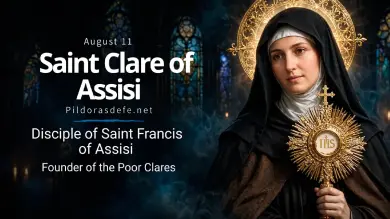
Saint Clare of Assisi: Beloved Disciple of Saint Francis and Founder of the Poor Clares
Discover the life of Saint Clare of Assisi, patron saint of television and eye disease: A faithful disciple of St. Francis who founded the holy Poor Clares
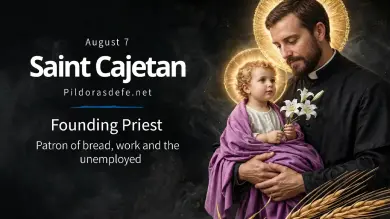
Life of Saint Cajetan of Thiene: The Holy Priest Who Defended Labor and Dignity
Discover the inspiring life of Saint Cajetan of Thiene, patron saint of bread and work: Learn about his miracles of Divine Providence and labor blessings
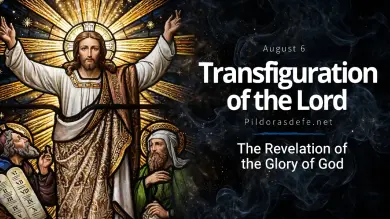
The Feast of the Transfiguration of the Lord: Behold the Radiant Glory of Christ
Discover the mystery of the Feast of the Transfiguration of the Lord: Contemplate Christ's radiant glory on Mount Tabor and awaken your Christian faith today

Our Lady of the Snows: The Miraculous Patroness of Rome and Protector of Marriages
Discover the glorious miracle of Our Lady of the Snows, patroness of Rome and advocate for marriages. Learn her history, devotion, and bless your home today
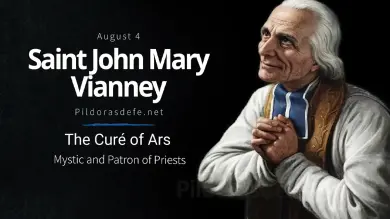
Life of Saint John Vianney: The Humble Patron Saint of Priests and Curate of Ars
Discover the inspiring life of Saint John Vianney, humble Curate of Ars and patron saint of parish priests, an eternal model of confession, prayer, and love
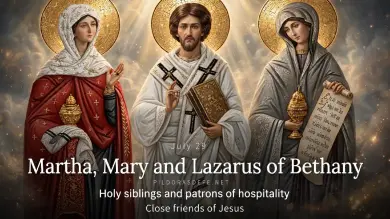
Saints Martha, Mary, and Lazarus of Bethany: Intimate Friends and Hosts of Jesus
Discover the lives of Saints Martha, Mary, and Lazarus, patron saints of hospitality: Learn how their Bethany home became a holy sanctuary of love for Jesus
Biography, celebrations and Church Feasts
 Venezuelan, faithful husband and father of a family. Electronic engineer and missionary of the faith. Committed to the proclamation of the Gospel. Solid believer that there are always new beginnings. Whoever has God has nothing to stop him.
Comments
Want to leave comments or also intentions on our homepage?
Register nowBe the first to comment.
Useful Resources
Church
Pope Leo XIV: Love is also Loss; but it bears fruit only through self-giving: Discover how true Christian hospitality and detachment can bring peace
Church
Pope Leo XIV calls for steadfast support from his cardinals during the Consistory: "I cannot carry out this ministry alone," he says, calling for communion
Church
Pope Leo XIV invites the youth to seek perfect joy in God, warning that true happiness and lasting peace are never found on screens or social media platforms
Church
uring his General Audience, Pope Leo XIV deeply reflected on the Holy Eucharist. Discover how this sacred, living mystery actively transforms our Catholic faith
Church
Pope Leo XIV beautifully invites us to deepen our relationship with God through daily contemplation: Discover how silent prayer forms truly credible apostles
Church