The Lives of Saints Philip and James: Following the Master Foretold by the Prophets
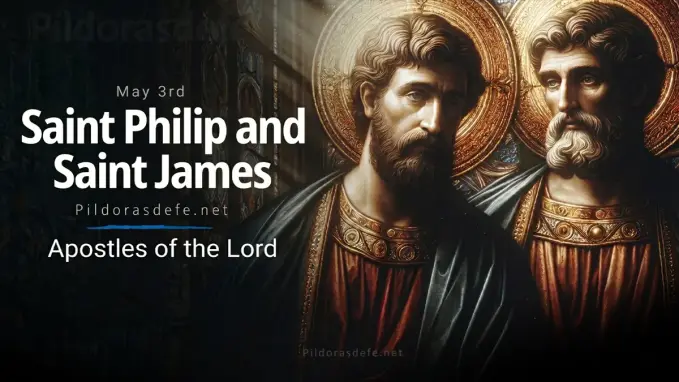
Saints Philip and James: Apostles who found the Savior foretold by Moses and the prophets. Experience their divine mission and encounter with the Messiah! 🙏 ✨
"Lord, show us the Father, and that is enough for us." This single plea from Saint Philip echoes through the ages as the ultimate cry of the human heart seeking eternal purpose and divine clarity. Philip and James, the holy witnesses we honor today, were not mere historical figures but intimate companions of the Light, chosen from the dust of Galilee to illuminate the world. Their story is the sacred bridge between the ancient prophecies of Moses and the birth of the Universal Church. As we celebrate their feast on May 3rd, we are invited to look beyond the surface of their lives and see how two ordinary men became the very pillars upon which our faith stands, proving that a simple "yes" to the Master can transform a common life into a monumental legacy of grace.
Today we celebrate the Feast of the Apostles Philip and James—mighty witnesses of the Lord. Saint Philip, a devoted Apostle of the Savior, was born in Bethsaida and stood among the first to be called by Jesus. It was Philip who, with a heart overflowing with conviction, caused the Apostle Bartholomew to burn with a holy curiosity about Jesus when he spoke those immortal words: "Come and see." Tradition and the weight of ancient writings tell us that he eventually sealed his testimony in blood, dying upon an inverted cross during the reign of Emperor Domitian in Hierapolis of Phrygia.
Saints Philip and James
Saint James, also an Apostle of the Lord and often referred to as "the Less" to distinguish him from the brother of John, rose to a position of profound authority as the first Bishop of Jerusalem following the martyrdom of James the Greater and the departure of Peter. He occupies a singular and prominent position in the Acts of the Apostles and is the revered author of the Epistle that bears his name. This letter, addressed to the twelve tribes of the dispersion, serves as a timeless echo of the "Sermon on the Mount." His legendary asceticism earned him the deep esteem of the Orthodox Jews, many of whom were converted by his silent holiness. He ultimately suffered martyrdom for the Truth in 62 AD.
Feast Day: May 3rd
According to the Roman Martyrology: The Feast of Saints Philip and James, Apostles. Philip was born in Bethsaida, the same town as Peter and Andrew; originally a disciple of John the Baptist, he was called by the Lord to "Follow Me." James, the son of Alphaeus, known as "the Just," was considered the "brother of the Lord" due to his kinship through the Blessed Virgin Mary. He served as the first Bishop of Jerusalem, and, during the critical controversy over circumcision, he famously joined Peter’s proposal to not impose heavy legalistic burdens or rigid traditions upon the new converts from paganism. He crowned his apostolate with a glorious martyrdom.
The Lives of Saints Philip and James
Today, the Church honors these two holy Apostles together, Philip and James the Less—two humble Galileans who found the One of whom Moses and all the prophets wrote with such longing. They represent the diversity of the early Church: Philip, the seeker who brings others to Christ, and James, the steadfast guardian of the faith in its first city.
These two great pillars, James and Philip, became the very foundation stones of the Church. Their lives remind us once again that true holiness and the resulting apostolate are entirely the gifts of God’s grace, rather than a matter of mere human achievement or social status. They were ordinary men transformed by an extraordinary Presence.
Saint Philip the Apostle
Saint Philip was among the very first Apostles called by Jesus. Alongside Andrew and Peter, he heard the famous life-altering command: "Follow me," spoken while he was standing on the shores of Lake Gennesaret. Philip’s heart was so moved that he immediately sought out Nathanael, igniting a holy curiosity by simply saying: "Come and see." He understood that Christ must be experienced rather than just explained.
In the Gospel of John, Philip is introduced during the moment of the miraculous multiplication of the loaves and fishes. Jesus tested him by asking how they could feed the massive crowd, and Philip, thinking in human terms, calculated the cost (John 6:5-7), only to witness the divine abundance that follows total surrender to the Master.
Later, after Jesus made His triumphal entry into Jerusalem, a group of Greeks wanted to meet the Lord. They approached Philip, perhaps because of his Greek name or approachable nature, to ask how they might see Jesus (John 12:21). This highlights Philip’s role as a bridge between cultures, bringing the Gentile world into contact with the Savior.
At the Last Supper, it is Philip who approaches Jesus with that anxious, beautiful petition: "Lord, show us the Father, and that is enough for us," to which Jesus responded with gentle profundity: "Have I been with you so long, and yet you do not know me, Philip? He who has seen me has seen the Father; how can you say, "Show us the Father"?" This moment refined Philip"s faith, teaching him that the Divine was standing right before him.
The vast majority of ancient traditions and historical writings affirm that he died a martyr, crucified on an inverted cross during the reign of Emperor Domitian in Hierapolis, Phrygia, offering his last breath for the sake of the Gospel.
Saint James the Apostle
The Apostle James, son of Alphaeus, is also known as James the Less to distinguish him from James, the son of Zebedee, the brother of John, who is venerated in Spain as Santiago de Compostela. Although his title suggests a "lesser" role, his impact on the early Church was colossal and definitive.
From the Gospel of Luke, we know that Jesus specifically chose James from among His many followers to be one of the twelve men whom He named Apostles (Luke 6:14), setting him apart for a life of radical service and witness.
In his first letter to the Corinthians, Saint Paul notes that after His glorious Resurrection, Jesus appeared specifically to James and then to all the Apostles. James was instrumental in the early days of the Church; he welcomed Paul—once a fierce persecutor of Christians—into the community along with Peter and John, recognizing the transformative power of grace. He served with distinction as the first Bishop of Jerusalem.
He is the revered author of the first "Catholic" Epistle of the New Testament. In this work, he addressed the twelve tribes scattered abroad, providing practical wisdom for Jewish-Christians living outside of Palestine. His writing is often called the "Proverbs of the New Testament" because of its direct and challenging wisdom.
Prayer, hope, charity, and the danger of poor judgment are central themes in his writings. He speaks with piercing clarity on the duty of justice and places immense emphasis on the "sins of the tongue." James teaches us that if we are true disciples of Jesus, our faith must be manifested through perfect works of love (James 1:4). According to the historian Eusebius, James was murdered in 62 or 63 AD during a popular revolt. He was reportedly cast down from the pinnacle of the Temple, and when the fall did not kill him, he was beaten to death while praying for his executioners. Holy Apostles Philip and James, pray for us!
🌟 4 Curious Facts About Saints Philip and James
1. United Even in Death: The Basilica of the Twelve Apostles
Few realize that these two saints share more than just a feast day. Their holy relics rest together in the crypt of the Basilica of the Twelve Holy Apostles (Santi Dodici Apostoli) in Rome. In 2016, scientists examined these remains, confirming they belonged to men of the first century, further cementing the historical reality of their shared mission and eternal rest.
2. The "Brother of the Lord" and His Legendary Holiness
James was so respected for his piety that even non-Christians called him "the Just." Traditional accounts suggest that his knees had become hard like those of a camel because he spent so much time prostrate in the Temple, praying for the forgiveness of his people. His reputation for holiness was a primary reason many Jews converted to the faith.
3. Philip’s Multi-Cultural Mission
Philip is uniquely positioned in the Gospels as a bridge between the Jewish and Greek worlds. While most Apostles focused on the house of Israel initially, Philip was the one the "Greeks" approached to see Jesus. This indicates that he possessed a unique openness and perhaps a fluency in Greek that allowed him to be one of the first truly "international" evangelists.
4. The Symbolism of the Cross and the Loaves
In sacred art, Saint Philip is often depicted holding a tall column or a cross, representing his martyrdom, but he is also frequently shown with baskets of bread. This beautiful detail links him forever to the miracle of the loaves, reminding us that he learned through experience that God provides exactly what we need, even when our human calculations fail.
The legacy of Saints Philip and James invites us to move from intellectual curiosity to a transformative, lived experience with the Savior. By seeking the Father’s face in our daily lives and proving our faith through works of justice, we become modern echoes of their apostolic voice. May their courage inspire our own witness today.
ANSWER THE MASTER"S CALL TODAY!
Like Philip and James, you are being invited to move beyond mere curiosity and into a transformative encounter with the Living God.
Do not let the calculations of this world dim your faith; instead, lift your heart and say, "Show us the Father!" Embrace your mission with the same courage that these holy men showed, knowing that your life is a gift intended to bring others to the Light.
Share this message of hope and let us walk together toward the Kingdom!
If you feel moved by the legacy of these two Apostles, I suggest dedicating a "Philip and James Hour" this week. Spend thirty minutes in silence, asking God to "show you the Father" in the mundane moments of your day, and another thirty minutes practicing the "justice of the tongue" that James preached. By consciously choosing to speak only words that build up and bring peace, you are directly applying the theology of the Apostles to your modern life, transforming your home into a sanctuary of the early Church.
Final Reflection: Holiness is not the result of human perfection, but the fruit of an authentic encounter with the Master. Philip and James show us that God uses our doubts and our unique heritage to build His Kingdom. When we surrender our calculations and our traditions to Him, He makes us immovable pillars of His eternal Love.
❓ FAQ: Frequently Asked Questions About Saints Philip and James
Saint Philip was a bridge-builder who led others directly to Christ. Born in Bethsaida, he immediately shared his discovery with Nathanael. His spiritual hunger peaked at the Last Supper when he asked to see the Father. Philip reminds us that our primary mission is to facilitate a personal encounter between the Master and those still searching.
James the Less is historically identified as a close relative of Jesus, likely a cousin. His title "the Less" distinguished him from the son of Zebedee. As the leader of the Jerusalem community, his profound holiness earned him the name "the Just," proving that even a quiet, steadfast presence can become a foundational pillar of our faith today.
His letter emphasizes that authentic Christianity requires tangible action. He warns against a hollow faith that lacks charity. James teaches that "just as the body without the spirit is dead, so faith without works is also dead" (James 2:26). We must manifest our internal devotion through external justice and a deep control over our daily speech.
Both Apostles sealed their mission with the ultimate sacrifice. Philip was crucified in Hierapolis after preaching throughout Phrygia, while James was cast down from the Temple heights and beaten in Jerusalem. Their martyrdom serves as a powerful reminder that the Gospel is worth everything, including our very lives, for the sake of eternal glory and divine truth.
They are celebrated together because their relics rest in the same Roman basilica. Their union signifies the diversity of the apostolate working for one Kingdom. Jesus told them: "You will receive power when the Holy Spirit comes on you; and you will be my witnesses to the ends of the earth" (Acts 1:8). Their shared feast honors this mission.
Another Daily Saints.
Saint Clare of Assisi: Beloved Disciple of Saint Francis and Founder of the Poor Clares
Discover the life of Saint Clare of Assisi, patron saint of television and eye disease: A faithful disciple of St. Francis who founded the holy Poor Clares
Life of Saint Cajetan of Thiene: The Holy Priest Who Defended Labor and Dignity
Discover the inspiring life of Saint Cajetan of Thiene, patron saint of bread and work: Learn about his miracles of Divine Providence and labor blessings
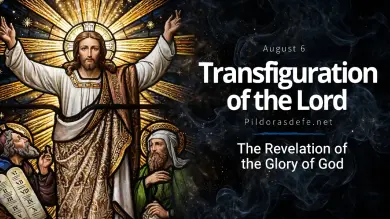
The Feast of the Transfiguration of the Lord: Behold the Radiant Glory of Christ
Discover the mystery of the Feast of the Transfiguration of the Lord: Contemplate Christ's radiant glory on Mount Tabor and awaken your Christian faith today

Our Lady of the Snows: The Miraculous Patroness of Rome and Protector of Marriages
Discover the glorious miracle of Our Lady of the Snows, patroness of Rome and advocate for marriages. Learn her history, devotion, and bless your home today
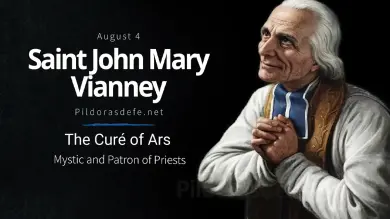
Life of Saint John Vianney: The Humble Patron Saint of Priests and Curate of Ars
Discover the inspiring life of Saint John Vianney, humble Curate of Ars and patron saint of parish priests, an eternal model of confession, prayer, and love
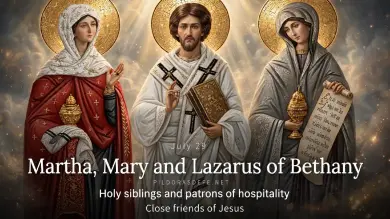
Saints Martha, Mary, and Lazarus of Bethany: Intimate Friends and Hosts of Jesus
Discover the lives of Saints Martha, Mary, and Lazarus, patron saints of hospitality: Learn how their Bethany home became a holy sanctuary of love for Jesus
 Venezuelan, faithful husband and father of a family. Electronic engineer and missionary of the faith. Committed to the proclamation of the Gospel. Solid believer that there are always new beginnings. Whoever has God has nothing to stop him.
Comments
Want to leave comments or also intentions on our homepage?
Register nowBe the first to comment.
Useful Resources
Church
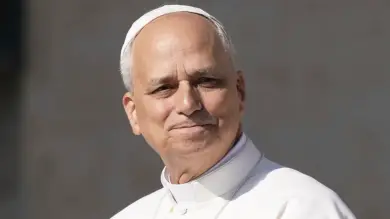
Pope Leo XIV: Love is also Loss; but it bears fruit only through self-giving: Discover how true Christian hospitality and detachment can bring peace
Church
Pope Leo XIV calls for steadfast support from his cardinals during the Consistory: "I cannot carry out this ministry alone," he says, calling for communion
Church
Pope Leo XIV invites the youth to seek perfect joy in God, warning that true happiness and lasting peace are never found on screens or social media platforms
Church
uring his General Audience, Pope Leo XIV deeply reflected on the Holy Eucharist. Discover how this sacred, living mystery actively transforms our Catholic faith
Church
Pope Leo XIV beautifully invites us to deepen our relationship with God through daily contemplation: Discover how silent prayer forms truly credible apostles
Church