Discover How the Holy Spirit Brings Healing and Freedom in the Sacrament of Confession
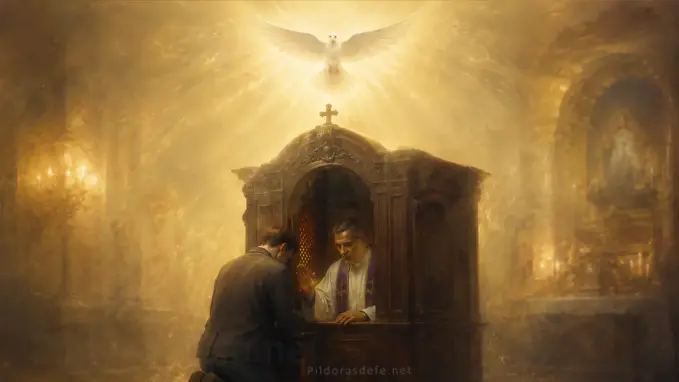
The Holy Spirit plays a central role in the sacrament of confession, inspiring contrition, sealing forgiveness, and bestowing peace. Discover its healing power
In the hushed stillness of the confessional, something far deeper than human words or ritual takes place. The Holy Spirit in Confession is the living breath of Christ Himself, continuing the sacred work He began on that first Easter evening when He stood among His apostles, breathed on them, and said, “Receive the Holy Spirit. Whose sins you forgive are forgiven them, and whose sins you retain are retained.” This divine breath has never faded. Every time a person kneels with a contrite heart and a priest raises his hand in absolution, the same Spirit who moved over the waters of creation and descended in fire at Pentecost moves gently in the depths of the human soul. He awakens conscience, stirs authentic sorrow, applies the saving power of the cross, and seals the forgiven sinner with a peace the world cannot give. The Church has always understood that the entire movement of conversion, contrition, honest confession, and the resolve to begin again, unfolds under the quiet, powerful action of the Holy Spirit. To discover the Holy Spirit in Confession is to understand why this sacrament continues to heal, liberate, and send people forth renewed two thousand years later.
From the moment the Risen Christ stood among his frightened apostles on Easter evening and breathed on them, saying, “Receive the Holy Spirit. Whose sins you forgive are forgiven them, and whose sins you retain are retained” (John 20:22-23), the forgiveness of sins has been inseparable from the life-giving presence of the Third Person of the Trinity. This was no symbolic gesture. The same Spirit who hovered over the waters at creation, who overshadowed Mary at the Incarnation, and who descended in tongues of fire at Pentecost is the one who now makes reconciliation with God a living, personal reality in every confessional.
The Spirit Who Convicts and Draws Us
Before we ever enter the confessional, the Holy Spirit is already at work. Jesus promised that the Spirit “will convict the world concerning sin and righteousness and judgment” (John 16:8). This conviction is not a harsh accusation but a gentle, truthful light. The Spirit helps us see our lives as they truly are, not to shame us, but to free us.
The Catechism of the Catholic Church teaches that the acts of the penitent, contrition, confession, and satisfaction, happen "through the action of the Holy Spirit." Even imperfect contrition (sorrow for sin based on fear of punishment or the ugliness of sin itself) is described as “a gift of God, a prompting of the Holy Spirit.” The Spirit softens the heart, stirs up sorrow, and gives us the courage to name what we would rather hide. Without this interior movement, our words in confession would remain empty. With it, they become the raw material of healing.
The Spirit Who Empowers the Minister
When the priest raises his hand and pronounces the words of absolution, “I absolve you from your sins in the name of the Father, and of the Son, and of the Holy Spirit”, he does not act on his own authority. He stands in the person of Christ, but it is the Holy Spirit who makes those words efficacious.
The longer form of absolution makes this explicit: “God, the Father of mercies, through the death and resurrection of his Son has reconciled the world to himself and sent the Holy Spirit among us for the forgiveness of sins.” The Spirit is not a passive observer; he is the active agent who applies the saving power of Christ’s cross to this particular sinner at this particular moment. The priest’s voice becomes the Spirit’s instrument. The sinner’s “Amen” or “Thanks be to God” is the Spirit’s response rising from a renewed heart.
4 Surprising Ways the Holy Spirit Works in Confession
1. The Spirit’s gift to Padre Pio
St. Padre Pio possessed an extraordinary charism during confession: he often perceived the hidden sins and wounds of penitents before they spoke them. This gift of the Holy Spirit, carefully documented in eyewitness testimonies and the official records of his canonization, allowed him to guide souls with remarkable clarity and compassion. Through him, the Spirit brought countless hidden burdens into the light of mercy, leading to deep and lasting conversions.
2. The tireless confessor of Ars
St. John Vianney, the Curé of Ars, spent up to eighteen hours a day hearing confessions, often sustained by the Holy Spirit amid physical exhaustion. Pilgrims traveled from far away, and many left not only spiritually renewed but also carrying a tangible peace they attributed to the Spirit’s presence through his ministry. His life reveals how the Spirit can empower one priest to become an instrument of mass reconciliation.
3. Breaking invisible chains
Throughout the Church’s history, the Holy Spirit has used the sacrament of confession to liberate souls from deep spiritual bondage. Just as Jesus freed the Gerasene demoniac in the Gospel, sincere confession has repeatedly broken the hold of long-standing addictions, inner torments, and spiritual oppression. The moment of absolution often marks the instant when the Spirit shatters chains that human effort alone could never loosen.
4. The peace that surpasses understanding
Countless faithful, from saints to ordinary people, describe an overwhelming and unexpected peace immediately after confession. This peace, which Scripture calls the fruit of the Spirit, is not merely the absence of guilt but the positive presence of divine consolation. Many testify that emotional wounds, anxiety, and even certain physical symptoms tied to unconfessed sin begin to ease as the Holy Spirit seals the forgiveness received.
The Spirit Who Seals and Strengthens
After the absolution, the Holy Spirit continues his work. He seals the forgiveness received. He pours out peace, that deep, inexplicable peace the world cannot give. Furthermore, He strengthens the penitent against future temptation and begins to repair the damage sin has caused in the soul.
Many people leave confession with a tangible sense of lightness, clarity, or renewed energy.
That is the Spirit at work. He restores us to the life of grace, rekindles the gifts we received in Baptism and Confirmation, and orients us once again toward the Father. As Pope Francis has beautifully said, when we go to confession, we go “to be healed… to heal my soul.” That healing is the Spirit’s gift.
A Trinitarian Embrace
Every confession is therefore a profoundly Trinitarian encounter:
- We are drawn by the Father’s mercy.
- We meet the Son who bore our sins on the cross.
- We are renewed by the Holy Spirit, who makes all things new.
The sign of the cross we make at the beginning and the Trinitarian formula at the end are not mere formalities. They are the embrace of the entire Trinity wrapping itself around a wounded child.
Living in the Spirit After Confession
The role of the Holy Spirit does not end when we leave the confessional. He accompanies us as we carry out our penance and as we strive to avoid the near occasions of sin. He turns our good resolutions into lasting conversion. When we fall again (as we often do), the same Spirit who first drew us to confession gently calls us back, never condemning, always inviting.
The next time you prepare for confession, consciously invite the Holy Spirit. Before examining your conscience, pray simply:
"Come, Holy Spirit, light of my soul. Show me what needs healing. Give me true sorrow and the courage to speak it. And after I am forgiven, fill me with your peace and strength."
The Holy Spirit is already waiting. He has been waiting since that first Easter evening when Jesus breathed on the apostles and gave the Church the greatest gift of mercy the world has ever known.
The Sacrament of Confession is not merely a human act of telling sins. It is a divine encounter in which the Holy Spirit, the Lord and Giver of Life, once again breathes new life into weary souls. Come. Breathe with him. Be made new.
The Spirit who makes all things new
In the end, the Holy Spirit in Confession reveals that reconciliation is never a mere transaction but a deeply personal encounter with the living God. He who first breathed life into humanity continues to breathe new life into every wounded and weary soul who approaches this sacrament with trust. May we never grow tired of returning to the confessional, where the Spirit once again makes all things new and sends us forth as witnesses of mercy. As Saint Paul reminds us:
"God, who is rich in mercy, because of the great love he had for us, even when we were dead in our transgressions, brought us to life with Christ."
Prayer to the Holy Spirit for the grace of confession
Come, Holy Spirit, breath of the Father and the Son, and fill my heart with the light and strength I need to approach the sacrament of reconciliation. Awaken in me a sincere desire to see my life as You see it.
Grant me the gift of true contrition, not born of fear alone but of love for the One who has loved me first. Help me to name my sins honestly, without excuse or minimization, and to trust completely in the mercy that flows from the cross of Christ.
Through the ministry of Your priest, speak Your word of absolution over my life. Cleanse me from every stain, break every chain that still binds me, and restore me to the joy of Your friendship. After I am forgiven, fill me with Your peace and give me the courage to begin again.
May this sacrament become for me a fountain of healing and a new beginning. I ask this through Christ our Lord.
Amen.
Breathe again in the embrace of mercy
The same Spirit who hovered at creation and descended at Pentecost still moves in every confessional.
He is waiting to breathe new life into you. Come. Let Him make you new.
There is no burden too heavy and no wound too deep for the Holy Spirit, who continues to breathe mercy through the sacrament of confession. When was the last time you allowed Him to renew your soul?
❓ FAQ: Frequently Asked Questions About the Holy Spirit in Confession
The Holy Spirit gently prompts us to examine our conscience and awakens true sorrow for sin. The Catechism teaches that contrition, even when imperfect, is a gift of God and a prompting of the Holy Spirit. Before entering the confessional, we can pray simply, “Come, Holy Spirit,” and trust that He will bring to light what needs healing and give us the courage to name it honestly.
On Easter evening, Jesus breathed on the apostles and said, “Receive the Holy Spirit. Whose sins you forgive are forgiven them.” This sacred breath shows that forgiveness is not a human action alone. The Holy Spirit is the divine agent who makes the words of absolution effective and applies the saving power of Christ’s death and resurrection to each penitent.
Many people experience a tangible sense of peace, lightness, or inner renewal after receiving absolution. While feelings vary, the Holy Spirit’s presence is real even when not emotionally dramatic. He often works quietly, sealing forgiveness and restoring peace that the world cannot give. Trust the grace more than the feeling.
The Holy Spirit pours out peace, joy, strength against temptation, and a renewed desire to love God and neighbor. These are among the fruits of the Spirit mentioned by Saint Paul. After confession, many notice a clearer conscience, greater freedom, and the grace to begin again with hope. These fruits are the Spirit’s way of confirming that reconciliation has truly taken place.
The priest acts in the person of Christ, but it is the Holy Spirit who makes the sacrament effective. The words of absolution are spoken “in the name of the Father, and of the Son, and of the Holy Spirit.” Through the Spirit, the absolution becomes Christ’s own word of forgiveness, not merely the priest’s. The Spirit works through the ordained minister to reconcile the sinner with God and the Church.
 Venezuelan, faithful husband and father of a family. Electronic engineer and missionary of the faith. Committed to the proclamation of the Gospel. Solid believer that there are always new beginnings. Whoever has God has nothing to stop him.
Comments
Want to leave comments and intentions on our site?
Be the first to comment.
Useful Resources
Walking in Faith

Discover how to protect your mental and spiritual health with these effective Catholic strategies to prevent depression, leaning entirely on God's daily grace
Walking in Faith
Whoever receives the Brown Scapular commits to the Carmelite spirituality. Discover nine essential things you need to know about this powerful sacramental
Walking in Faith

Spiritual therapy offers a profound path to heal depression: Discover three essential Catholic steps to restore your mental health and find lasting peace today
Walking in Faith

Experience the miraculous healing anointing of the Sacred Heart of Jesus through this prayer: Discover how His infinite mercy can heal and transform your life.
Walking in Faith
Discover the 12 promises of the Sacred Heart of Jesus: Learn how these divine blessings of mercy, love, and protection can transform your family and life today
Walking in Faith